

Table of Contents
If you were hit by another skier or hurt in a lift or terrain-park incident at Breckenridge, you can usually pursue a claim in Colorado even after you've flown home—and in a rear-end collision, the law generally puts the duty to avoid you on the person who was uphill. The hard part isn't your right to recover; it's preserving evidence on a crowded mountain before the witnesses scatter to a dozen different states.
I'm Elliot A. Singer. Below is the straight version—how fault actually gets decided on Peak 8, what to do in the first thirty minutes, and how we run a Summit County case for someone who's recovering two time zones away.
Where People Actually Get Hurt at Breckenridge
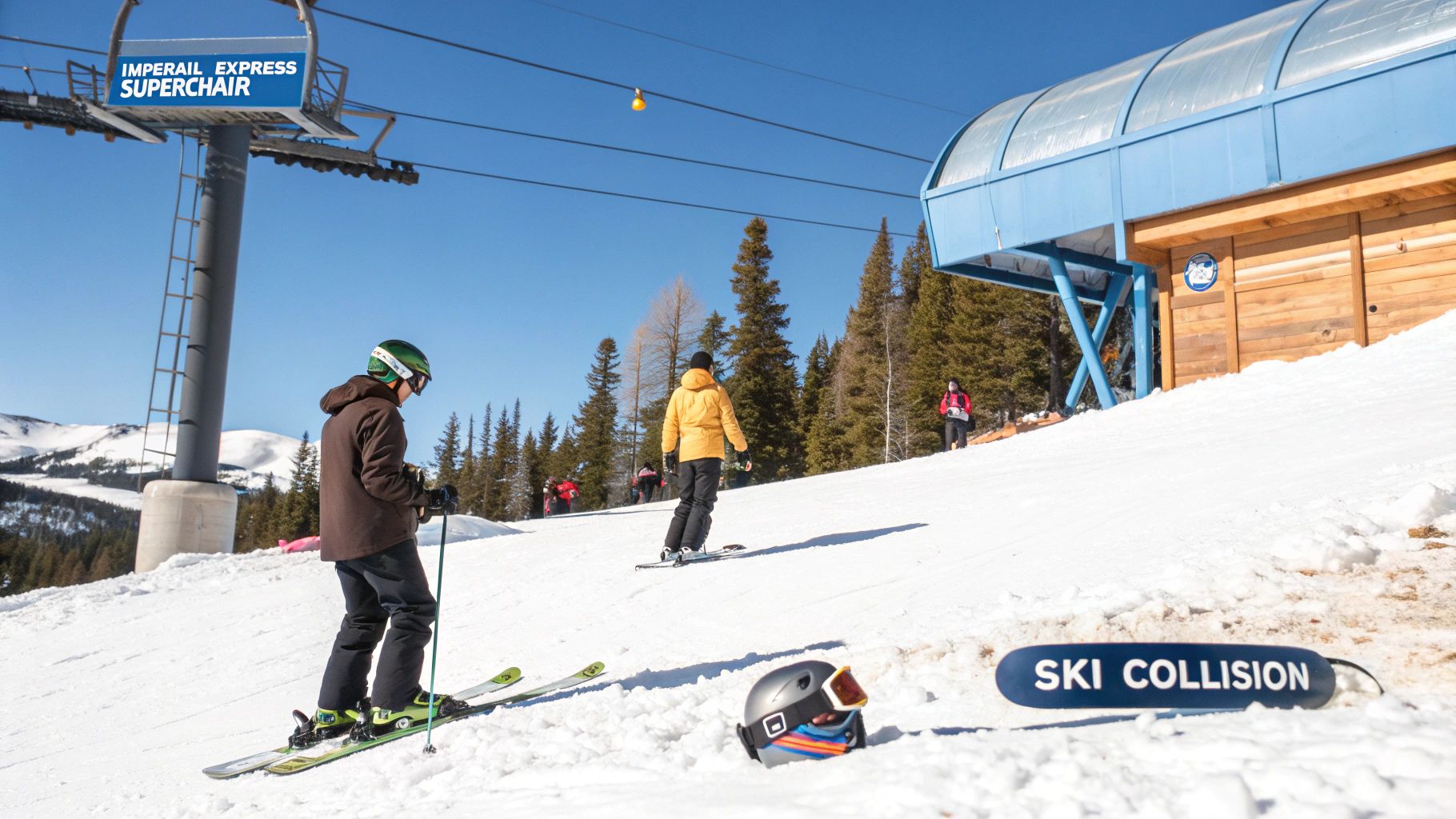
Breckenridge isn't one hill—it's five peaks (6 through 10) sprawling above a town at roughly 9,600 feet, with terrain that runs from beginner greens to some of the highest lift-served runs in North America. That mix of total beginners and experts on the same mountain is exactly what makes certain spots dangerous. A few that come up again and again:
- The Peak 8 base. Ski-school first-timers snowplowing across the flats meet stronger skiers carrying speed off the upper mountain. It's a predictable bottleneck and a classic collision zone.
- The high alpine off Imperial Express. The runs up top are long, steep, and fast. People ski above their ability and can't stop in time, the textbook setup for an uphill skier hitting someone below.
- The Freeway terrain park on Peak 8. Jumps, rails, and landings raise the question of how the resort built and maintained them, though Colorado law treats many terrain features as inherent risks.
- Lifts and the BreckConnect Gondola. Loading, unloading, sudden stops, and mechanical problems can point to the operator rather than to you.
Knowing the terrain matters because reconstructing how a collision happened—who came from where, how fast, with what sightlines—is most of the case.
Who's at Fault: The Quick Reference
Colorado ski liability turns on a basic split: did your injury come from a risk that's just part of skiing, or from someone else's carelessness? Here's how the common scenarios usually shake out.
| What happened | Who's usually liable | Why |
|---|---|---|
| An out-of-control skier hits you from behind. | The uphill skier | The skier coming from above has the better view and the duty to avoid the person below. |
| You catch an edge on an icy patch. | Typically no one (inherent risk) | Variable snow and ice are risks the law treats as part of the sport. |
| A bad landing in the terrain park—blind, ungroomed, full of ruts. | Depends on the facts | Many terrain features are treated as inherent risks; a claim against the operator turns on the specific design or maintenance problem. |
| A violent, sudden chairlift stop throws you. | The resort | Safe lift operation is the resort's responsibility; a lift malfunction is generally not treated as an inherent risk of skiing. |
| You hit an unmarked, unpadded man-made obstacle (e.g., a snowmaking hydrant just off the trail). | The resort | Colorado law requires operators to mark certain man-made hazards; a hidden one may point to the operator. |
That inherent-risk-versus-negligence line is the whole ballgame, and it's drawn by Colorado's Ski Safety Act (C.R.S. §§ 33-44-101 et seq.). One deadline matters more than any other here: a ski-injury claim under that Act generally must be filed within two years of the injury (C.R.S. § 33-44-111) — a shorter window than the deadline for an ordinary car-accident claim, which is exactly why getting advice early matters.
About That Waiver You Signed
The waiver on your pass is something the resort will raise. How far it reaches depends on its wording and on what actually caused the injury. A claim against another skier is also a different question from a claim against the resort. Whether it applies to your facts is exactly the kind of thing to have a lawyer read before you assume you're out of luck.
The First 30 Minutes on the Mountain
What you do right after a collision often decides the case, because the other skier's evidence is about to get on a plane. If you can manage it:
- Don't let the other skier leave. The biggest mistake is letting them ski off with a promise to meet you at the base. They won't. Get a photo of their face, their gear, and their lift pass or ID.
- Get their contact info and the patrol report. Photograph the other person's driver's license and write down a phone number. Make sure Ski Patrol writes an incident report—and understand it's the resort's version, a starting point, not the final word.
- Find independent witnesses. The tourists who saw it are your best evidence and they vanish within hours. Names and phone numbers, fast.
- Preserve your gear. A cracked helmet, snapped skis, or a torn jacket is physical proof of the impact. Don't repair or toss it.
None of this requires you to be a lawyer in the moment. It just buys you a real case later.
How We Prove It When the Other Side Denies Everything
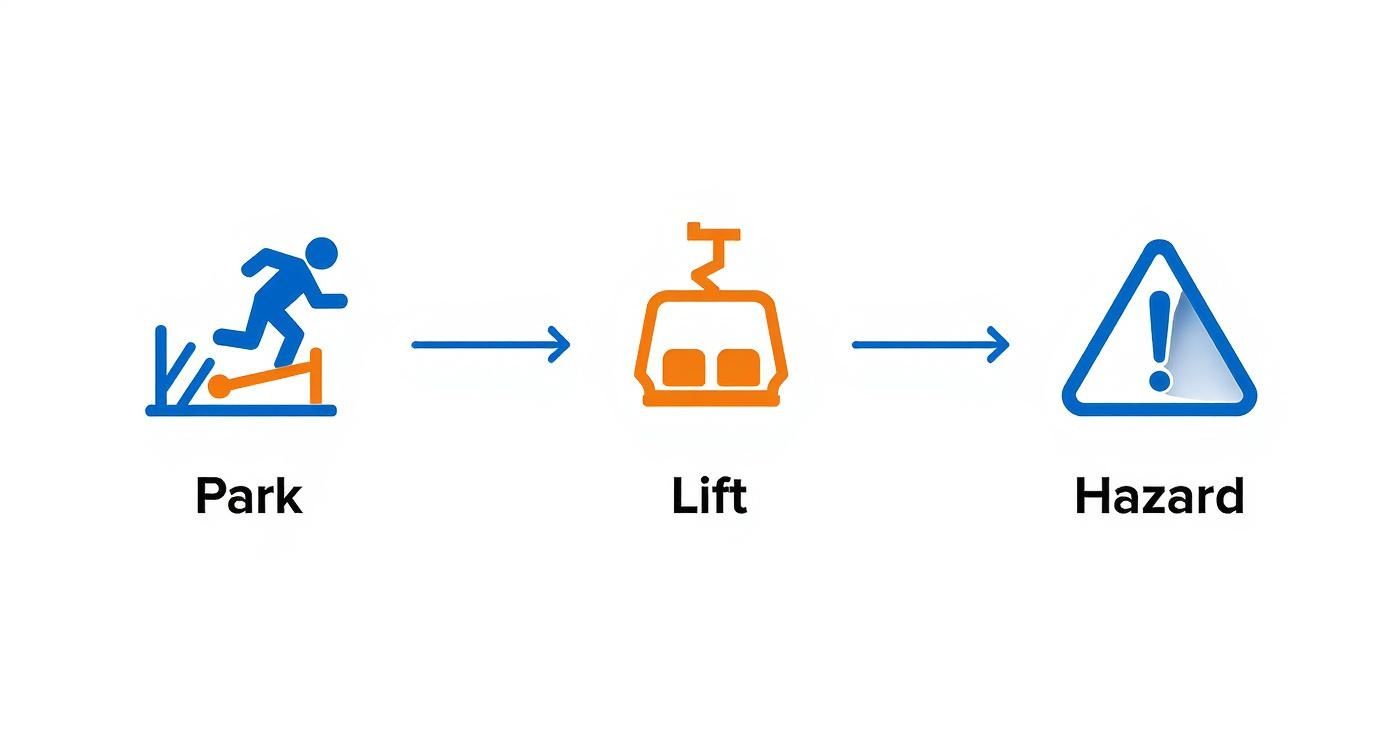
The uphill skier may say they were in control and you cut across them. We answer that with documentation: lift-scan records that show where the other skier was riding, tracking down out-of-state witnesses through investigators, and treating the patrol report as a lead to investigate rather than gospel. The goal is a file complete enough that the claim is valued on the facts.
You're Home in Another State—We're Your Boots on the Ground
This is the worry I hear most from people hurt at Breck: "I'm back in Texas now. How am I supposed to sue a resort in Colorado?" You can. The crash happened here, so the case belongs here, and where you live doesn't change your right to recover. The logistics are the hard part, and that's what we take off your plate.
We handle Summit County cases for clients across the country: virtual meetings, secure document transfer, and someone physically here to deal with the courts, local defense counsel, and on-the-ground investigation while you focus on healing.
Breckenridge cases sit inside the broader Colorado resort-injury picture. Our Denver skiing accident attorney guide walks through how lift incidents, trail hazards, collisions, and waiver defenses get evaluated statewide.
Talk to Someone Before You Talk to the Adjuster
The adjuster may call soon, and an early offer can come before anyone has added up future surgeries, lost wages, and months of therapy. There's no charge and no obligation to find out what your claim is actually worth first. Call (720) 432-7032 for a free consultation, and we'll give you an honest read on what happened and what your options are.
Disclaimer: This post is for general information only and is not legal advice. Reading it does not create an attorney-client relationship. Every case is different—talk to a qualified attorney about your specific situation.

Written by
Elliot Singer, Esq.
Personal injury attorney at Conduit Law, dedicated to helping Colorado accident victims get the compensation they deserve.
Learn more about our team

