

Table of Contents
It happens fast. One second someone is walking from their car to the store, the next the world goes sideways and slams into them—a sudden meeting with a patch of ice a property owner did not deal with. A wrist snaps. An ankle twists. A back seizes. Colorado law recognizes these claims. Under C.R.S. § 13-21-111, an injured person can recover even if partly at fault, as long as their fault is less than 50 percent; the award is reduced by their share. Additionally, non-economic damages for pain and suffering are capped at $1,500,000 for claims that accrue on or after January 1, 2025, and actions filed during 2025. Colorado generally sets a two-year statute of limitations for these claims under C.R.S. § 13-80-102, meaning injured parties must file suit within that window or lose their legal right to compensation entirely.
In ice cases, the pattern is familiar. The fall is only the start. What happens next matters too: the evidence of the hazard can melt away within days, and memories fade.
The central challenge in any ice case is showing the owner was careless when many people assume ice is simply weather. The most important evidence, the sheet of ice or the frozen runoff from a leaky gutter, disappears as temperatures rise. Photographs, witness names, and maintenance records should be gathered right away.
The Legal Clock: Denver's Snow Removal Deadlines
Insurers often describe Colorado winter weather as an unavoidable hazard. But weather alone does not decide these cases. Under the Colorado Premises Liability Act, the question is what the owner knew or should have known and whether they acted reasonably in response.
In Denver, a property owner also has clearing deadlines to meet.
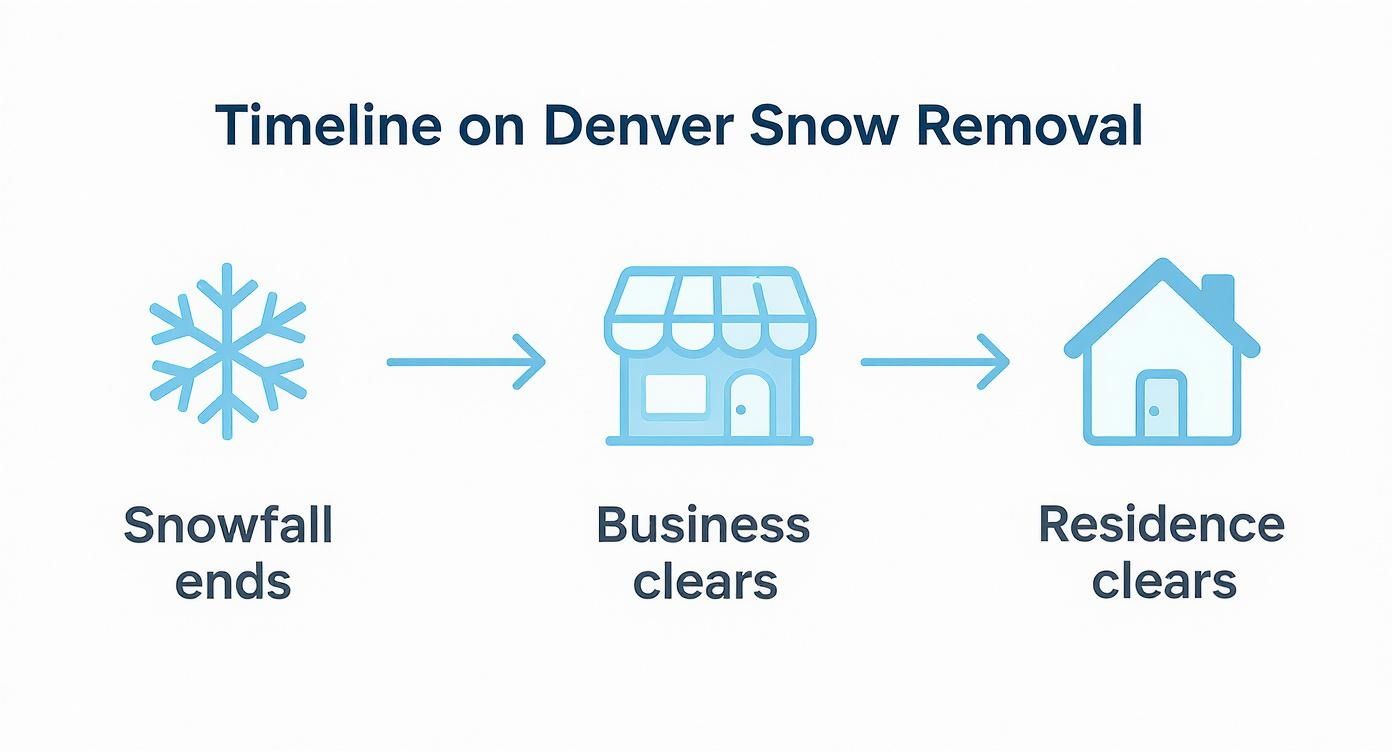
The Denver Municipal Code requires property owners to clear public sidewalks within set times after snow stops falling. A missed deadline can be relevant evidence of whether an owner acted reasonably.
Commercial Properties: The 4-Hour Rule
Businesses and apartment complexes generally have four hours after snow stops falling to clear public sidewalks of snow and ice. We confirm the deadline that applied to the specific property.
Residential Properties: The 24-Hour Rule
For homes and duplexes, the timeline is longer: residential owners generally have 24 hours after snow stops falling to clear their sidewalks.
A missed deadline does not prove a case by itself, but it is useful evidence. It shows the owner had time to act and did not.
The Law That Governs Your Fall: Colorado Premises Liability
Colorado's Premises Liability Act (C.R.S. § 13-21-115) governs claims against landowners for injuries on their property, and claims are framed under that statute. The owner's duty depends on why you were there. Most of these claims must be filed within two years of the injury (C.R.S. § 13-80-102).
Your reason for being on the property shapes the owner’s legal duty.
- Invitees: This is you. A customer at a store, a tenant in an apartment complex. An owner can be liable for unreasonably failing to use reasonable care to protect you from dangers they actually knew or should have known about.
- Licensees: A social guest, like at a friend’s party. The owner can be liable for unreasonably failing to address or warn of dangers they actually knew about.
- Trespassers: No legal right to be there. Recovery is generally limited to injuries the owner caused willfully or deliberately.
For an invitee, the "should have known" standard matters. The leaky gutter that creates a recurring ice patch every winter, or the poorly lit walkway where snowmelt refreezes, are the kinds of conditions an owner may be expected to know about and address.
How Insurers Defend Ice Claims, and How We Respond
Insurers defending ice claims usually rely on two arguments. Both can be answered with evidence gathered early.
Defense #1: "Natural Accumulation"
The adjuster may say the ice was a natural accumulation from the weather. Colorado has no blanket rule that natural snow and ice end a claim. Under the Premises Liability Act, the outcome turns on your status on the property, what the owner knew or should have known, and how much control and time the owner had to respond.
We look at how long the hazard sat, whether the owner salted, shoveled, or warned visitors, and whether the ice came from a condition the owner created or allowed to continue, such as:
- A leaky downspout spilling water across a walkway.
- Poor grading causing snowmelt to pool and refreeze in one spot.
- Misdirected sprinklers coating a sidewalk in an artificial glaze.
Evidence that the ice was a recurring, predictable problem weakens this defense considerably.
Defense #2: Comparative Negligence—Blaming You
The other common argument is that you were partly at fault: your shoes, your walking speed, where you were looking. Under C.R.S. § 13-21-111, you can still recover if your share of fault is less than 50 percent, and your recovery is reduced by that share. At 50 percent or more, recovery is barred.
That threshold is why early evidence about the conditions matters.
We respond with facts: black ice hidden by shadow, an area with no safe route, surveillance footage, maintenance logs, and witness statements showing your conduct was reasonable.
What You Must Do Immediately After a Fall on Ice (Before the Evidence Melts)
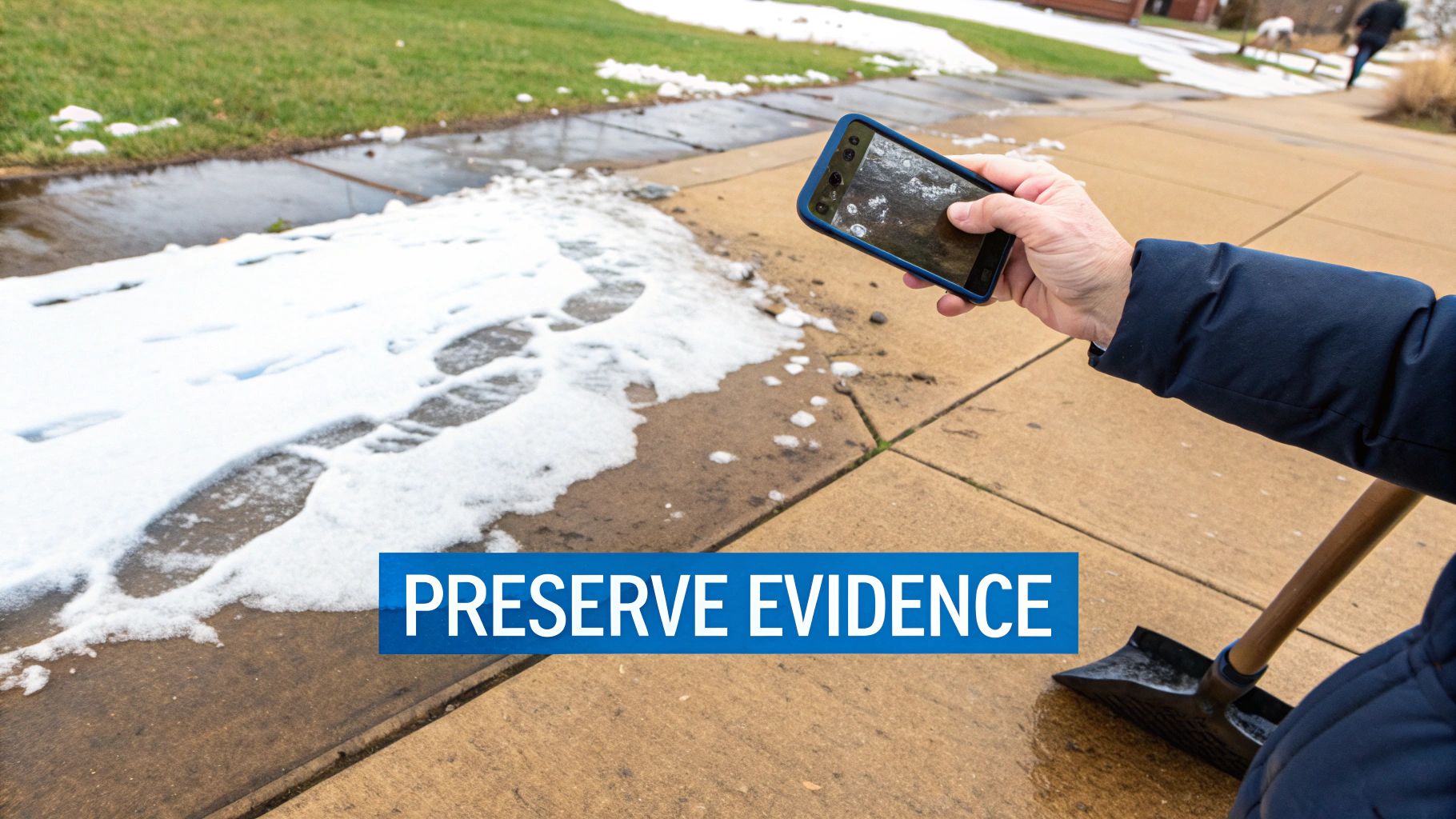
The next few hours matter. Photographs of the ice, weather records, maintenance logs, surveillance footage, and witness names are easiest to secure before conditions change. Strong early evidence also answers any later argument about your share of fault.
- Prioritize Medical Care. Go to urgent care or the ER. This creates a record linking your injury to the fall.
- Document the Hazard. Take photos and video with your phone before the scene changes. Get close-ups of the ice, wide shots of the area, and pictures of any contributing factors like downspouts, poor lighting, or a lack of salt.
- Report the Fall. Notify the property manager or business owner in writing (an email is fine). State the date, time, and location of your fall. Create a paper trail.
- Talk to a Lawyer Before the Adjuster. The owner's insurer may call soon after the fall. Politely decline to give a recorded statement and tell them your lawyer will be in touch.
Securing Your Compensation: What Your Claim is Worth

Proving the owner was negligent is half the work. The other half is documenting the full extent of your losses.
This includes two types of damages:
- Economic Damages: These are the tangible, out-of-pocket costs. Every medical bill, every dollar of lost wages, and the cost of any future care you’ll need.
- Non-Economic Damages: This is compensation for the human cost. The physical pain and suffering, the emotional distress, and the loss of your ability to enjoy the life you had before the fall.
We handle these cases on a contingency fee basis: no attorney's fees unless we recover for you.
Disclaimer: The information provided in this post is for general informational purposes only and does not constitute legal advice. No attorney-client relationship is formed by reading this content. If you have been injured, you should consult with a qualified attorney to discuss your specific situation.
Under Colorado law, most injured people have two years from the date of injury to file a premises lawsuit. Evidence and memories fade much faster than that, so it helps to start early.
We handle the claim so you can focus on your recovery. Schedule your free case review now.
If the fall or collision happened at a ski resort instead of an ordinary sidewalk, parking lot, or apartment walkway, the legal analysis may involve the Colorado Ski Safety Act. See our Denver skiing accident attorney guide for resort-specific injury claims.

Written by
Elliot Singer, Esq.
Personal injury attorney at Conduit Law, dedicated to helping Colorado accident victims get the compensation they deserve.
Learn more about our team

