Table of Contents
You're on your way home—maybe cruising down Sheridan, maybe stuck in the 120th Avenue interchange cluster—when it happens. The shriek of tires, the percussive thump-crunch of metal folding in on itself. A Westminster car crash is a violent, disorienting punctuation mark on an otherwise normal day. Shock gives way to pain, confusion about what comes next, and the dawning realization that everything has changed. Colorado law provides a three-year window to pursue a claim under C.R.S. § 13-80-101(1)(n), but that countdown begins immediately. Even when liability isn't crystal clear, Colorado's modified comparative negligence rule under C.R.S. § 13-21-111 allows recovery as long as fault is less than 50 percent. Non-economic damages—compensation for pain, suffering, and emotional distress—are capped at $1,500,000 for cases filed on or after January 1, 2025. Understanding these rules and acting promptly protects the injured victim's legal rights during an already overwhelming time.
For Westminster crashes involving Adams or Jefferson County issues, our Denver car accident attorneys can connect local evidence, treatment records, and insurance coverage into a claim plan.
But the real confusion is just beginning.
Because a wreck here isn't just about a smashed car and a sore neck. It's about getting dropped into a jurisdictional black hole. Depending on which side of an invisible line your accident occurred, your entire legal battle will be fought in one of two completely different court systems—Adams County or Jefferson County. This isn't a minor detail. It’s a trap door. And the insurance companies are waiting for you to fall through it. You don't just need a lawyer; you need a hyper-local Westminster car crash lawyer who speaks both languages fluently—the language of the 17th Judicial District and the 1st. We do.
Your Crash Has a Problem Most Lawyers Can’t Solve
Here's the thing about Westminster—it's a city with a split personality. The dividing line between Adams and Jefferson Counties snakes right through it. This means a personal injury case will land in one of two courthouses, miles apart, with different judges, different procedures, and different unwritten rules. That jurisdictional split creates real complications. Beyond venue confusion, Colorado law adds another layer of complexity. The state's modified comparative negligence rule bars recovery if the injured party is 50% or more at fault. Then there's the statute of limitations: injured parties in a motor vehicle crash have three years to file suit. Miss that deadline, and the case vanishes entirely. These overlapping Westminster-specific factors, combined with state-level rules, demand strategic navigation that distinguishes experienced personal injury representation from generic legal counsel.
The insurance company knows this. In fact, their entire strategy depends on it.
They will hire a defense attorney who has spent their entire career in, say, the Jefferson County courthouse in Golden. If your lawyer is an outsider there—or worse, has never even set foot in the Adams County courthouse in Brighton—you've already lost the home-field advantage. It's a calculated mismatch, and your claim is the casualty. Local defense counsel know the judges, the court staff, the procedural quirks, and the unwritten rules that govern how cases move through their specific courthouse. They understand which judges favor certain legal arguments and how individual magistrates rule on evidentiary questions. Meanwhile, your attorney must navigate unfamiliar territory while managing Colorado's strict 3-year statute of limitations, modified comparative negligence rules capping recovery at 50% fault. This home-field disadvantage compounds every strategic decision, from settlement negotiations to trial preparation, systematically disadvantaging your case from the moment the claim is filed.
We refuse to let that happen. Our firm knows the judges, the staff, and the defense counsel's playbook in both the 17th Judicial District (Adams) and the 1st Judicial District (Jefferson). We've built cases from Westminster Police Department reports and Colorado State Patrol investigations on US 36 and I-25. We aren't visitors in these courtrooms—we're regulars. This isn't just about filing paperwork; it's about making sure a case is built for the exact battlefield where it will be fought. That battlefield operates under specific Colorado rules that most lawyers underestimate. Colorado's modified comparative negligence rule bars recovery if a plaintiff is 50% or more at fault. Local judges apply these rules differently. Understanding how the 17th and 1st Districts interpret damages, negligence percentages, and liability requires courtroom experience—not just legal knowledge.
The High-Speed Wrecks Insurance Companies Dread
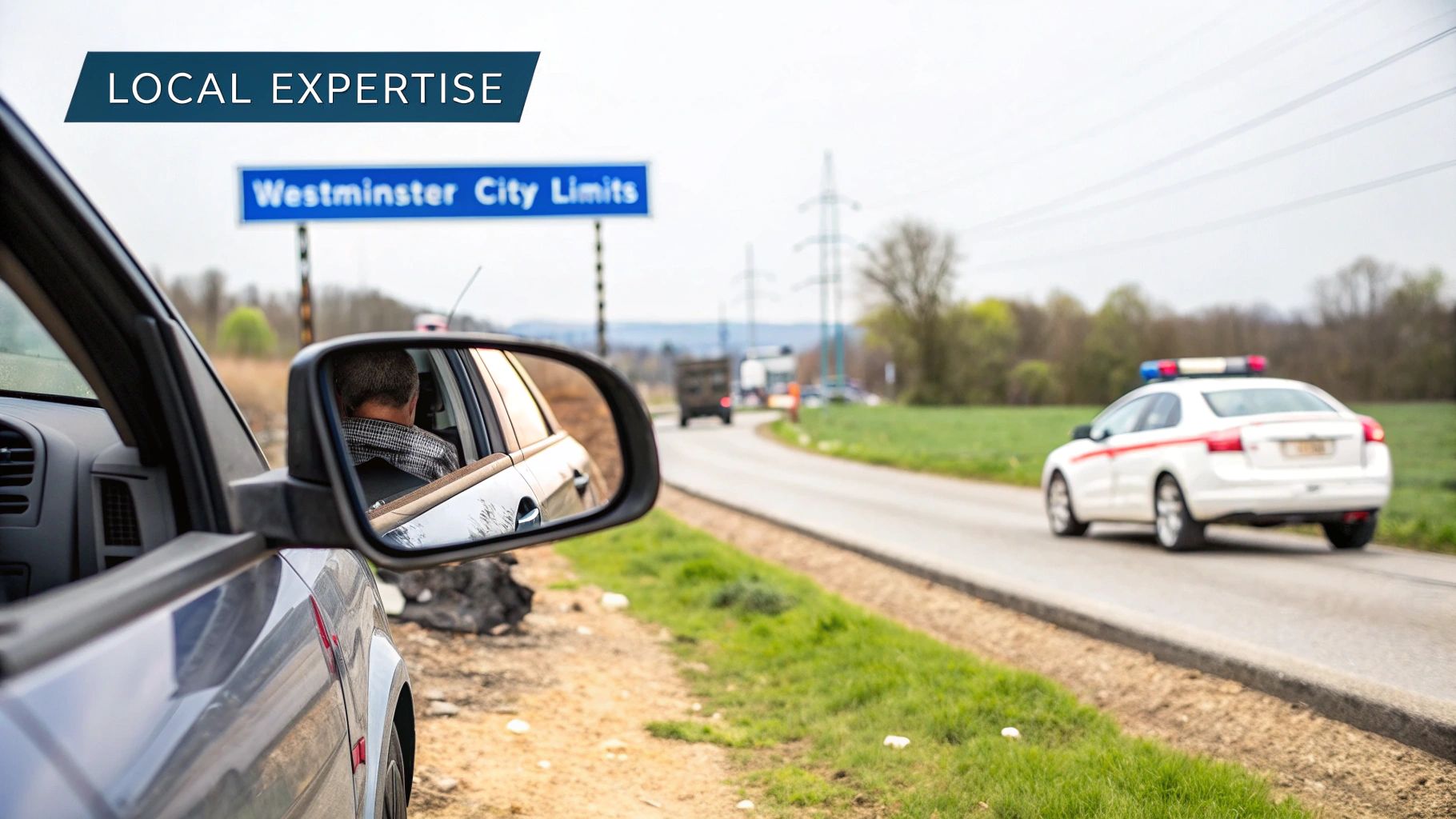
Some roads are just built for bad news. High-speed, high-impact collisions on the US 36 Denver-Boulder Turnpike and the I-25 corridor are where lives get shattered. These aren't fender-benders. They are violent events that cause the most severe, high-value outcomes—from traumatic brain injuries to wrongful death claims. Under Colorado law, injured parties in a motor vehicle crash have three years from the date of injury to file a claim, making swift action critical. Insurance companies understand these high-speed corridors generate maximum exposure. The medical bills, lost wages, and catastrophic injuries demand experienced legal representation to navigate complex claims and maximize recovery within Colorado's statutory framework.
We’ve handled the devastating aftermath of these crashes time and time again.
- T-Bone Accidents: A driver blowing a red light on Federal or Sheridan doesn't just cause an accident; they detonate a bomb in your passenger cabin. Proving fault requires immediate action—securing traffic camera footage, finding witnesses, and locking down evidence before it vanishes. We know exactly how to build a T-bone car accident settlement Colorado claim that leaves the insurer no room to argue.
- Highway Collisions: At 70 mph, physics is a cruel master. Crashes on US 36 and I-25 lead to catastrophic spinal cord injuries, complex fractures, and immense suffering. These cases require a massive front-loading of resources—accident reconstructionists, medical experts, and economists—to calculate the true, lifelong cost of the damage.
- Pedestrian/Bicycle Accidents: As Westminster grows, so does the risk to people on foot or on bikes. We have extensive experience holding negligent drivers accountable for the devastating harm they cause to the most vulnerable people on our roads.
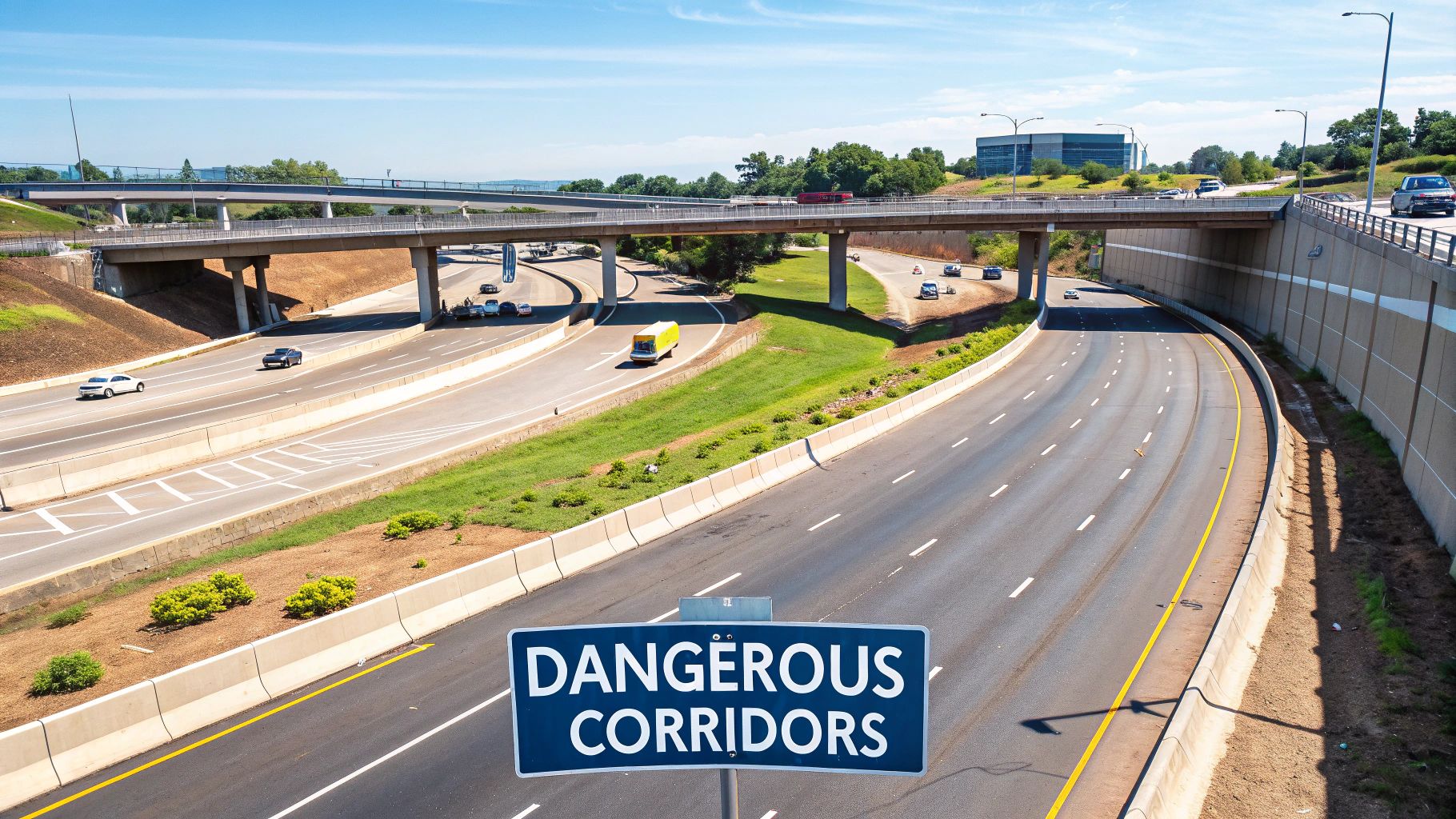
This isn't just about knowing the law. It's about knowing the roads, the risks, and the specific evidence needed to win cases that start in these dangerous corridors. Additionally, the three-year statute of limitations creates a critical deadline for filing suit. Understanding Colorado's damage framework is equally vital, requiring strategic focus on provable losses. High-speed collisions demand specialized knowledge of highway dynamics, vehicle forensics, and medical causation. The difference between winning and losing often hinges on whether counsel understands not just courtroom procedure, but the physics of impact, the biomechanics of injury, and how insurance companies systematically undervalue these catastrophic claims.
The Police Report Is Not Your Friend—It’s Theirs
Let's be brutally honest. In the wake of an accident, especially a serious one, law enforcement is stretched thin. Westminster has seen a tragic uptick in fatal car crashes, and there simply aren't enough traffic investigators to document every single piece of critical evidence at every scene. Police reports reflect investigator availability, not necessarily the full truth of what happened. Under Colorado law, victims have three years from the date of a motor vehicle accident to file a claim, but that window closes regardless of investigative gaps. Every detail matters. An incomplete or inaccurate police report can become a prosecution tool rather than a neutral record, potentially undermining a legitimate claim before it's ever properly investigated.
The police report filed after an accident serves the state's administrative interests, not the injured party's financial recovery. It's a starting point—and often, a flawed one. Officers document what they observe at the scene, but they rarely investigate with compensation in mind. Their conclusions about fault, injuries, or causation may not align with what's needed to support a personal injury claim. Under Colorado's modified comparative negligence statute, a plaintiff can recover damages only if found less than 50% at fault—making accurate fault determination critical. Because police reports contain gaps, assumptions, or officer bias, relying solely on them can undermine recovery. A thorough independent investigation by legal counsel is essential to build a stronger claim than the police report alone provides.

Relying solely on that police report is a critical mistake. A dedicated personal injury team must launch its own investigation the moment hired, because police prioritize building the state's criminal case, not maximizing victim compensation. Time-sensitive evidence disappears quickly—black box data from the at-fault vehicle, surveillance footage from nearby businesses set to auto-delete within 24 hours, or witness statements that fade from memory. While law enforcement focuses on their objectives, a thorough investigation preserves crucial proof that strengthens settlement negotiations and trial positioning. Under Colorado's modified comparative negligence rule, plaintiffs can recover damages only if found less than 50% at fault, making evidence quality essential. Financial futures cannot be entrusted to an overwhelmed system working for different goals.
The Trick Insurance Companies Don’t Want You to Know
Insurance adjusters have one primary weapon they use to deny your claim—it’s called comparative negligence.
Their entire job is to pin a piece of the blame on you. Were you going one mile over the speed limit? Did you check your text messages two minutes before the crash? They will dig, twist, and insinuate until they can argue you were partially responsible. Why? Because under Colorado's modified comparative negligence law, if they can convince a jury you were 20% at fault, they get to slash your settlement by 20%. This strategy works in their favor as long as the victim's fault is less than 50%—the threshold at which Colorado law bars recovery entirely. The stakes are particularly high given Colorado's three-year statute of limitations for filing personal injury claims. Insurance companies know that pressuring injured parties with blame-shifting tactics can lead to rushed settlements. Additionally, every percentage point of assigned fault directly reduces what victims can recover for pain, suffering, and emotional distress.
If they can get that number to 50%—you get nothing. Zero.
The adjuster's entire job is to shift as much blame as possible onto the injured party. This is how insurance companies save themselves millions of dollars every year. From day one, the most effective defense against this tactic is building a case so airtight that their blame-shifting arguments collapse under the weight of actual evidence. However, insurers will exploit every opportunity to push fault onto claimants. Strong documentation—medical records, accident scene evidence, witness statements, and expert analysis—makes their arguments untenable. Additionally, injured parties should understand Colorado's three-year statute of limitations for filing personal injury claims. Thorough case preparation ensures insurers cannot gain leverage through blame-shifting tactics.
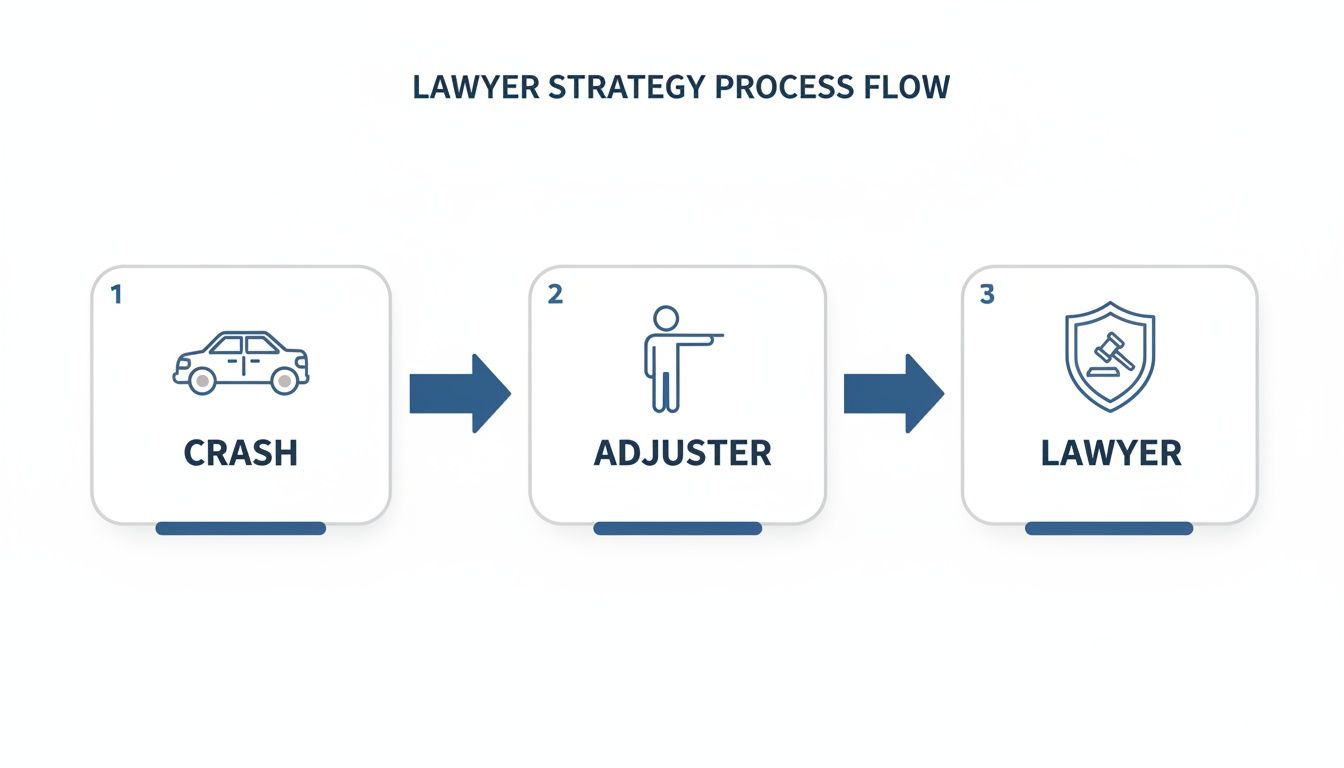
This fight gets even more absurd when the at-fault driver is uninsured. The injured party must then turn to their own UM/UIM policy—the coverage they paid for out of pocket. And their own insurance company will pull out the very same playbook, trying to assign blame to avoid paying the benefits rightfully owed. It's infuriating. What many Colorado residents don't realize is that insurance companies exploit the state's modified comparative negligence rule, which bars recovery if the injured party is found 50% or more at fault. This gives insurers leverage to undervalue claims. The stakes are high, and the timeline matters too. Insurance companies know injured parties often lack the resources and expertise to navigate these complex rules. That's precisely when professional legal representation becomes essential.
Disclaimer: The information in this blog post is for general informational purposes only and does not constitute legal advice. The law is complex and may change. The outcome of any legal matter depends on a variety of factors unique to each case. You should not act or refrain from acting based on this information without seeking professional legal counsel specific to your situation. Using this site or communicating with Conduit Law through this site does not form an attorney-client relationship.
You’ve been through enough. Call my office for a free, no-pressure consultation to talk about what happened. I got you.

Written by
Elliot Singer, Esq.
Personal injury attorney at Conduit Law, dedicated to helping Colorado accident victims get the compensation they deserve.
Learn more about our team