Conduit Law - Colorado Personal Injury AttorneysAccident Attorneys
Car Accidents5 min read

Pueblo Accident Injury Attorney | Conduit Law

Injured in a Pueblo car crash? Our Pueblo accident injury attorney knows the I-25 corridor and 10th Judicial District. You pay nothing unless we win your case.

January 14, 2026By Conduit Law
#Pueblo accident injury attorney, I-25 car accident, Pueblo injury lawyer, Colorado truck accident, 10th Judicial District
Pueblo Accident Injury Attorney | Conduit Law
Table of Contents

You know the feeling. That split-second of white-knuckle panic when a semi-truck drifts into your lane on I-25. Or the jolt of adrenaline as traffic slams to a halt near the US 50 interchange—again. It feels dangerous because it is dangerous. This isn't just another stretch of highway; it's a high-stakes gauntlet, and getting through it unscathed feels like a win. Colorado's roadways claim hundreds of serious injuries annually, and those caught in collisions face complex legal terrain alongside physical recovery. If injured, Colorado law provides a three-year statute of limitations to pursue a claim under C.R.S. § 13-80-101. However, Colorado follows modified comparative negligence rules under C.R.S. § 13-21-111, meaning an injured party can only recover if less than 50% at fault. Non-economic damages—covering pain, suffering, and emotional distress—are capped at $1,500,000 as of 2025. Understanding these legal parameters is essential for anyone navigating a personal injury claim in Colorado.

But sometimes, you don't win. Sometimes, someone else's carelessness changes your life in an instant.

When that happens, you don't need just any lawyer. You need a Pueblo accident injury attorney who understands the brutal physics of an I-25 pile-up and knows the 10th Judicial District courtroom like the back of their hand. You need someone who sees Pueblo not as a dot on a map, but as a community with unique, high-stakes problems that demand a specialist. This isn't just about a car crash—it's about getting your life back. Colorado law imposes strict deadlines and complex rules that govern every stage of recovery. Under C.R.S. § 13-80-101, injured parties have only three years to file a personal injury lawsuit. Additionally, Colorado's modified comparative negligence rule (C.R.S. § 13-21-111) bars recovery if an injured party is more than 50% at fault. Non-economic damages are also capped at $1,500,000 as of 2025. A specialized Pueblo injury attorney understands how these statutes intersect with local court practices, ensuring nothing slips through the cracks while maximizing every avenue of compensation available.

We Know Pueblo's Treacherous Traffic Traps

Your accident wasn't random—it was predictable. The chaos on I-25 around Pueblo is a known quantity, a daily grind of merging trucks, distracted commuters, and poorly designed interchanges just waiting to cause another wreck. These hazardous conditions create a perfect storm for collisions that leave victims with serious injuries and mounting expenses. Under Colorado law, injured parties have three years from the accident date to file a personal injury claim (C.R.S. § 13-80-101), but evidence deteriorates and witnesses' memories fade quickly. Colorado follows modified comparative negligence rules, meaning an injured party can still recover damages even if partially at fault—as long as their negligence doesn't exceed 50% (C.R.S. § 13-21-111). Non-economic damages, such as pain and suffering, are capped at $1,500,000 as of 2025. Understanding these legal parameters is crucial when pursuing compensation for injuries sustained in Pueblo's notoriously dangerous traffic corridors. The specifics of Colorado's statutes directly impact what injured parties can recover and how quickly they must act.

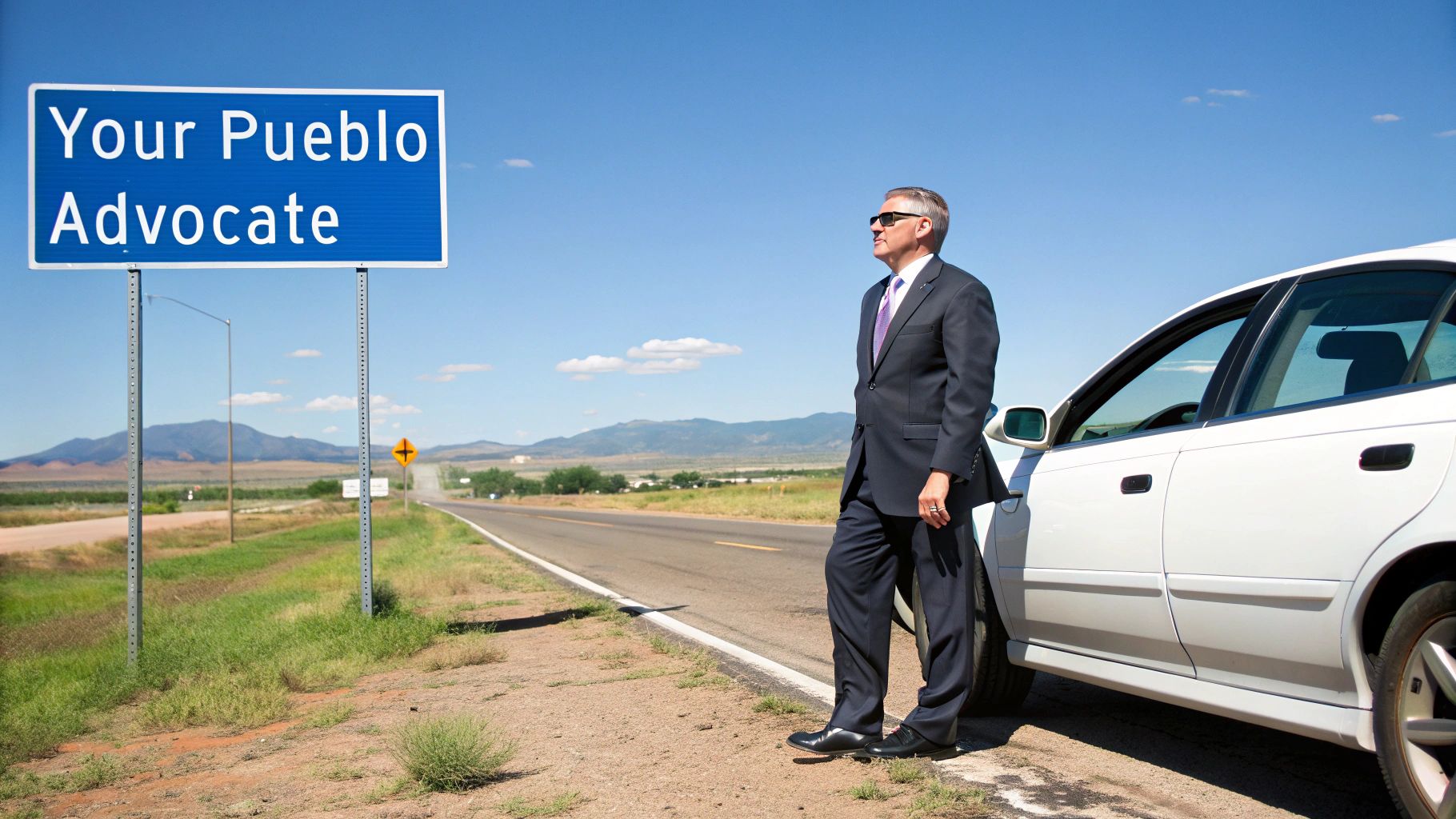
A man in a suit and sunglasses stands by a white car on a road, with a "Your Pueblo Advocate" sign.

We've built our practice mastering the brutal realities of Pueblo's roads. We know the specific danger zones where devastating rear-end collisions and T-bone car accident settlement Colorado claims are born—like the frantic merge at Exit 101 (US 50) or the pile-ups waiting to happen near Exit 99B (4th Street). These high-risk corridors demand specialized knowledge of local traffic patterns and negligence law. Colorado's modified comparative negligence rule (C.R.S. § 13-21-111) allows recovery only when the injured party is less than 50% at fault, making evidence collection critical. Additionally, Colorado law provides a three-year statute of limitations for personal injury claims (C.R.S. § 13-80-101), creating a strict deadline for legal action. Non-economic damages, including pain and suffering, are capped at $1,500,000 as of 2025. Understanding these statutory limitations and local accident patterns is essential for maximizing settlements and ensuring victims receive full compensation within Colorado's legal framework.

Pueblo serves as a critical freight hub, making its roads consistently congested with heavy commercial vehicles and tractor-trailers. This reality has created a specialized need for attorneys experienced in catastrophic and fatal trucking accidents. These cases demand comprehensive knowledge of federal FMCSA regulations and state-specific legal frameworks. Seasoned I-25 truck accident attorneys understand how to navigate complex liability issues and hold negligent trucking companies accountable for their actions. Colorado law provides important protections for victims. Under C.R.S. § 13-80-101, injured parties have three years from the accident date to file a lawsuit. Colorado follows modified comparative negligence rules under C.R.S. § 13-21-111, allowing recovery even if a plaintiff is partially at fault—as long as fault doesn't exceed 50 percent. Non-economic damages, including pain and suffering, are capped at $1,500,000 as of 2025. Understanding these statutory limitations and protections is essential when pursuing justice in trucking accident cases.

And the danger isn't confined to the interstate. High-speed corridors like Pueblo Boulevard and Santa Fe Avenue are hotspots for distracted driving incidents that leave families shattered. Knowing these specific locations isn't trivia—it's leverage. When collisions occur on these treacherous stretches, Colorado law provides victims with critical protections. Under C.R.S. § 13-80-101, injured parties have three years from the accident date to file a personal injury claim. Additionally, Colorado's modified comparative negligence rule under C.R.S. § 13-21-111 allows recovery even when a victim bears up to 49% of fault, provided the defendant carries 50% or greater responsibility. For serious injuries resulting in non-economic damages like pain and suffering, awards are capped at $1,500,000 as of 2025. Understanding these legal frameworks—combined with precise knowledge of accident-prone locations—equips victims and their advocates with the insight needed to build compelling cases and secure meaningful compensation.

The Insurance Company's Game Is Rigged Against You

Here's a secret the insurance industry spends billions to hide: their entire business model is built on paying injured claimants as little as possible. Or nothing at all. They have a playbook, and accident victims are their next target. Insurance companies employ trained adjusters and defense attorneys specifically to minimize payouts. They exploit legal technicalities, twist facts, and pressure claimants into accepting lowball settlements before understanding the full extent of their injuries. Colorado law does set some protections—including a three-year statute of limitations under C.R.S. § 13-80-101 for filing personal injury claims. However, modified comparative negligence rules under C.R.S. § 13-21-111 allow insurers to argue shared fault and reduce awards if a claimant is found more than 50% responsible. Additionally, non-economic damages—compensation for pain, suffering, and emotional distress—are capped at $1,500,000 as of 2025. These legal boundaries create opportunities for insurers to strategically undervalue legitimate claims.

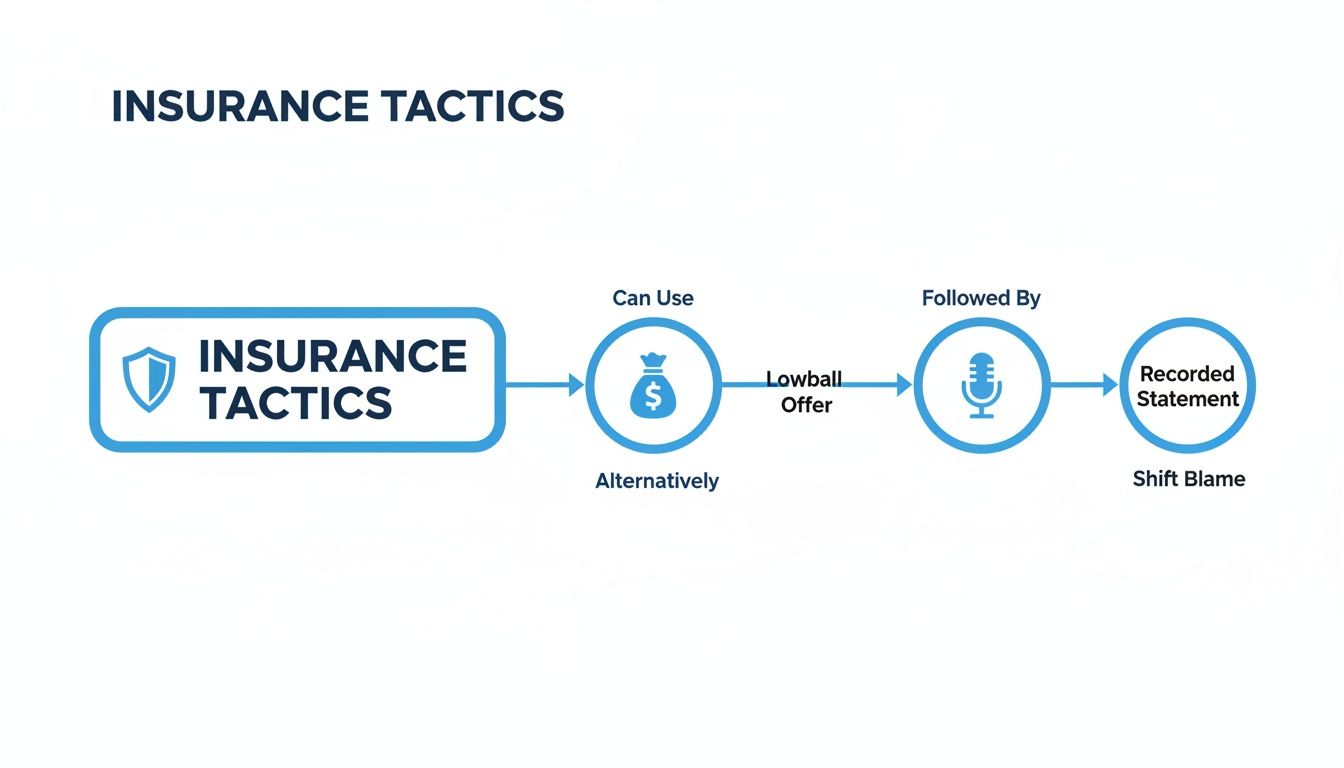
They'll call you—sometimes while you’re still in the hospital—oozing fake sympathy. They'll ask for a recorded statement, hoping you’ll say one wrong word they can twist to deny your claim. Politely decline.

Then comes the lowball offer. It's fast, it's insulting, and it's designed to prey on financial panic. It's a trap. Never accept it. Insurance adjusters know that injured claimants often face mounting medical bills and lost wages, making them vulnerable to quick settlements far below actual damages. This pressure tactic exploits a critical misconception: that the statute of limitations demands immediate acceptance. Colorado law provides three years to file a personal injury claim under C.R.S. § 13-80-101—ample time for proper evaluation. Additionally, Colorado's modified comparative negligence rule under C.R.S. § 13-21-111 allows recovery even if the injured party is partially at fault, provided they are not more than 50% responsible. Understanding these protections, along with non-economic damage caps of $1,500,000 as of 2025, reveals what a legitimate settlement should include. Lowball offers ignore these legal safeguards entirely, benefiting only the insurance company's bottom line.

But their absolute favorite tactic—the one they use over and over—is blaming you for the crash. They will invent reasons, misinterpret the police report, and do anything to shift fault onto your shoulders. They do this because they know Colorado's dirty little secret: under the state's modified comparative negligence law (C.R.S. § 13-21-111), if a claimant is found to be 50% or more at fault, they cannot recover any damages whatsoever. This creates a powerful incentive for insurers to maximize blame allocation. Even if evidence supports a claimant's case, insurers weaponize this statute to pressure settlements or deny claims entirely. The stakes grow even higher when non-economic damages are involved—capped at $1,500,000 as of 2025—making every percentage point of assigned fault financially significant. Additionally, Colorado's three-year statute of limitations (C.R.S. § 13-80-101) means claimants must act quickly or lose their right to sue altogether. These legal structures combine to create an environment where insurance companies hold substantial leverage over injured parties.

They will try to blame you for the crash. It's their number one move, and it's devastatingly effective.

Flowchart illustrating common insurance tactics: lowball offers, recorded statements, and shifting blame.

We've seen these cynical tactics for years. Insurance companies deploy the same strategic playbook to minimize payouts: delay, deny, and dispute. Their arguments are predictable, and they can be dismantled piece by piece. While understanding their schemes and why insurers deny claims is valuable, claimants face additional legal complexities that demand protection. Colorado law establishes a three-year statute of limitations for personal injury claims under C.R.S. § 13-80-101, creating a critical deadline. Meanwhile, the state's modified comparative negligence rule under C.R.S. § 13-21-111 means that if an injured party is found 50% or more at fault, they cannot recover damages—a high bar that insurers aggressively exploit. Additionally, non-economic damages are capped at $1,500,000 as of 2025, limiting compensation for pain and suffering. Insurance adjusters understand these rules intimately and use them strategically. Without experienced advocacy, injured parties navigate an unequal playing field where deadlines slip, liability gets mischaracterized, and settlements fall short. This is precisely why professional representation serves as an essential shield against these entrenched insurance company tactics.

We Fight for You in the 10th Judicial District

Your legal battle won't be fought in some anonymous Denver skyscraper. It will happen right here, in the Pueblo County District Court at 501 N. Elizabeth Street. This is our turf. We know the local rules, the judges, and the defense lawyers who will try to lowball you. That's a home-field advantage you cannot afford to give up. Understanding Colorado's legal landscape is equally critical. Under C.R.S. § 13-80-101, injured parties have three years from the date of injury to file a personal injury claim—miss that deadline, and your case is gone. Colorado also follows modified comparative negligence rules; if you're found more than 50% at fault (C.R.S. § 13-21-111), you cannot recover damages at all. Additionally, non-economic damages like pain and suffering are capped at $1,500,000 as of 2025. Local counsel who understand these statutes and the 10th Judicial District's specific procedures can navigate these complexities and protect your rights effectively.

Their entire defense will likely hinge on one legal rule: modified comparative negligence under Colorado law. Under C.R.S. § 13-21-111, it's a brutal system. If a jury finds the injured party is 50% or more to blame for the accident, that person recovers absolutely nothing—zero dollars. This modified comparative fault bar means defendants aggressively attack credibility and manufacturing doubt about causation becomes their primary strategy. Colorado also imposes strict timelines for action. Under C.R.S. § 13-80-101, injured parties have only three years from the date of injury to file a lawsuit, or the claim expires permanently. Additionally, non-economic damages—compensation for pain, suffering, and emotional distress—are capped at $1,500,000 as of 2025. These limitations underscore why experienced legal representation matters in the 10th Judicial District. Skilled advocates understand how to combat comparative fault arguments while navigating Colorado's complex statutory framework to maximize recovery within these constraints.

They will try to blame you for the crash. This isn't just a negotiation tactic; it's their legal kill shot. Insurance adjusters and defense counsel understand that Colorado follows a modified comparative negligence standard under C.R.S. § 13-21-111, which bars recovery if a plaintiff is found more than 50% at fault. This makes liability assessment the battleground where cases are won or lost. Building an ironclad case means documenting evidence that makes their blame-shifting argument impossible to sustain—police reports, witness statements, accident reconstruction, and photographic evidence all work together to establish clear liability. Under Colorado's three-year statute of limitations for personal injury claims (C.R.S. § 13-80-101), there's a defined window to preserve evidence and build this defense. Success requires meticulous investigation before the other side can contaminate the record. Non-economic damages, capped at $1,500,000 as of 2025, depend entirely on establishing that liability rests firmly with the defendant, not shared blame.

We also handle the nightmare scenario where the at-fault driver has no insurance or carries too little coverage. In that case, the focus shifts to the injured party's own Uninsured/Underinsured Motorist (UM/UIM) policy—the coverage they paid for but never expected to use. Don't be surprised when an insurance company suddenly treats its own policyholder like the opposition. Under Colorado's modified comparative negligence rule, claimants can recover damages even if partially at fault, provided fault doesn't exceed 50% (C.R.S. § 13-21-111). Non-economic damages in Colorado are now capped at $1,500,000 as of 2025, making it critical to maximize recovery through all available channels. With Colorado's three-year statute of limitations on personal injury claims (C.R.S. § 13-80-101), time is limited. An experienced uninsured motorist attorney in the 10th Judicial District advocates aggressively to ensure insurance companies pay exactly what is owed under policy terms.

Your Next Move Is Your Most Important One

What you do right now matters. The first step is simple: get the police report from the Pueblo PD and call a lawyer who actually understands this city. You need to preserve evidence before it disappears. Time is critical—Colorado law allows three years from the date of injury to file a personal injury claim under C.R.S. § 13-80-101, but waiting diminishes evidence quality and witness recollection. Photographs, surveillance footage, and physical evidence deteriorate quickly. Additionally, Colorado's modified comparative negligence rule (C.R.S. § 13-21-111) bars recovery if the injured party is found more than 50% at fault, making early investigation essential to establish liability clearly. Non-economic damages—compensation for pain, suffering, and emotional distress—are capped at $1,500,000 as of 2025, making economic damages documentation equally important. An experienced local attorney knows Pueblo courts, understands regional negligence patterns, and can immediately take steps to secure critical evidence before opposing parties do. Acting now protects both the claim's viability and its value.

Man on phone near broken down car after an accident on the side of the road.

The consultation is free. The advice is real. And there are zero upfront costs. We work on a contingency fee basis, which means we only get paid if we win your case—either through a settlement or a verdict. This aligns our interests directly with yours. Time matters in Colorado personal injury cases. Colorado Revised Statutes § 13-80-101 establishes a three-year statute of limitations for most personal injury claims. Missing this deadline can permanently eliminate your right to recover damages. Colorado's modified comparative negligence rule (C.R.S. § 13-21-111) allows recovery even if you bear some responsibility for the injury, provided your fault doesn't exceed 50%. Additionally, non-economic damages—including pain and suffering—are capped at $1,500,000 as of 2025, which affects the maximum compensation available in certain cases. Understanding these legal parameters is crucial for evaluating case value and determining the best strategy forward.

There is no financial risk to you. None. This is about leveling a brutally unfair playing field. The insurance giants have their team of lawyers. It's time injured parties had theirs. Colorado law provides critical protections, including a three-year statute of limitations under C.R.S. § 13-80-101 to file a claim—but that clock is ticking from the date of injury. Under Colorado's modified comparative negligence rule (C.R.S. § 13-21-111), recovery is still possible even if partially at fault, as long as negligence doesn't exceed 50%. Non-economic damages—compensation for pain, suffering, and lost quality of life—are capped at $1,500,000 as of 2025. Understanding these limitations and deadlines is essential. Insurance companies count on injured individuals navigating these complex statutes alone, without skilled representation. The playing field shifts dramatically when experienced legal counsel enters the picture, ensuring rights are protected and every available avenue for fair compensation is pursued.


Conduit Law has recovered over $50 million for Colorado injury victims by treating every case with the seriousness it deserves. When someone is injured due to another's negligence, understanding Colorado's legal framework becomes critical. Under C.R.S. § 13-80-101, victims have three years from the date of injury to file a personal injury claim—missing this deadline can eliminate the right to recover entirely. Colorado follows a modified comparative negligence rule under C.R.S. § 13-21-111, meaning an injured party can still recover damages even if partially at fault, provided their negligence doesn't exceed 50%. Additionally, non-economic damages such as pain and suffering are capped at $1,500,000 as of 2025. These statutory constraints make the initial steps following an injury invaluable. The decision to seek qualified legal counsel immediately can mean the difference between substantial recovery and losing rights altogether. Your fight is our fight.

Disclaimer: This blog post is for informational purposes only and does not constitute legal advice. No attorney-client relationship is formed by reading this post. If you need legal advice, please contact a qualified attorney.

I've got your back. Call me for a free, no-obligation case review.

CL

Written by

Conduit Law

Personal injury attorney at Conduit Law, dedicated to helping Colorado accident victims get the compensation they deserve.

Learn more about our team
Explore Our Practice Areas

We handle 24+ types of personal injury cases throughout Colorado.

Need Legal Assistance?

If you have been injured, our experienced personal injury attorneys are here to help you get the compensation you deserve.