
Table of Contents
Free case qualifier
In a car or vehicle accident?
Answer a few quick questions about the crash and your injuries — we route your details straight to intake.
Start the qualifierBus crashes in Colorado run on a different clock than car crashes — and most of the firms taking these cases never adjust the timer. An RTD bus rear-ending traffic on I-25, a charter coach losing control on Berthoud Pass, a school bus sideswiped on a Denver Public Schools route, or a hotel airport shuttle braking hard on Peña Boulevard are not generic motor vehicle claims. Each one triggers a different liability stack, a different insurance layer, and — most consequentially — a different deadline. Miss the Colorado Governmental Immunity Act 182-day notice on a public-entity bus and the case is over before the medical workup is even finished. This guide walks injured passengers, pedestrians, cyclists, and motorists through how Conduit Law actually builds Colorado bus accident files: what evidence disappears in 30 days, how RTD and school district claims differ from private charter cases, and what the disbursement math looks like when the file is run correctly. For the Denver-specific pillar, see our Denver bus accident lawyer page; this article extends that framework statewide.
Why Colorado Bus Crashes Don't Settle Like Car Crashes
Colorado bus accident claims look superficially similar to car crashes — police report, medical bills, demand letter — but the legal architecture underneath is structurally different. Buses are common carriers under Colorado law and federal motor carrier regulations, which means the operator owes passengers a heightened duty of care rather than ordinary reasonable care. Federal Motor Carrier Safety Administration (FMCSA) rules at 49 C.F.R. § 387.33 require interstate passenger carriers operating buses with seating for 16 or more (including driver) to carry minimum liability coverage of $5 million — a coverage layer that dwarfs the $25,000 Colorado private auto minimum under C.R.S. § 10-4-619. The result is that a bus crash with serious injuries often has the policy room to support a real recovery, but only if the file is built around the operator type, the regulatory framework, and the preservation deadlines that govern the case from day one.
The Common Carrier Doctrine and Why It Matters
Colorado has long recognized common carriers as owing the highest practical duty of care to passengers, a doctrine reaffirmed in cases like Lewis v. Buckskin Joe's, Inc., 156 Colo. 46 (1964) and applied across modern bus and shuttle litigation. Under that standard, an RTD operator who slams the brakes for a non-emergency reason — a phone notification, a missed stop, an aggressive lane change — exposes the agency to a level of liability scrutiny no private driver faces. The "highest degree of care consistent with the practical operation of the conveyance" standard transforms otherwise close negligence cases into clear liability cases when the facts come out. Adjusters know this. They settle common-carrier files differently when the demand letter explains the standard correctly and ties it to specific operator conduct documented in onboard video, training records, or dispatch logs — and they discount the claim aggressively when the demand reads like a generic rear-ender.
Three Insurance Layers Most Firms Miss on Colorado Bus Files
The single biggest pricing mistake we see on Colorado bus crash cases is treating the at-fault commercial policy as the only available coverage. The actual coverage stack on a typical Colorado bus file has three layers, and demand letters that target only the first one routinely undervalue the case by six figures. Layer one: the bus operator's commercial auto or self-insured retention — $5 million minimum on regulated interstate passenger carriers per 49 C.F.R. § 387.33, often higher on charter and tour operators. Layer two: any contributing third-party driver's BI policy, which becomes relevant when a passenger car causes the bus to maneuver dangerously. Layer three: the injured passenger's own UM/UIM coverage, which under C.R.S. § 10-4-609 stacks across household vehicles in most policy forms when separate UIM premiums were paid. Audit all three layers in the first 30 days or leave money on the table.
Firm position: We send a preservation letter to the bus operator within 72 hours of intake on every Colorado bus crash, regardless of injury severity. Onboard video is overwritten on rolling 7-30 day cycles depending on the operator. The cost of a preservation letter is roughly $40 in attorney time. The cost of losing the video at mediation is typically a five-figure reduction in offer value. The math is not close.
The CGIA 182-Day Notice Trap on RTD, School Bus, and Government Routes
The most catastrophic mistake in Colorado bus accident law is missing the Colorado Governmental Immunity Act notice deadline under C.R.S. § 24-10-109. Any claim against a public entity — RTD, a public school district, a city, a county, the state, a regional transportation district, or a public university shuttle — requires written notice filed with the proper public official within 182 days of the injury. The deadline is jurisdictional, not procedural. Missing it does not just hurt the case; it extinguishes the claim entirely, regardless of injury severity, regardless of liability clarity, regardless of whether the public entity had actual knowledge of the incident from its own crash report. The Colorado Court of Appeals has applied this rule strictly across decades of decisions, and out-of-state firms routinely blow the notice in Colorado public-entity files. The 182-day clock starts the day of injury, not the day of diagnosis or discovery.

What the CGIA Notice Must Contain
A CGIA notice is not a generic demand letter, a settlement request, or a casual report to the public entity. C.R.S. § 24-10-109(2) specifies mandatory content: the claimant's name and address, factual basis of the claim, name and address of the public employee involved, the time and place of the act or omission, the nature and extent of injury, and the amount of monetary damages requested. The notice must be filed in writing with the entity's governing body or attorney — not the bus driver, not RTD customer service, not the police. Substantial compliance is the standard the Colorado Supreme Court applied in Brock v. Nyland, 955 P.2d 1037 (Colo. 1998), but the courts have consistently rejected notices that omit critical statutory elements or that target the wrong public official. Get the notice wrong and the doctrine of substantial compliance does not save the file.
Charter, Tour, and Private Shuttle Routes — Different Rules Entirely
Private bus operators — Greyhound, Bustang's contracted carriers (yes, Bustang is a CDOT operation but its carriers vary), Gray Line tours, casino shuttles to Black Hawk and Cripple Creek, charter buses for sports teams and weddings, hotel airport shuttles, and senior-living vans — are not subject to the CGIA notice requirement and follow the standard three-year motor vehicle statute of limitations under C.R.S. § 13-80-101. But they trigger their own framework: federal motor carrier regulations, FMCSA driver qualification files, hours-of-service logs under 49 C.F.R. Part 395, and commercial general liability policies that often layer on top of the base auto coverage. The first 30 days of a private charter case should focus on identifying the actual operator (the brand on the bus is often a contracted carrier), the federal MC number, the insurer, and the safety rating posted on the FMCSA SAFER website. These details rewrite the demand strategy.
Evidence That Disappears in 30 Days on a Colorado Bus Crash
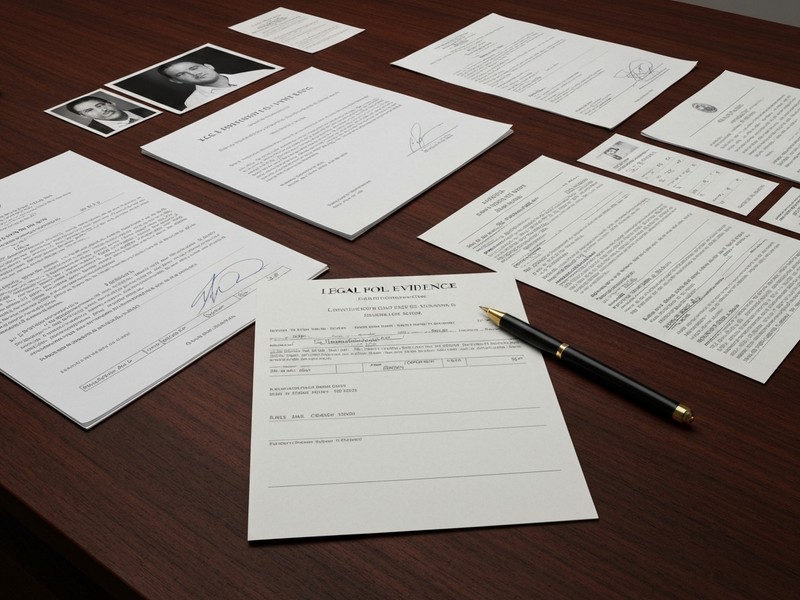
Bus crash evidence has a shorter shelf life than almost any other personal injury file type. Onboard video systems on RTD buses retain footage on rolling cycles — typically 7 to 30 days depending on the route and storage configuration — and footage from non-incident routes is overwritten automatically unless someone flags it for preservation. Charter operator dashcams often run on 24-hour loops. Driver logs under 49 C.F.R. § 395.8 must be retained by motor carriers for only six months, and electronic logging device (ELD) data is retained on similar timelines. Maintenance and inspection records, post-trip vehicle inspection reports under 49 C.F.R. § 396.11, and dispatcher communications all sit in operator-controlled systems where the default retention setting is the legal minimum. Without a written preservation letter sent immediately to the operator and its insurer, the strongest evidence on the case is gone before the first medical specialist sees the client.
On-Board Video, Telematics, and the Preservation Letter
Modern Colorado buses generate a remarkable volume of evidence — and lose most of it within a month. RTD's bus fleet runs onboard surveillance cameras (interior and exterior facing), GPS telematics, automatic vehicle location (AVL) systems, and event data recorders that capture speed, brake application, steering input, and stop-arrival timing. Charter coach operators commonly run forward-facing dashcams plus driver-facing cameras under FMCSA-recommended safety protocols. School districts increasingly run interior cameras for student behavior monitoring. None of this evidence is automatically preserved when a crash occurs; the operator's incident response team flags some footage based on internal severity criteria, and the rest cycles out. A formal litigation hold letter sent within 72 hours, identifying specific data sources by route and time window, is the only reliable preservation mechanism. We document each preservation request with a follow-up confirmation request 14 days later.
Driver Logs, Hours-of-Service Records, and FMCSA Discoverability
Federal regulations under 49 C.F.R. Part 395 require commercial bus drivers to record duty status, including driving hours, on-duty hours, and off-duty rest periods, with strict limits on consecutive driving time and required rest breaks. ELD data captures this electronically on regulated carriers, and the records are discoverable in litigation but only retained for six months absent a preservation request. Driver fatigue is a leading cause of charter bus crashes nationally per the National Transportation Safety Board's accident database, and a driver who exceeded HOS limits is a fault gold mine — both for direct negligence and for negligent supervision against the carrier. The carrier's own safety rating from the FMCSA SAFER system, prior crash history, and out-of-service violations are publicly available and frame the demand letter narrative even before formal discovery begins. Driver qualification files, including medical certifications and training records, must be preserved under 49 C.F.R. § 391.51 for the duration of employment plus three years following separation.
A Colorado Bus Crash Disbursement — Real Numbers
Pricing a Colorado bus crash case requires walking the disbursement math, not quoting an "average" figure that means nothing in a specific file. Take a representative scenario the firm sees regularly: a passenger riding an RTD route 0 through downtown Denver is thrown to the floor when the operator brakes hard for a non-emergency reason, suffers a cervical disc herniation at C5-C6, undergoes 14 weeks of physical therapy, two epidural steroid injections, and an eventual anterior cervical discectomy and fusion. Total billed medical specials: $118,000. Lost wages: $22,400. RTD is self-insured up to a substantial retention. The CGIA notice is filed on day 35 post-crash. The case is built around the common-carrier standard, onboard video showing the unjustified braking, and the operator's training file. The disbursement walk below is what a well-run RTD case looks like — not a guarantee in any specific matter.

The Disbursement Sheet a Colorado Bus Client Actually Sees
The economics of a Colorado bus crash are visible only when the disbursement sheet is laid out line by line, and most clients have never seen one until the firm walks them through it. On the cervical-fusion RTD scenario above, the firm pursues the public-entity claim within CGIA damage caps under C.R.S. § 24-10-114, which currently sets the per-person cap at $424,000 (adjusted from the older $387,000 figure following the most recent statutory increase) for incidents accruing under the current cap regime. Settlement target lands at the cap given the surgical case, the clean liability story from onboard video, and the operator's documented training gap. The lien negotiation against Medicare or the client's ERISA health plan typically produces the largest variance in net recovery — disciplined common-fund-doctrine arguments and made-whole-doctrine analyses routinely cut billed health insurance liens to 20-40% of face value.
| Line Item | Gross Amount | Notes |
|---|---|---|
| Public-entity settlement (CGIA cap) | $424,000 | Per-person cap under C.R.S. § 24-10-114 (current adjustment) |
| Attorney fee (33⅓% pre-suit blended) | ($141,333) | Contingency; no fee charged on costs |
| Case costs (records, mediator, expert) | ($9,400) | Treating-physician deposition, life-care plan review |
| Health insurance lien (negotiated) | ($28,500) | Reduced from $118,000 billed via fund-doctrine argument |
| Net to client | $244,767 | Roughly 58% of gross — typical for disciplined lien negotiation |
Why the CGIA Damages Cap Reframes the Settlement Math
Public-entity cases in Colorado settle inside a hard ceiling that private cases do not face. The per-person cap under C.R.S. § 24-10-114 is currently $424,000 (adjusted upward from the older $387,000 figure under the cap-adjustment statute), with a per-incident aggregate cap of $1,195,000 across all claimants in a single occurrence. That ceiling means a multi-passenger RTD crash with five seriously injured riders can split the $1.195 million aggregate cap across all five, regardless of total damages. The math forces firms to make hard early decisions about which claimants need to file separately, when to accept proportional reductions, and whether a non-CGIA defendant (a third-party negligent driver, a maintenance contractor, a vehicle manufacturer with a product defect claim) can carry damages outside the cap. We model the cap math at intake on every multi-passenger public-entity case before any client signs a retainer.
Why Multi-Passenger Bus Cases Multiply Liability and Aggravation Disputes
Bus crashes are uniquely difficult because they involve multiple injured passengers, often with overlapping injury claims and competing narratives. A single hard-braking incident on an RTD bus can produce 10 to 30 passenger injury claims ranging from minor soft-tissue complaints to serious herniations and surgical cases. Each claim has its own medical history, its own pre-existing condition profile, and its own credibility baseline. Defense counsel for the operator routinely argues that low-impact collisions cannot produce significant injuries — a defense theory backed by some biomechanical literature but cut decisively in Colorado by the "thin skull" rule and the established doctrine that an aggravation of pre-existing conditions is fully compensable even when the same event would produce no injury in a healthy claimant. The strongest passenger files document the pre-crash baseline and the post-crash change with specific medical records.
Pre-Existing Conditions, the Thin-Skull Rule, and Aggravation Theory
Colorado law under cases like Newbury v. Vogel, 151 Colo. 520 (1963) and modern jury instructions (CJI-Civ. 6:8) holds that a tortfeasor takes the plaintiff as found, including any unusual susceptibility to injury. A passenger with degenerative cervical disc disease who experiences an acute herniation in a bus crash is fully entitled to recover for the herniation, even though a healthier passenger might have walked away. Defense counsel will spend significant effort on prior MRI imaging, prior chiropractic records, and prior pain management notes trying to argue that the injury was preexisting rather than caused or aggravated by the crash. The cleanest counter is a treating physician's causation opinion drawn from records that compare the pre-crash baseline to the post-crash imaging and clinical findings, with specific reference to the timing and mechanism of injury.
School Bus Cases — Children, Long Treatment Horizons, and Future Damages
School bus injuries to minor passengers introduce additional complexity that adult-only files do not face. C.R.S. § 13-22-101 governs settlement of minor claims, requiring court approval for settlements over $10,000, and tolling rules under C.R.S. § 13-81-103 extend statute-of-limitations clocks until the minor reaches majority. But CGIA notice requirements still apply on the ordinary 182-day clock — minor status does not toll the public-entity notice deadline, a rule the Colorado Court of Appeals has applied strictly in school district injury cases for decades. Future damages projections for a child with a traumatic brain injury, orthopedic injury, or psychological trauma require life-care planning, vocational economics, and educational impact analysis far beyond what an adult file demands. School bus cases involving a contracted carrier (rather than district-employed driver) also need careful analysis of which entities have CGIA protection and which do not — the answer materially changes the damages ceiling and the available coverage layer.
Filing in the Right Colorado Venue When the Carrier Underprices
Most Colorado bus crash cases settle pre-suit, but the ones that don't require careful venue selection. A Denver-RTD case files in Denver County District Court, the seat of the 2nd Judicial District; school district cases file in the district where the incident occurred; charter bus crashes on I-70 may have venue in Clear Creek, Summit, or Eagle County depending on the location of impact. Each Colorado venue has its own jury pool tendency, its own civil division calendar, and its own mediator panel. Filing the case in a venue with a conservative jury pool to capture procedural advantages can backfire if the case has to try; filing in a plaintiff-friendly venue can pressure faster settlement but draws aggressive removal motions on diversity-jurisdiction cases involving out-of-state charter operators. We model venue at intake on every contested file. For broader Colorado statewide context, see our Colorado personal injury lawyer page.
Colorado Statute of Limitations and Notice Deadline Recap
The deadline framework on Colorado bus crashes is unforgiving and operator-dependent, and the worst mistakes in this practice area come from confusing the deadlines or missing them entirely. The chart below summarizes the deadlines we track on every Colorado bus crash file at intake, but no chart substitutes for a same-week consultation when a public entity may be involved. The three-year motor vehicle SOL is the longest available clock, and even that is materially shorter than the standard tort SOL because it covers the underlying tort cause of action. Contractual UIM claims may have separate limitation periods written into the auto policy, often three years from accident or denial, and the contractual clock can extinguish the UIM claim independently. For Colorado-statewide reference on this issue, see our Colorado personal injury statute of limitations guide.
- CGIA notice (public entity bus only): 182 days from injury under C.R.S. § 24-10-109 — non-waivable, jurisdictional
- Motor vehicle SOL (private operators): 3 years from accident under C.R.S. § 13-80-101
- UIM contractual limitation: 3 years from accident or denial — check the policy declarations
- Minor tolling: SOL paused under C.R.S. § 13-81-103 until majority — but CGIA notice still applies on the standard 182-day clock
- FMCSA records preservation: 6-month default retention under 49 C.F.R. § 395.8 — preservation letter required immediately
What Colorado Bus Crash Victims Get Wrong After a Crash
The same five mistakes show up in nearly every Colorado bus crash file we open after another firm has worked it. Recorded statements given to the operator's claims department in the first 48 hours, often without an attorney present, used later to manufacture comparative fault arguments under C.R.S. § 13-21-111. Medical treatment delayed because the passenger "felt OK" and only sought care a week later when symptoms worsened — a treatment gap the carrier uses to argue the injury was unrelated. Failure to identify the actual operator on a charter or contracted route, allowing the wrong defendant to be served past the statute. Acceptance of a property damage release containing buried bodily injury release language. And the universal mistake: assuming the first settlement offer reflects the real case value when public-entity adjusters routinely open at 15-25% of likely settlement value to test claimant resolve.
The Recorded Statement Trap on Public-Entity Bus Cases
RTD's claims process and similar public-entity claim processes routinely include a request for a recorded statement from the injured passenger, framed as a routine investigative step. There is no Colorado statute requiring an injured passenger to give such a statement, and the recorded statement is the single most common source of comparative fault arguments later in the file. Adjusters ask seemingly innocent questions — "Were you holding the rail?" "Did you see the bus brake before you fell?" "Have you had any prior back issues?" — and use the answers to build a defense narrative even when the passenger had no opportunity to brace and no causal pre-existing condition. The cleanest answer is to decline the recorded statement, refer the adjuster to written communication through counsel, and let an attorney handle substantive coverage and liability discussions.
Frequently Asked Questions
How long do I have to file a Colorado bus accident lawsuit?
For private bus operators (charter, tour, hotel shuttle, senior-living van), Colorado's three-year motor vehicle statute of limitations applies. For public-entity operators (RTD, school district, city, county, state shuttle), a CGIA notice must be filed within 182 days of injury — missing that deadline extinguishes the claim entirely.
What is the CGIA damages cap on Colorado public bus claims?
The current per-person cap under C.R.S. § 24-10-114 is $424,000, with a per-incident aggregate cap of $1,195,000 across all claimants. The amounts are periodically adjusted by statute. The cap applies to total recoverable damages from public entities and is the single largest factor in valuing RTD, school district, and other government-operator bus claims.
Who can be liable in a Colorado charter or tour bus crash?
Potentially liable parties include the bus driver, the carrier company, the contracting tour operator, a maintenance contractor, another at-fault driver, or a vehicle/component manufacturer on a product defect theory. Federal motor carrier liability minimums under 49 C.F.R. § 387.33 require $5 million in coverage for interstate passenger carriers with 16+ seats.
Does the CGIA notice apply to school bus accidents?
Yes, when the school bus is operated by a public school district employee on district equipment. The 182-day notice deadline applies, even when the injured passenger is a minor — minor tolling under C.R.S. § 13-81-103 does not extend the CGIA notice clock. Contracted private carrier school bus cases follow the standard three-year SOL instead.
Should I give a recorded statement to RTD's claims department?
No. There is no Colorado statute requiring a recorded statement to RTD or any other public-entity claims process. Recorded statements are routinely used to develop comparative fault arguments and to lock in passenger testimony before medical workup is complete. Decline politely, refer the adjuster to written communication, and have an attorney review the file before any substantive statement is provided.
What does it cost to hire a Colorado bus accident lawyer?
Conduit Law handles Colorado bus accident cases on a contingency fee basis — no upfront cost, no fee unless we recover, and the free consultation includes a coverage audit, a CGIA notice deadline review, and a realistic case-value range. Drivers and passengers can call (720) 432-7032 to start that review.
The information in this article is provided for general educational purposes and does not constitute legal advice. Reading it does not create an attorney-client relationship with Conduit Law, LLC. Bus accident claims are highly fact-specific and depend on the operator type, applicable insurance, jurisdiction, and circumstances of each crash. CGIA damage caps and statutory minimums under C.R.S. § 24-10-114 are periodically adjusted by Colorado statute and may have changed since publication. Anyone injured in a Colorado bus, shuttle, or charter coach crash should consult a licensed Colorado attorney before making coverage or settlement decisions, particularly when a public entity may be involved and the 182-day CGIA notice clock is running.
If you were injured on an RTD bus, a school bus, a charter coach, an airport shuttle, or any other Colorado bus route — or if you were a pedestrian, cyclist, or motorist hit by a bus anywhere in Colorado — call Conduit Law at (720) 432-7032 for a free coverage audit, CGIA notice review, and Colorado bus accident case-value range. For Denver-specific bus crash representation and the broader practice framework, see our Denver bus accident lawyer pillar page, our Colorado passenger injury rights guide, and our Colorado wrongful death claim guide for fatal-crash matters.

Written by
Elliot Singer, Esq.
Personal injury attorney at Conduit Law, dedicated to helping Colorado accident victims get the compensation they deserve.
Learn more about our team
