

Table of Contents
Free case qualifier
In a car or vehicle accident?
Answer a few quick questions about the crash and your injuries — we route your details straight to intake.
Start the qualifierCalifornia moves on trucks. Freight from the Ports of Los Angeles and Long Beach leaves on 18-wheelers, agricultural loads move through the Central Valley, and interstate commerce runs along I-5 and the east-west freight corridor of I-10. The result is heavy commercial truck traffic across much of the state.
That volume has consequences. If you're reading this, you may already know what they look like: damaged vehicles, serious injuries, medical bills arriving faster than you can open them, and an insurance company working to resolve the claim.
As a rough illustration, not a statement of our results, serious California truck accident cases can range from around $150,000 to well over $3 million, depending on injury severity and the strength of the evidence. California law has features that matter here: no general cap on damages in injury cases (the MICRA cap applies only to medical malpractice), pure comparative fault that allows a reduced recovery even if you were mostly at fault, and detailed state trucking rules on top of federal ones.
This guide explains how those rules affect case value, and how to evaluate an offer against what a case is actually worth.
For broader context on how truck accident claims work and what makes them different from car accidents, see our truck accident lawyer resource page.
Average Truck Accident Settlement Amounts by Injury Severity
California's lack of a general damages cap and its pure comparative fault rule both affect settlement value, because insurers evaluate claims with the possible jury outcome in mind, especially in cases with strong liability evidence. The ranges below are illustrative only and are not our firm's results.

Want a quick estimate?
Use our free truck accident calculator to see what your case might be worth in 60 seconds—no email required.
| Injury Category | Common Injuries | Typical Settlement Range | Key Factors |
|---|---|---|---|
| Minor Injuries | Soft tissue damage, whiplash, sprains, minor lacerations | $25,000–$175,000 | Short treatment, full recovery expected, minimal lost wages |
| Moderate Injuries | Bone fractures, herniated discs, surgery required, torn ligaments, PTSD | $175,000–$750,000 | Extended treatment, some permanent limitation, significant lost income |
| Severe Injuries | Traumatic brain injury (TBI), spinal cord damage, amputations, internal organ damage, severe burns | $750,000–$5,000,000+ | Lifelong care needs, lost earning capacity, permanent disability |
| Fatal Truck Accidents | Wrongful death | $1,000,000–$15,000,000+ | Lost lifetime income, loss of consortium, punitive damages, corporate negligence |
Several features of California law push valuations higher than in some states. There is no general cap on non-economic damages in personal injury cases, so pain and suffering awards aren't limited by statute. And commercial trucks operate under both federal and state rules, which can create a detailed record of compliance to examine.
Wrongful death cases can also involve punitive damages where a trucking company's conduct was malicious, oppressive, or fraudulent, such as falsified maintenance records or pressure on drivers to violate Hours-of-Service limits.
What a "minimum truck settlement" actually is
People who type that query want a floor number. California does not publish one. No statute says a truck case must settle for at least a set dollar figure. The closest things to a floor are documented economic losses, the injured person's share of fault under Li v. Yellow Cab Co., 13 Cal.3d 804, and the insurance policy minimums federal law requires most interstate carriers to carry. A policy minimum is not a settlement minimum.
The FMCSA financial-responsibility table in 49 C.F.R. § 387.9 sets a $750,000 public-liability minimum for most interstate property carriers, and $5 million for many hazardous-materials hauls. That is the lowest policy the carrier is allowed to hold. It is not a check anyone is entitled to. A modest-injury claim can resolve well below that limit. A catastrophic claim can exhaust it and still look for other covered defendants.
A working floor is built, not announced. Start with specials (reasonable medical bills plus documented wage loss). Apply a conservative multiplier only where the treatment record supports it. Then reduce by the comparative-fault percentage California's pure-comparative rule will actually assign. What remains is a defensible walk-away number — not a promise, and not the $750,000 policy floor.
| Input | Figure | Why it is here |
|---|---|---|
| Documented medical specials | $40,000 | Hard economic number, receipts and bills |
| Conservative multiplier (2.5×) | $100,000 | Soft-tissue file with real treatment — not a surgery file |
| Plaintiff fault at 20% (Li) | $80,000 | Recovery reduced, never eliminated, under pure comparative fault |
| FMCSA policy minimum (49 C.F.R. § 387.9) | $750,000 | Coverage ceiling the carrier must carry — not the settlement |
| Walk-away floor in this illustration | $80,000 | Specials × multiplier × (1 − fault). Still inside the policy limit. |
Why published actual settlement amounts are not a case result
Public databases and law-firm blogs recycle "actual settlement amounts" as if those figures were a tariff. They are not. A reported million-dollar Sacramento truck result is one file: a specific injury stack, a specific carrier policy, and a specific liability record. It does not set a floor for a sideswipe treated with a few weeks of physical therapy, and it does not cap a catastrophic claim that exhausts 49 C.F.R. § 387.9 coverage and still looks for other defendants. California still has no statutory minimum. What moves a live file is documented specials, comparative fault under Li v. Yellow Cab Co., the policy the carrier actually carries, and whether ELD or CHP evidence is still available to collect. Treat a published number as a case study, not a price.
What a publicized $1 million truck figure usually includes
A $1 million headline usually packs severe injury, clear liability, and enough coverage to pay it. Typical ingredients include traumatic brain injury or spinal damage, Hours-of-Service or brake-maintenance proof, and a policy at or above the FMCSA $750,000 public-liability minimum. What those headlines omit is just as important: medical liens, comparative fault, and the gap between a verdict and the check that actually clears. Jury awards get reduced. Medicare and hospital liens come out. If the injured person is 20% at fault, California's pure comparative rule cuts the recovery; it does not erase it. That is why "actual settlement amounts truck accidents" is a useful search and a dangerous shopping list. Use the ranges in the injury table as bands, the floor illustration as math, and a file review for the number that belongs to one crash. Nothing on this page is a quote, and nothing here is a promise that a Sacramento or Oakland claim will land at $1 million.
| What the headline shows | What the file still has to prove |
|---|---|
| A round number ($1 million, $3 million) | Injury stack, treatment length, and whether MMI has been reached |
| A city name (Sacramento, San Diego, Oakland) | The actual corridor, CHP/SWITRS file, and which carrier policy applies |
| A policy minimum ($750k FMCSA floor) | Whether that limit is even available after other claimants and defense costs |
Types of Truck Accidents on California Roads
California's unique geography and infrastructure create specific truck accident patterns you won't find in other states. From the congested port corridors of Southern California to the agricultural hauling routes of the Central Valley, each region produces distinct collision types with distinct legal implications.
Port Corridor Collisions (I-710 / Long Beach Freeway)
The I-710 connects the Ports of Long Beach and Los Angeles to inland rail yards and distribution centers and carries heavy port drayage traffic. Rear-end collisions, sideswipes, and multi-vehicle crashes involving container chassis and tanker trucks are common concerns. Drayage operators vary widely in size and insurance, which makes identifying every liable party and every policy important.
Jackknife and Runaway Truck Accidents on Mountain Passes
The Grapevine (I-5 through the Tejon Pass) and Cajon Pass (I-15 east of Los Angeles) are steep mountain grades where summer heat can contribute to brake fade. Jackknife and runaway truck crashes there often involve brake failure, improper gear selection, or overweight vehicles.
Agricultural Hauling Accidents (Highway 99 / Central Valley)
Highway 99 runs the length of California's Central Valley, one of the most productive agricultural regions in the country. During harvest seasons, the highway fills with produce haulers, livestock transports, and oversized farm equipment. Heavy truck traffic, dense Tule fog that can reduce visibility to near zero, and fatigued drivers on tight harvest deadlines make for a dangerous mix, and fog has been a factor in serious multi-vehicle pileups.
Urban Intersection Crashes
In the greater Los Angeles basin, San Francisco Bay Area, and San Diego metro, commercial trucks share congested surface streets with cars, cyclists, and pedestrians. Right-turn squeeze crashes, red-light violations by trucks unable to stop in time, and backing accidents at loading docks are common patterns, often involving delivery trucks, concrete mixers, and dump trucks on tight schedules.
Interstate Corridor Accidents (I-5, I-10, I-15)
California's three major interstate trucking corridors each present distinct hazards. I-5 runs the full length of the state, with fog-related chain reactions in the Central Valley and fatigue-related drift crashes on long, monotonous stretches. I-10 carries east-west freight from the ports through the Inland Empire toward Arizona, with busy interchanges around San Bernardino. I-15 connects Southern California to Las Vegas, where desert heat, weekend recreational traffic, and commercial hauling meet on the Cajon Pass descent.
What Evidence Strengthens Your California Truck Accident Claim
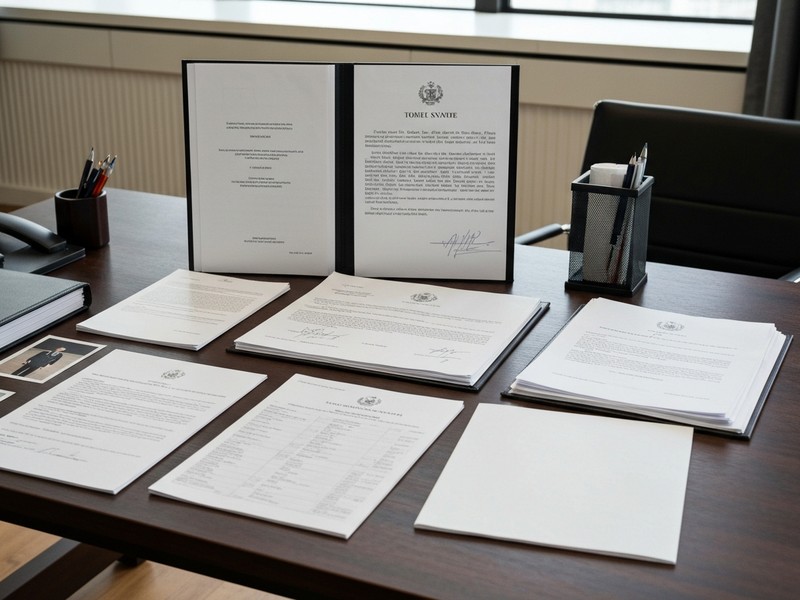
The difference between a modest settlement and a substantial one is often the evidence. Truck accident cases depend on the quality of the documentation, and in California there are state-specific evidence sources worth pursuing.
Electronic Logging Device (ELD) Data
Federal law requires most commercial trucks to use electronic logging devices that track driving hours. ELD data shows whether the driver complied with Hours-of-Service rules, including the 11-hour driving limit within a 14-hour on-duty window. A violation can show the driver was operating while fatigued and may point to company practices. Carriers are only required to keep these records for a limited time, so we send a preservation (spoliation) letter promptly after being retained.
Black Box / Event Data Recorder (EDR)
Most commercial trucks carry event data recorders that capture speed, braking, throttle position, and seatbelt status in the seconds around a collision. EDR data showing a driver was speeding or failed to brake can be strong liability evidence, and because it can be overwritten, it needs to be preserved early.
California Highway Patrol (CHP) Reports and CalTrans Records
Crashes on California state highways are generally investigated by the CHP, and collision data is compiled in the Statewide Integrated Traffic Records System (SWITRS). CalTrans also maintains road condition records, construction zone documentation, and signal timing data that can help establish contributing factors. We request CHP investigative files and CalTrans records for the stretch of road where the crash occurred.
CARB Compliance Records
California's Air Resources Board imposes emissions and equipment requirements on commercial trucks under the Truck and Bus Regulation, and enforcement records can be obtained. A carrier's CARB compliance history isn't proof of fault in a crash, but along with maintenance and safety records it can help show how the company approached compliance generally.
Port and Weigh Station Records
Trucks entering and leaving the Ports of LA and Long Beach pass through checkpoints that generate records of weight, cargo, and driver credentials. California's weigh stations also capture data on overweight vehicles and out-of-service violations. These records matter in cases involving overloaded trucks or drivers without proper credentials, and we request them in port-corridor cases.
Dash Cam, Traffic Camera, and Freeway Camera Footage
CalTrans operates an extensive freeway camera network, particularly on Los Angeles-area freeways. Combined with private security cameras, intersection cameras, and the truck's own dash cam, video may be available from several angles. Much of it is kept only briefly, so we send preservation requests to CalTrans, the relevant municipality, and nearby businesses as soon as possible.
Dealing with Trucking Company Insurance in California
Trucking insurers know California law well, including its lack of a general damages cap and its pure comparative fault rule. That knowledge shapes how they evaluate and negotiate claims.

How California Law Affects Settlement Value
Federal law requires most interstate property carriers to carry at least $750,000 in liability coverage, and many hazardous-materials carriers at least $5 million. Many carriers maintain policies above these minimums. In California, the lack of a general damages cap and pure comparative fault mean the insurer's risk at trial is often greater than in states with caps or fault bars, and a well-prepared case reflects that in negotiation.
Common Tactics Insurance Companies Use in California
Insurers use similar approaches nationwide, with some California-specific points:
- The rapid settlement offer: An insurer may contact you within days with an offer meant to close the case early. Early offers are often made before the full extent of an injury is known, and in California, with no general damages cap, the gap between an early offer and the case's value can be large.
- Comparative fault arguments: Because California uses pure comparative fault, fault can reduce a claim but not eliminate it. Expect arguments about lane position, speed, distraction, or failure to take evasive action, each of which would reduce the recovery proportionally.
- Surveillance and social media monitoring: Insurers may review social media and sometimes use investigators. A single photo at a family gathering can be presented as evidence your injuries are less serious than claimed.
- Medical history review: Insurers often request your complete medical history and look for pre-existing conditions, such as a prior back complaint, an old knee surgery, or a history of anxiety, to explain current symptoms.
- Delay: Claims can move slowly while bills accumulate, which adds pressure to accept an early number.
Why You Need an Attorney Before Giving a Recorded Statement
The insurance adjuster may call early and ask for a recorded statement, describing it as routine. A recorded statement becomes evidence in the claim file. "I'm doing better" can be used to minimize the injury, and "I didn't see the truck until it was right there" can be used to argue comparative fault. You can politely decline and say your attorney will be in touch.
California-Specific Truck Accident Laws
California's legal framework has several features that matter for truck accident victims. Understanding them helps you evaluate any offer.
Pure Comparative Fault
This is one of the most important California rules for truck accident victims. Under pure comparative fault (Li v. Yellow Cab Co., 13 Cal.3d 804), you can recover damages even if you were mostly at fault. Your recovery is reduced by your percentage of fault, but it is not eliminated. In Colorado, by contrast, being 50% or more at fault bars recovery entirely. In practice, this means a shared-fault argument in California reduces the claim rather than ending it. If your accident involved shared fault, this is a conversation worth having with a California personal injury lawyer.
No Cap on Personal Injury Damages
California has no general statutory cap on non-economic damages in personal injury cases; the MICRA cap applies only to medical malpractice. There is no statutory ceiling on what a jury can award for pain and suffering, emotional distress, loss of enjoyment of life, or disfigurement, while some other states do cap these damages. In severe injury cases, non-economic damages can equal or exceed economic damages, and insurers take that into account when valuing a claim.
Two-Year Statute of Limitations
California gives you two years from the date of the accident to file a personal injury lawsuit (Cal. Code Civ. Proc. § 335.1). For wrongful death claims, the clock is two years from the date of death. That is shorter than Colorado's three-year deadline for motor vehicle cases. Negotiations can continue for a long time, so if you are approaching the one-year mark without a settlement, it's wise to have an attorney preparing the lawsuit.
Six-Month Government Claim Deadline
If your truck accident involves a government entity (a CalTrans vehicle, a city-owned dump truck, a county road crew), you generally must present a government claim within six months of the accident (Gov. Code § 911.2). If that deadline is missed, a late-claim application may be possible within one year (Gov. Code § 911.4), but it is not guaranteed. After a written rejection, suit generally must be filed within six months (Gov. Code § 945.6). This short timeline catches many people off guard while they focus on medical treatment.
CARB Regulations and California-Specific Trucking Standards
The California Air Resources Board imposes emissions and equipment requirements on commercial trucks beyond federal standards, including the Truck and Bus Regulation and the Drayage Truck Regulation for port operations. These are mainly environmental rules, so a violation doesn't by itself prove a crash was the company's fault, but compliance history can be part of the broader picture of how a carrier operates. We review it where relevant.
FMCSA Federal Regulations
Federal Motor Carrier Safety Administration regulations also apply to commercial trucking operations in California: Hours-of-Service limits, drug and alcohol testing, vehicle maintenance standards, driver qualification requirements, and cargo securement rules. Under California's negligence per se doctrine, a safety-regulation violation that caused the crash can support a presumption of negligence. Together, federal and state rules provide clear standards against which to measure the trucking company's conduct.
Dangerous Truck Corridors in California
Where your accident happened matters for your case, because certain corridors have known hazards that drivers and carriers should plan for.
I-710 (Long Beach Freeway)
A heavily traveled port drayage route between the ports and inland distribution hubs. Carriers here vary widely in size, insurance, and maintenance practices, so identifying the right defendants and coverage is important.
I-5 (North-South Artery)
California's main north-south route carries heavy commercial traffic from the Mexican border to Oregon. Known hazard areas include the Grapevine (Tejon Pass), the Central Valley stretch near Stockton and Sacramento, and the congested corridor through Los Angeles. Fog-related chain-reaction pileups in the San Joaquin Valley have been among California's most serious truck crashes.
I-10 (East-West Freight Corridor)
The primary east-west route for freight moving from the ports through the Inland Empire and east to Arizona, with heavy truck traffic between the I-710 interchange and San Bernardino and complex interchanges with I-15 and I-215.
Highway 99 (Central Valley)
California's agricultural backbone. During harvest season, this highway fills with produce trucks, livestock transports, and oversized farm equipment, and dense Tule fog in the late fall and winter months adds to the risk of multi-vehicle truck crashes.
I-15 (Southern California to Las Vegas)
The Cajon Pass descent on I-15 is a steep grade where desert heat can contribute to brake fade, and runaway truck crashes there can be severe. Weekend recreational traffic to and from Las Vegas adds to the hazard.
Sacramento Valley: I-5 / I-80 / Highway 99 Convergence
Sacramento sits at the intersection of three major freight corridors: I-5 running north-south, I-80 connecting the Bay Area to Nevada, and Highway 99 through the Central Valley. As an inland distribution hub, Sacramento sees substantial daily truck volume: agricultural loads, refrigerated perishables, and retail distribution fleets. The I-5/I-80 interchange area involves tight merges where rear-end and sideswipe crashes with 18-wheelers occur. The Port of Sacramento adds barge-to-truck transfers in the industrial corridor. Higher-value Sacramento-area cases often involve fatigued long-haul drivers with ELD violations or overloaded haulers with worn brakes.
Frequently Asked Questions
What is the minimum truck accident settlement in California?
There is no statutory minimum. A defensible floor is documented specials, a conservative multiplier the treatment record can support, and a reduction for the injured person's share of fault under Li v. Yellow Cab Co. The FMCSA $750,000 figure is a policy-minimum, not a settlement-minimum.
Is $750,000 the minimum truck settlement?
No. 49 C.F.R. § 387.9 requires most interstate property carriers to carry at least $750,000 in public-liability coverage. That is the lowest policy they may hold. It is not the lowest amount a claim must settle for, and a modest-injury file can resolve well below that limit.
How long does a truck accident settlement take in California?
Many California truck accident cases take a year or more to resolve, and complex cases involving multiple defendants, catastrophic injuries, or government entities can take longer. The timeline depends on reaching Maximum Medical Improvement, the scope of evidence collection, and whether liability is disputed. California's two-year statute of limitations also shapes the timeline, since a lawsuit must be filed if the claim hasn't resolved before then.
What is the average truck accident settlement in California?
There is no reliable published average. As illustrations only, not firm results: minor soft-tissue cases may resolve for $25,000 or more, moderate injuries involving fractures, surgery, or months of rehabilitation might fall in the $175,000 to $750,000 range, and severe cases involving TBI, spinal cord damage, or permanent disability can reach $1 million or more. California's lack of a general damages cap and its pure comparative fault rule both affect these valuations.
Can I still recover damages if I was partially at fault in California?
Yes. Under pure comparative fault, you can recover damages even if you were mostly at fault. Your recovery is reduced by your percentage of fault. If a jury determines your case is worth $1 million and you were 30% at fault, you receive $700,000. Unlike states with a 50% or 51% fault bar, California does not eliminate a claim based on shared fault, so fault arguments reduce a recovery rather than end it. Use our settlement calculator to estimate how comparative fault might affect your recovery.
What is the statute of limitations for truck accidents in California?
You have two years from the date of the accident to file a personal injury lawsuit (Cal. Code Civ. Proc. § 335.1). For wrongful death, it's two years from the date of death. If a government entity is involved (CalTrans, a city vehicle, a county crew), you generally must present a government claim within six months (Gov. Code § 911.2), with a late-claim application possible within one year in some cases (Gov. Code § 911.4). Missing these deadlines can end the claim regardless of its strength, so it's important to consult an attorney well before the six-month mark.
How does California's no damages cap affect my truck accident settlement?
It means your non-economic damages (pain and suffering, emotional distress, loss of enjoyment of life) have no statutory ceiling. In states with caps, these damages can be limited regardless of how serious the injuries are. In California, they are determined by the facts of your case and the judgment of a jury, and in severe truck cases they can equal or exceed medical bills and lost wages. Insurers factor that into their evaluation. See our Colorado truck accident settlement guide for a comparison of how damages caps work in Colorado.
Should I accept the trucking company's first settlement offer?
Usually not. A first offer is often made before you've reached Maximum Medical Improvement, before the ELD and black box data has been obtained, and before the full cost of your injuries is clear. In California, with no general damages cap and pure comparative fault, the gap between a first offer and the value of the case can be significant. An experienced truck accident attorney can evaluate the offer against the realistic value of your case and advise you on whether it's worth considering.
What does a $1 million truck accident settlement in Sacramento look like?
A $1 million Sacramento truck accident settlement would typically involve severe, life-altering injuries: traumatic brain injury requiring ongoing cognitive rehabilitation, spinal cord damage with permanent mobility limits, or multiple orthopedic injuries requiring surgery and extended recovery. Cases at that level often arise from I-5 corridor crashes involving fatigued long-haul drivers with documented Hours-of-Service violations, I-80 crashes involving overloaded freight, or collisions where maintenance records show neglected brake systems. Strong liability evidence, such as ELD data and black box records, is often what separates a lower offer from a higher outcome. Important disclaimer: settlement amounts vary significantly based on injury severity, the specific facts of your case, and the quality of available evidence. No attorney can guarantee a specific outcome. These examples describe hypothetical scenarios with clear liability and catastrophic injuries. Most cases settle for less. If you were injured in a Sacramento-area truck accident, an attorney review of your specific facts is the only way to assess your case's realistic value.
Get a Free Case Review from a California Truck Accident Attorney
After a serious truck crash, the trucking company and its insurer typically begin investigating right away, often with an adjuster and defense counsel involved from the start.
Meanwhile, evidence can disappear. Electronic data may be overwritten, CalTrans camera footage is kept only briefly, and witnesses' memories fade. California's two-year statute of limitations can pass more quickly than people expect.
Here's what happens when you call us:
- We send a preservation (spoliation) letter promptly, asking that critical evidence be preserved: ELD data, black box records, dash cam footage, maintenance logs.
- We investigate the trucking company, the driver, the vehicle owner, the cargo loader, and every third party that may share liability.
- We pull CHP reports, CalTrans records, CARB compliance history, and port authority inspection logs.
- We calculate the full value of your case under California law, not just the first number offered.
- No fee unless we win.
You can also use our free truck accident calculator to get an instant estimate of your case value.
One call is all it takes to get started.
Elliot Singer, Esq.
Conduit Law, LLC
About Elliot · Truck accident lawyer · Contact the firm
Disclaimer: This article is for informational purposes only and does not constitute legal advice. The settlement ranges discussed are general estimates based on California truck accident cases and are not guarantees of outcome. Every case is unique. Past results do not guarantee future outcomes. The information contained herein is not intended to create, and receipt of it does not constitute, an attorney-client relationship.
Call us 24/7 for a free, no-obligation consultation. You can reach Conduit Law at (720) 432-7032 or connect with us online to schedule your free case review.

Written by
Elliot Singer, Esq.
Personal injury attorney at Conduit Law, dedicated to helping Colorado accident victims get the compensation they deserve.
Learn more about our team

