

Table of Contents
Free case qualifier
In a car or vehicle accident?
Answer a few quick questions about the crash and your injuries — we route your details straight to intake.
Start the qualifierArizona Truck Accident Settlement Amounts: What Your Case Is Worth (2026)
Arizona's highways carry heavy commercial truck traffic. The I-10 corridor between Phoenix and Tucson, the I-17 grades heading north to Flagstaff, I-40 east toward New Mexico, and cross-border freight through Nogales and Tucson all see large trucks mixed with passenger traffic.
Truck crashes often cause serious injuries. Arizona follows pure comparative fault (A.R.S. § 12-2505), meaning you can recover damages even if you were partly at fault; your award is reduced by your percentage of fault. In states that bar recovery at 50% or 51% fault, a mostly-at-fault plaintiff recovers nothing.
How much is a case worth? As a general illustration, Arizona truck accident settlements can range from about $25,000 for minor injuries to $10,000,000 or more for fatalities with clear liability, depending on injury severity, liability, and evidence. These figures are not Conduit Law results.
Illustrative Truck Accident Settlement Ranges by Injury Severity
Settlement value tracks injury severity. Economic damages (medical bills, lost wages) can be calculated from records. Non-economic damages (pain, suffering, emotional distress, scarring) vary much more. The ranges below are general illustrations, not Conduit Law results; every case turns on its own facts, and no firm can promise a specific outcome.

| Injury Category | Common Injuries | Illustrative Range | Key Factors |
|---|---|---|---|
| Minor Injuries | Soft tissue, whiplash, sprains, minor lacerations | $25,000–$150,000 | Short treatment, full recovery expected |
| Moderate Injuries | Bone fractures, herniated discs, surgery required, torn ligaments | $150,000–$600,000 | Extended treatment, some permanent limitation |
| Severe Injuries | TBI, spinal cord damage, amputations, internal organ damage | $600,000–$3,500,000+ | Lifelong care, lost earning capacity, permanent disability |
| Fatal Truck Accidents | Wrongful death | $1,000,000–$10,000,000+ | Lost lifetime income, loss of companionship, no damages cap |
Want a quick estimate?
Use our free truck accident calculator to see what your case might be worth in 60 seconds—no email required.
Hypothetical example (composite scenario; not a Conduit Law result or a guarantee): A 35-year-old Phoenix driver suffered a T-bone collision with a loaded semi on I-10 near Tempe. Diagnosis: L4 spinal fracture, spinal fusion surgery and about 18 months of rehab, permanent nerve damage causing chronic pain. Lost 2 years of work as a construction foreman. Clear truck driver negligence (HOS violation). Settlement: $1.8 million. This case hit the "severe" threshold because of permanent disability and future earning loss.
Breaking Down Damages in Arizona Truck Cases
Economic Damages (Actual Cost):
- Medical bills: ER, surgery, hospitalization, ongoing treatment
- Lost wages: Time off work, reduced earning capacity
- Vehicle damage and rental costs
- Future medical care and home modifications
Non-Economic Damages (Subjective Loss):
- Pain and suffering
- Emotional distress and PTSD
- Scarring, disfigurement
- Loss of enjoyment of life
- Loss of consortium (spousal relationship impact)
Punitive Damages (Rare): Arizona allows punitive damages only in limited circumstances involving especially wrongful conduct, discussed below.
Types of Truck Accidents in Arizona — Geography Matters
Arizona's geography and climate create recognizable accident patterns.
I-10 Corridor (Phoenix to Tucson): One of the busiest commercial routes in the state. Long desert stretches and summer heat put stress on tires, brakes, and engines, and the speed difference between trucks and passenger cars adds risk.
I-17 Grade Changes (Phoenix to Flagstaff): Steep grades test truck braking systems, and runaway truck ramps exist along the route. Crashes here can involve a truck losing brakes downhill and jackknifing, causing multi-vehicle collisions.
I-40 (Flagstaff to New Mexico): Winter conditions, wind gusts, and elevation changes make this route hazardous, and dust storms can cause sudden low-visibility conditions and chain-reaction crashes.
Border Crossing Truck Traffic (Nogales/Tucson): Cross-border trade brings heavy truck traffic through southern Arizona. Claims in this region can involve cross-border liability and insurance questions.
Heat-Related Tire Blowouts: Extreme summer heat makes under-inflated tires, worn treads, and manufacturing defects more likely to fail. When a tire blows on a loaded semi at highway speed, the driver can lose control, often with serious results for smaller vehicles nearby.
Dust Storms (Haboobs): Monsoon season can bring sudden dust storms that sharply reduce visibility. A truck driver who fails to slow down or pull over can cause chain-reaction crashes, and whether that was negligent depends on the circumstances.
Wide Turns in Phoenix Metro: Wide turns that clip vehicles, right-hook collisions at intersections, and left-turn misjudgments are common urban truck crashes. These often result in moderate to severe injuries.
What Evidence Strengthens Your Truck Accident Claim
Settlement values in Arizona truck cases depend heavily on evidence quality. Truck crashes typically generate far more documentary evidence than ordinary car accidents.
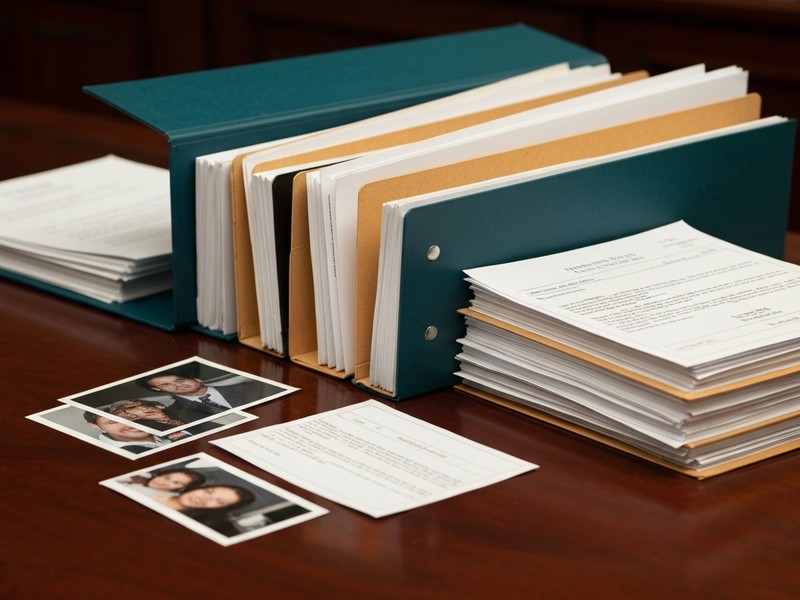
Electronic Logging Device (ELD) Data: Federal FMCSA rules generally require trucks to log driver hours electronically. ELD data shows on-duty time, rest breaks, and potential Hours of Service violations, which can be strong evidence of fatigue.
Hours of Service (HOS) Violations: ELD data can reveal HOS violations, which are often significant evidence in a truck case.
Event Data Recorder (EDR/Black Box): Many trucks have event data recorders that capture speed, braking, and acceleration around a crash. This data can confirm or contradict each side's account.
DPS and Police Reports: Arizona Department of Public Safety and local police crash reports create an official record, often including witness information, scene diagrams, and the officer's observations. Request these soon after the crash.
Dash Cam Footage: Your own dash cam, nearby traffic cameras, or business surveillance footage can provide objective video of what happened.
Truck Maintenance Records: Maintenance failures (worn brakes, bald tires, broken lights) are discoverable. A truck operated with known defects can be strong evidence of negligence.
Driver History: Prior violations, crashes, or DUI convictions may support a claim that the trucking company was negligent in hiring or retaining the driver.
FMCSA Safety Records: A trucking company's federal safety records are publicly available and can show a history of violations.
Witness Statements: Independent witnesses add credibility, and statements taken early preserve details before memories fade.
Dealing with Trucking Company Insurance
Trucking companies carry commercial liability insurance, usually with higher limits than passenger vehicles. Larger policies mean more careful review of every claim.

Common Defense Arguments:
- Shared fault: "You cut off the truck" or "You were speeding too." Under Arizona's pure comparative fault rule, any percentage of fault assigned to you reduces your damages.
- Dispute injury causation: "That pre-existing condition caused your pain, not the accident." This is why medical records predating the accident are crucial.
- Damages disputes: Questioning medical bills, lost wages, or the extent of pain.
- Delays: Long negotiations can create financial pressure.
Steps That Help a Claim:
- Act promptly: The statute of limitations is generally 2 years (A.R.S. § 12-542), and evidence degrades and witnesses forget well before then.
- Document everything: Medical records, photos, repair estimates, lost wage letters from your employer.
- Get an expert valuation: In serious-injury cases, an economist or life care planner can quantify future medical costs and earning loss.
- Know the insurance limits: Available coverage often shapes how a case resolves, especially when damages exceed policy limits.
- Prepare for trial: Cases that are prepared for litigation, including depositions of drivers, dispatchers, and safety managers, are valued on their full evidence.
- Read releases carefully: Early settlement offers usually require a release that ends all future claims. Consider them only once the full extent of your injuries is known.
Role of Underinsured Motorist (UIM) Coverage: If the at-fault party's coverage is not enough, your own UIM coverage may help close the gap. Arizona insurers must offer UM/UIM coverage in writing, but a driver may reject it (A.R.S. § 20-259.01), so check your policy.
Arizona-Specific Truck Accident Laws
Pure Comparative Fault (A.R.S. § 12-2505): You can recover even if you were mostly at fault; your award is reduced by your percentage of fault. If a jury finds you 40% at fault and awards $500,000 total, you receive $300,000. Arizona has also abolished joint and several liability in most cases, so each defendant generally pays its own share of fault, and fault can be allocated to nonparties (A.R.S. § 12-2506).
No Damages Caps (Ariz. Const. art. 2, § 31; art. 18, § 6): Arizona's Constitution provides that no law may limit the amount of damages recoverable for causing the death or injury of any person, and the anti-abrogation clause protects the right of action to recover injury damages. As a result, Arizona has no statutory cap on damages in truck accident cases, including pain and suffering.
Statute of Limitations (A.R.S. § 12-542): You generally have 2 years from the date of injury to file a lawsuit. Wrongful death claims also have a 2-year limit, starting from the date of death.
Government Claims Notice Requirement (A.R.S. § 12-821.01): If a government vehicle or a dangerous road condition contributed to the crash, you must serve a written notice of claim on the public entity within 180 days, including a specific settlement amount, and any lawsuit against that entity generally must be filed within one year (A.R.S. § 12-821). Missing the 180-day notice deadline can permanently bar a claim against a public entity.
FMCSA Regulatory Compliance: Federal trucking regulations (49 CFR Parts 300–399) set standards for truck maintenance, driver qualifications, Hours of Service, and safety. Violations of these rules are often central evidence in truck cases.
Size, Weight, and Load Records: Records of overweight trucks or improperly secured loads can be important evidence of negligence.
Punitive Damages Standard: Arizona allows punitive damages only where clear and convincing evidence shows the defendant acted with an "evil mind," such as conscious disregard of a substantial risk of harm to others (Linthicum v. Nationwide Life Ins. Co., 150 Ariz. 326 (1986)). Whether a truck case meets that standard depends on the facts.
Frequently Asked Questions
Q: How long does an Arizona truck accident claim take to settle?
A: Claims with clear liability and modest injuries can resolve within months. Cases with severe injuries or disputed liability often take longer, and litigation can add a year or more. Timing also depends on reaching maximum medical improvement, so the full value of the claim is known.
Q: Can I recover if I'm partially at fault for the accident?
A: Yes. Under Arizona's pure comparative fault rule, your recovery is reduced by your share of fault rather than barred. If you're 50% at fault, you recover 50% of damages; if you're 80% at fault, you recover 20%.
Q: What if the truck driver was from Mexico?
A: Claims involving cross-border carriers can raise additional insurance and liability questions. These cases can often still be pursued through the carrier's coverage, but they require careful review of who insured the truck and driver.
Q: Is there a damage cap in Arizona?
A: No. Article 2, § 31 of the Arizona Constitution bars any law limiting the damages recoverable for a person's death or injury, so there is no cap on non-economic (pain and suffering) damages in a truck accident case.
Q: What happens if the trucking company's insurance runs out?
A: If the trucking company's policy limit is exhausted, you may be able to pursue the company itself (if it has assets) or claim against your own Underinsured Motorist (UIM) coverage, if you carry it.
Q: Should I accept an early settlement offer?
A: Be cautious. Early offers are often made before the full extent of an injury is known, and accepting one usually means signing a release of all future claims. It's best to understand your medical prognosis and talk with an attorney first.
Get a Free Case Review Today
If you or a loved one was injured in a truck accident on Arizona's I-10, I-17, I-40, or other state highways, Arizona law gives you meaningful options, including pure comparative fault and no cap on damages.
Conduit Law offers free case evaluations for Arizona truck accident victims. Our team will:
- Review your accident facts and medical records
- Explain how claims like yours are generally valued
- Explain your legal options and timeline
- Handle all communication with insurance adjusters
- Prepare your case for settlement or trial
No upfront fees. No retainer. You pay only if we recover. We represent injury victims on a contingency basis, meaning we fund your case and take our fee from the settlement or judgment.
Ready to move forward? Contact Conduit Law for your free case review or call us today. Arizona generally allows 2 years to file, and evidence is easiest to preserve early.
For more information on truck accident claims in other states, see our guides on Colorado truck accident settlements and Kansas truck accident settlements. You can also use our settlement calculator to estimate general injury values.
About the Author
Elliot A. Singer is Managing Attorney at Conduit Law and a former Assistant Attorney General. Elliot Singer has recovered more than $50 million for clients over his career.
Disclaimer: This article is informational and does not constitute legal advice. Settlement ranges are general illustrations and vary widely based on individual facts; they are not Conduit Law results. Readers should consult a qualified Arizona personal injury attorney for advice specific to their case. Laws change and vary by jurisdiction. Conduit Law does not guarantee any specific settlement outcome.

Written by
Elliot Singer, Esq.
Personal injury attorney at Conduit Law, dedicated to helping Colorado accident victims get the compensation they deserve.
Learn more about our team

