Conduit Law - Colorado Personal Injury AttorneysAccident Attorneys
Legal Process & Rights7 min read

CO PI Lawyer Contingency Fees | Conduit Law

Personal injury lawyer Colorado contingency fee explained: Learn how you pay only if you win and get trusted, responsive legal help.

December 28, 2025By Conduit Law
#Personal injury lawyer Colorado contingency fee, Contingency Fee Explained, No Win No Fee Lawyer, Colorado Injury Attorney, Case Costs vs Fees
CO PI Lawyer Contingency Fees | Conduit Law
Table of Contents

Here's the deal: The insurance adjuster knows you're drowning. The wreck wasn't your fault, but now your phone rings off the hook—hospitals, mechanics, your boss. Every call is a demand for money you don't have. And right on cue, the at-fault driver's insurance company swoops in with a quick, pathetic offer, knowing you're desperate.

They want you to feel trapped. They want you to think hiring a real personal injury lawyer in Colorado on a contingency fee basis is a luxury you can't possibly afford. But that's a misconception designed to keep injured parties from pursuing justice. Under Colorado law, personal injury claims are subject to a three-year statute of limitations (C.R.S. § 13-80-101), meaning time is genuinely limited. Additionally, Colorado follows a modified comparative negligence standard under C.R.S. § 13-21-111, which allows recovery even if the injured party is partially at fault—as long as they're not more than 50% responsible. Non-economic damages are capped at $1,500,000 as of 2025. Contingency fee arrangements mean attorneys only get paid if the case succeeds, removing the financial barrier. This arrangement aligns the lawyer's interests with the client's, ensuring aggressive representation without upfront costs to the injured party.

That’s a lie. A calculated, cynical lie.

The contingency fee isn't just a payment plan; it's the key that unlocks the courthouse doors. It's the great equalizer. It means clients pay nothing—zero dollars, ever—unless the firm wins. This arrangement removes the financial barrier that might otherwise prevent injured Coloradans from pursuing justice. Under Colorado law, injured parties have three years from the date of injury to file a personal injury claim (C.R.S. § 13-80-101), but the clock is always running. Colorado follows a modified comparative negligence standard, meaning plaintiffs can recover damages even if partially at fault, provided their negligence doesn't exceed 50% (C.R.S. § 13-21-111). Non-economic damages—compensation for pain, suffering, and emotional distress—are currently capped at $1,500,000 as of 2025. By aligning the attorney's interests with the client's, contingency fees ensure that experienced legal representation remains accessible to those who need it most, regardless of their ability to pay upfront costs.

The Aligned Interest Principle: We Don’t Get Paid Unless You Do

Let's be brutally honest. After a serious accident, the financial stress is suffocating. The injured party is hurt, out of work, and watching a mountain of medical bills grow taller every day. Adding a lawyer's invoice to that chaos feels impossible. This is where the contingency fee model changes everything. Personal injury attorneys in Colorado typically work on contingency, meaning they only collect a fee if the case settles or wins at trial. No recovery means no payment—period. Understanding Colorado's legal framework makes this alignment even clearer. Under C.R.S. § 13-80-101, injured parties have three years from the accident date to file suit. Meanwhile, Colorado's modified comparative negligence rule under C.R.S. § 13-21-111 allows recovery even if the plaintiff bears up to 50% fault. Non-economic damages are capped at $1,500,000 as of 2025. When attorney and client share the same financial outcome, the incentive to maximize compensation becomes crystal clear.

Insurance companies count on that fear. They bet injured claimants will be too overwhelmed to fight back, too intimidated to hire an expert who knows their playbook inside and out. They want settlement seekers to take their first lowball offer and disappear quietly. This strategy exploits time pressure—Colorado's three-year statute of limitations under C.R.S. § 13-80-101 creates urgency that works in insurers' favor when claimants lack proper representation. Additionally, Colorado's modified comparative negligence rule under C.R.S. § 13-21-111 bars recovery for those found more than 50% at fault, giving insurers another lever to undervalue cases. Even when non-economic damages apply—capped at $1,500,000 as of 2025—insurers banking on confusion and fatigue can underpay what cases genuinely warrant. When injured parties understand their legal rights and the stakes involved, that power dynamic shifts entirely.

We exist to shatter that expectation.

A client hands an envelope to a personal injury lawyer, with scales of justice and a 'No Win No Fee' overlay.

The contingency fee is our pact. It transforms the attorney-client relationship into a powerful, unbreakable partnership. It's more than a contract; it's a guarantee. Under this arrangement, the law firm's compensation is directly tied to the client's recovery—meaning no fee is collected unless the case succeeds. This alignment of interests ensures that every strategic decision, from case evaluation through settlement negotiation, prioritizes the client's best outcome. Colorado personal injury claims operate under strict timelines and specific legal frameworks. Claimants have three years from the date of injury to file suit under C.R.S. § 13-80-101. Additionally, Colorado's modified comparative negligence rule under C.R.S. § 13-21-111 allows recovery only if the plaintiff is less than 50% at fault. Non-economic damages are capped at $1,500,000 as of 2025. The contingency model ensures legal representation navigates these complexities without upfront financial burden to the injured party.

Our incentive is 100% aligned with yours. If you don't win, we don't get paid.

It's that simple. The firm doesn't just work for clients; it succeeds with them. This contingency model forces relentless selectivity—only cases the firm believes it can win move forward. Then the fight begins for maximum possible recovery, because the firm's success is directly tied to the client's outcome. The firm fronts all costs and dedicates resources to every case because it genuinely believes in them. This alignment matters especially in Colorado's legal landscape. Clients have a three-year statute of limitations to file personal injury claims under C.R.S. § 13-80-101, but timing isn't the only constraint. Colorado's modified comparative negligence rule under C.R.S. § 13-21-111 means plaintiffs cannot recover if they're found 50% or more at fault. Additionally, non-economic damages are currently capped at $1,500,000 as of 2025. These realities make case selection critical. When the firm's compensation depends entirely on winning and maximizing recovery, every decision reflects genuine confidence in the client's case.

This is your access to justice, regardless of what's in your bank account.

The Mechanics of the Contingency Fee: A Look Inside the Engine Room

Let's pull back the curtain. The phrase "no win, no fee" gets thrown around frequently, but what does that arrangement actually mean for a client's bottom line? Under Colorado's contingency fee model, the attorney only receives payment if the case results in a settlement or verdict. This structure aligns the lawyer's interests with the client's financial outcome. However, understanding the mechanics matters. Colorado law imposes a three-year statute of limitations for personal injury claims under C.R.S. § 13-80-101, meaning time is a critical factor. Additionally, Colorado's modified comparative negligence rule under C.R.S. § 13-21-111 prevents recovery if a plaintiff is found more than 50% at fault. Non-economic damages are capped at $1,500,000 as of 2025. These statutory constraints directly influence case value and, consequently, the contingency arrangement. The fee percentage typically ranges from 25% to 40% of the recovery, depending on case complexity and stage of resolution.

A contingency fee is a pre-agreed percentage of the total money—the gross recovery—secured for the client, whether from a settlement or a jury verdict. The contingency part is the linchpin: the law firm only collects its fee if and when it successfully recovers money for the injured party. This arrangement aligns the attorney's financial incentive with the client's desired outcome. In Colorado, personal injury claims are subject to a three-year statute of limitations under C.R.S. § 13-80-101, making timely legal representation essential. Additionally, Colorado's modified comparative negligence rule under C.R.S. § 13-21-111 allows recovery only if the injured party is less than 50% at fault. Non-economic damages are capped at $1,500,000 as of 2025. Understanding these legal parameters helps clients grasp how contingency fees operate within Colorado's specific regulatory framework and why working with experienced counsel matters.

If the law firm doesn't win the case, the fee is zero. Zilch. Nothing. This isn't a sales gimmick—it's the financial engine that gives everyday people access to justice against billion-dollar corporations. Under Colorado's contingency fee model, attorneys absorb all litigation costs and risk upfront, only collecting a percentage of the settlement or judgment if they prevail. This arrangement levels the playing field for injured plaintiffs who lack resources to hire lawyers on hourly rates. Understanding Colorado's legal framework makes this model even more critical. The state imposes a three-year statute of limitations for personal injury claims under C.R.S. § 13-80-101, meaning plaintiffs must act quickly. Additionally, Colorado's modified comparative negligence rules bar recovery if a plaintiff is more than 50% at fault under C.R.S. § 13-21-111. Non-economic damages are capped at $1,500,000 as of 2025. Contingency fees ensure that financial barriers never prevent injured Coloradans from pursuing legitimate claims.

A lawyer explains 'Paid If You Win' terms while a client signs a legal document.

The Standard Range in Colorado

So, what percentage are we talking about? In Colorado, the industry standard for a personal injury lawyer contingency fee typically falls between 33.3% and 40%. This range reflects the complexity and risk involved in personal injury litigation. Several Colorado-specific factors influence these rates. The state's three-year statute of limitations under C.R.S. § 13-80-101 creates a defined window for filing claims, affecting case urgency and strategy. Additionally, Colorado's modified comparative negligence rule—codified in C.R.S. § 13-21-111—bars recovery if a plaintiff is more than 50% at fault, adding litigation complexity. Non-economic damages are capped at $1,500,000 as of 2025, which may impact settlement valuations. These statutory frameworks mean attorneys must carefully assess case viability, potential liability determinations, and damages ceilings before committing resources. The contingency fee structure aligns attorney incentives with client outcomes while accounting for these unique Colorado legal considerations.

This range isn't arbitrary. It reflects the escalating risk, time, and resources a law firm invests as a case moves forward. Colorado's three-year statute of limitations under C.R.S. § 13-80-101 creates urgency and complexity in claim development. Additionally, Colorado's modified comparative negligence rule—which bars recovery if a plaintiff bears 50% or more fault under C.R.S. § 13-21-111—requires substantial investigative work to establish liability. Cases involving serious injuries demand expert witnesses, medical records analysis, and settlement negotiations. Non-economic damages face a statutory cap of $1,500,000 as of 2025, which influences case valuation strategies. Early-stage cases may justify lower contingency percentages, while cases requiring trial preparation, expert testimony coordination, and complex causation arguments justify higher percentages. This tiered approach ensures law firms adequately compensate for the mounting costs and risk exposure inherent in advancing personal injury claims toward resolution or trial.

  • 33.3% (or one-third) is common for cases that settle before we have to file a formal lawsuit.
  • 40% is standard if we have to take your case into the trenches of litigation and trial, which demands an immense investment of firm resources.

The further we have to push, the more of our own skin we put in the game.

The Written Agreement: Our Ironclad Promise

Every single detail of the fee agreement is spelled out in writing, as required by Colorado Rule of Professional Conduct 1.5. No legalese, no fine print—just a clear, plain-English explanation of the partnership and financial terms. This transparency is especially important given Colorado's three-year statute of limitations for personal injury claims (C.R.S. § 13-80-101), which means timing and strategy directly impact case value. The agreement also addresses how Colorado's modified comparative negligence rule applies—clients cannot recover if found more than 50% at fault (C.R.S. § 13-21-111)—and clarifies the fee structure in light of potential non-economic damages awards, which are capped at $1,500,000 as of 2025. By putting everything in writing upfront, clients understand exactly how their case will be handled, what costs may arise, and how any recovery will be distributed, eliminating surprises and building trust from day one.

This document is our promise to you. It defines the percentage, explains how case expenses are handled, and confirms in black and white that if you don't get paid, neither do we. There are no hidden charges or surprise bills waiting for you. The written fee agreement transparently outlines our contingency arrangement—a structure designed to align our interests with yours from day one. Under Colorado law (C.R.S. § 13-80-101), injured parties have three years from the date of injury to file a personal injury claim, making timely legal representation critical. Additionally, Colorado's modified comparative negligence rule (C.R.S. § 13-21-111) allows recovery even if the injured party bears some fault, provided they're not more than 50% responsible. Non-economic damages, including pain and suffering, are capped at $1,500,000 as of 2025. Our written agreement ensures complete transparency about these legal constraints and how they may affect your case outcome. For a deeper look at how accident lawyer fees work, consult our comprehensive guide on fee structures and client protections.

Total transparency isn't a talking point—it's the foundation of the trust you place in us.

The Truth About Fees vs. Costs: Don’t Let Them Confuse You

Insurance adjusters love to muddy this up. They thrive on confusion. But the distinction between fees and costs is simple—so let's make it crystal clear. Fees are what the attorney charges for legal representation. Costs are the out-of-pocket expenses incurred to build the case—medical records, expert witnesses, court filing fees, and investigative reports. Understanding this difference matters, especially in Colorado personal injury cases where the statute of limitations allows three years from injury to file suit (C.R.S. § 13-80-101). Under Colorado's modified comparative negligence rule, plaintiffs can recover damages only if they're less than 50% at fault (C.R.S. § 13-21-111). Additionally, non-economic damages are capped at $1,500,000 as of 2025. Adjusters often conflate these categories to obscure how settlement funds actually break down, leaving injured parties uncertain about their net recovery. Knowing exactly what constitutes a fee versus a cost prevents misunderstandings and ensures transparency throughout the claims process.

  • Attorney Fees: This is the percentage we earn for our professional services—our expertise, strategy, and the thousands of hours we pour into your case.
  • Case Costs: These are the out-of-pocket expenses we advance to build your case—the hard cash needed to hire experts, file with the court, and get records.

You can't win without both.

We Advance 100% of the Costs—We Bet Our Own Money on You

Here’s the commitment that terrifies insurance companies: We advance 100% of these case costs from our own firm's capital.

Building a powerful case isn't cheap. These are the real-world expenses required to win:

  • Court filing fees
  • Accident reconstruction expert retainers
  • Fees for medical expert testimony
  • Deposition and transcript costs
  • Charges for obtaining medical records

We pay for all of it. The law firm is, quite literally, betting its own money on your case. This practice levels the playing field, neutralizing the insurance company's biggest weapon—their massive war chest. Under Colorado law (C.R.S. § 13-80-101), injured parties have three years from the date of injury to file a claim, creating a defined window of opportunity. Meanwhile, insurance companies exploit their financial advantage, dragging cases out and pressuring claimants into unfavorable settlements. By advancing 100% of costs—investigation, expert witnesses, depositions, and court fees—the law firm eliminates this imbalance. Additionally, Colorado's modified comparative negligence rule (C.R.S. § 13-21-111) allows recovery as long as fault remains below 50%, making strong representation critical. With non-economic damages capped at $1,500,000 as of 2025, every strategic decision matters. This contingency model ensures that financial resources never become a barrier to pursuing maximum compensation.

And here's the most important part: If the case is lost for any reason, the client owes nothing—not a single dollar in attorney fees, and nothing for the costs we advanced. We absorb the entire loss. That's not just a promise; that's our skin in the game. Under Colorado law (C.R.S. § 13-80-101), personal injury claims must be filed within three years, creating real deadlines that demand experienced representation from day one. Additionally, Colorado's modified comparative negligence standard allows recovery as long as fault doesn't exceed 50% (C.R.S. § 13-21-111). Non-economic damages are capped at $1,500,000 as of 2025. This contingency model—where the firm carries 100% of financial risk—ensures our interests align perfectly with the client's. We only succeed when clients win meaningful compensation. That alignment of incentives distinguishes true client advocacy from transactional legal services.

The Bottom Line: Calculating Your Net Recovery

Let’s talk about the only number that actually matters: your Net Recovery.

The big, splashy settlement figure you hear about is the Gross Settlement. That's the starting line, not the finish. Your Net Recovery is the final, take-home amount that lands in your bank account—the money used to rebuild your life after injury. Several factors reduce gross recovery to net recovery. Attorney fees, court costs, and medical liens all come out first. Colorado's modified comparative negligence rule under C.R.S. § 13-21-111 also affects recovery: if the injured party is found more than 50% at fault, they cannot recover anything. Non-economic damages such as pain and suffering are capped at $1,500,000 as of 2025. Time matters too. Colorado's three-year statute of limitations under C.R.S. § 13-80-101 means claims must be filed within that window or be barred forever. Understanding these deductions and legal limits ensures realistic expectations about what settlement money actually reaches the injured person's pocket.

Here's the formula. No smoke, no mirrors.

Net Recovery = Gross Settlement - Attorney Fees - Costs - Medical Liens

An average lawyer focuses on the settlement or verdict number itself. A great lawyer is obsessed with maximizing what the client actually receives after all costs and fees are deducted. The net recovery is what matters most. Colorado personal injury law requires navigating complex calculations and strict deadlines. Under C.R.S. § 13-80-101, there is a three-year statute of limitations to file a claim. Additionally, Colorado's modified comparative negligence rule under C.R.S. § 13-21-111 bars recovery if the injured party is found more than 50% at fault. Non-economic damages are capped at $1,500,000 as of 2025, which significantly impacts total recovery potential in serious injury cases. Expert personal injury attorneys understand how to manage every variable in this equation: minimizing litigation costs, negotiating medical liens, optimizing damage calculations, and structuring settlements for tax efficiency. The difference between an average result and an exceptional one often lies in meticulous attention to these financial details and strict compliance with Colorado's procedural requirements.

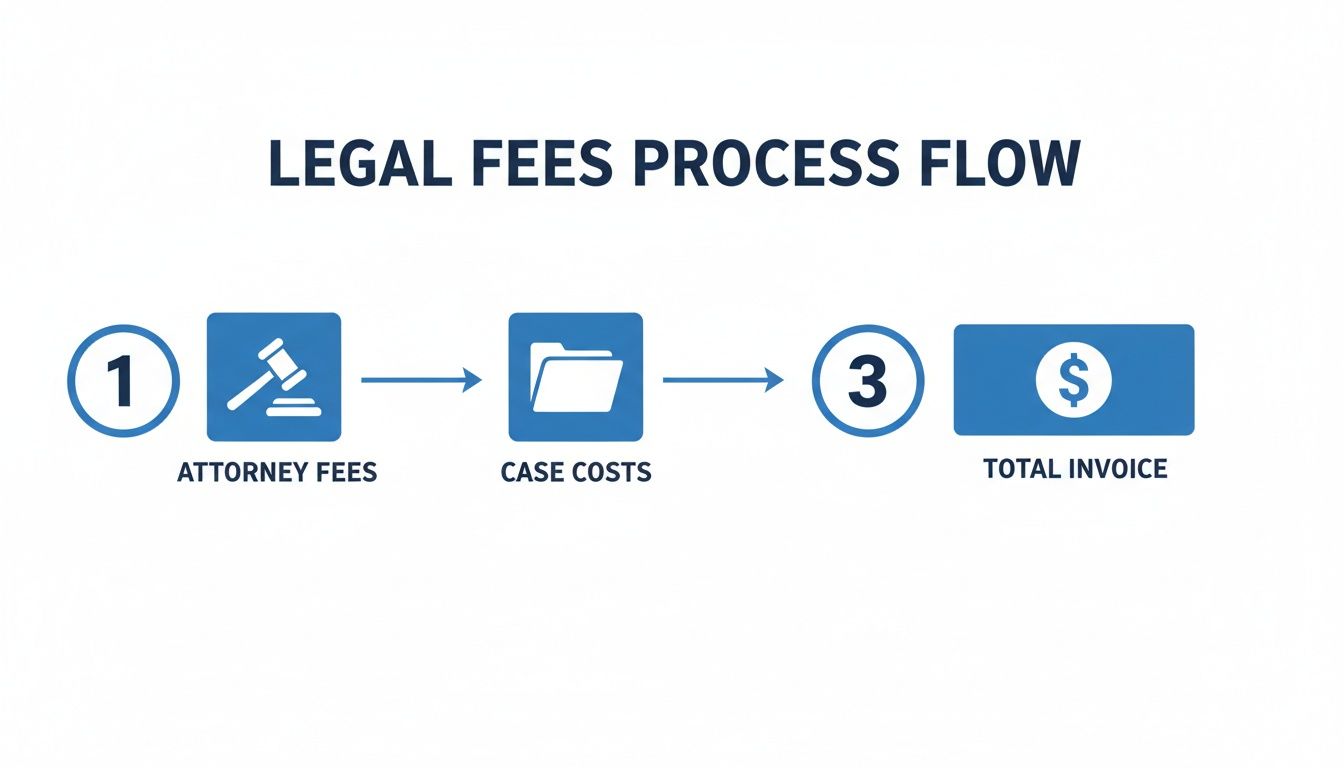
Flowchart illustrating the legal fees process, including attorney fees, case costs, and total invoice.

The Secret Weapon: Aggressive Lien Negotiation

The third deduction—Medical Liens—is where many law firms drop the ball, costing their clients a fortune. A lien is a legal claim a hospital or health insurer places on your settlement to get reimbursed for your medical care. In Colorado, these liens can consume a significant portion of recovery, particularly in cases involving substantial medical expenses. Under Colorado's modified comparative negligence standard (C.R.S. § 13-21-111), plaintiffs can recover damages even if they're up to 50% at fault, but medical liens still apply to whatever settlement is awarded. With Colorado's three-year statute of limitations (C.R.S. § 13-80-101) governing most personal injury claims, the window to resolve these disputes is limited. Non-economic damages are capped at $1,500,000 as of 2025, meaning lien negotiations become even more critical. Aggressive negotiation with healthcare providers and insurers can substantially reduce lien amounts, preserving more money for the injured party.

Our job doesn't stop when a settlement offer arrives. That's when the second fight begins. We go on the attack, challenging every medical lien filed against the recovery. Colorado law provides a three-year statute of limitations under C.R.S. § 13-80-101 for most personal injury claims, but liens can complicate the settlement process and reduce what injured parties actually receive. Additionally, Colorado's modified comparative negligence rule under C.R.S. § 13-21-111 bars recovery if a claimant is found more than 50% at fault, making aggressive lien negotiation even more critical to maximize net recovery. With non-economic damages capped at $1,500,000 as of 2025, every dollar of medical lien reduction becomes increasingly important. Skilled negotiation can eliminate inflated lien claims, challenge duplicate billing, and dispute charges that exceed reasonable market rates. The difference between accepting the first lien demand and strategically negotiating can mean tens of thousands of dollars staying in the client's pocket rather than going to healthcare providers.

We are relentless negotiators who understand exactly why medical lien negotiation matters in Colorado personal injury cases. Under C.R.S. § 13-80-101, clients have three years to pursue claims, but medical liens can quickly erode settlement value if left unmanaged. Every dollar negotiated down on a lien translates directly into the client's pocket—money that might otherwise disappear to healthcare providers. This aggressive approach to lien reduction represents one of the most powerful ways to maximize final recovery. Colorado's modified comparative negligence rule (C.R.S. § 13-21-111) sets a 50% fault threshold, meaning settlement calculations are already complex. Add medical liens into the equation, and the math becomes even more challenging. Non-economic damages, now capped at $1,500,000 as of 2025, must also be carefully protected. Strategic lien negotiation ensures that hard-won settlements genuinely benefit injured parties rather than funding provider claims.

Insurance companies want you to take their first garbage offer and disappear.

The Risk-Free First Step: Your Path to Clarity

The entire process begins with a simple conversation—no cost, no risk, no strings attached. A free consultation is about giving injured parties the clarity and confidence needed to move forward with a personal injury claim. During this initial discussion, an attorney can explain Colorado's critical deadlines, including the three-year statute of limitations for most personal injury cases under C.R.S. § 13-80-101. Understanding this timeline is essential, as missing the deadline eliminates the right to pursue compensation entirely. The consultation also covers how Colorado's modified comparative negligence rule applies—a plaintiff can recover damages even if partially at fault, provided their negligence doesn't exceed fifty percent under C.R.S. § 13-21-111. Additionally, prospective clients learn how damages are calculated in their jurisdiction, including that non-economic damages are capped at $1,500,000 as of 2025. This foundation of legal knowledge empowers individuals to make informed decisions about their case.

We’ll break down your rights and explain how the contingency fee applies to all the compensation you’re owed, including:

  • Medical bills (past and future)
  • Lost wages and diminished earning capacity
  • Pain and suffering

Understanding how pain and suffering settlement amounts are calculated is crucial, as this is often the largest component of personal injury recovery. Pain and suffering falls under non-economic damages, which in Colorado are capped at $1,500,000 as of 2025. However, several factors influence the actual settlement value, including injury severity, medical evidence, and impact on quality of life. Colorado's modified comparative negligence rule under C.R.S. § 13-21-111 also affects recovery—if an injured party is found more than 50% at fault, they cannot recover damages at all. Additionally, the three-year statute of limitations under C.R.S. § 13-80-101 creates urgency; claims must be filed within this window or be forever barred. Maximizing pain and suffering awards requires comprehensive documentation, expert medical testimony, and skilled negotiation. An experienced personal injury attorney understands these nuances and works strategically to ensure fair compensation within Colorado's legal framework.

You’re already facing enough uncertainty. Wondering if you can afford an expert legal advocate shouldn't be one of your worries.


The insurance company has a team of lawyers working to protect their interests, not yours. That's why having experienced legal representation matters. Colorado law gives injured parties three years from the date of injury to file a personal injury lawsuit under C.R.S. § 13-80-101, but evidence can disappear and memories fade quickly. Understanding Colorado's modified comparative negligence rule is equally critical—if a plaintiff is found more than 50% at fault under C.R.S. § 13-21-111, recovery is barred entirely. Additionally, non-economic damages such as pain and suffering are capped at $1,500,000 as of 2025, making strategic case valuation essential. When ready for a genuine conversation about what happened and what comes next, professional guidance can clarify the path forward. No pressure. No nonsense. Just clear answers about the legal options available.

Schedule Your Free, No-Obligation Case Review Now


Disclaimer: This blog post is for informational purposes only and does not constitute legal advice. The information provided is not a substitute for consulting with a qualified attorney. The results mentioned do not guarantee a similar outcome in your case. Contacting us does not create an attorney-client relationship.

CL

Written by

Conduit Law

Personal injury attorney at Conduit Law, dedicated to helping Colorado accident victims get the compensation they deserve.

Learn more about our team

Explore Our Practice Areas

We handle 24+ types of personal injury cases throughout Colorado.

Need Legal Assistance?

If you have been injured, our experienced personal injury attorneys are here to help you get the compensation you deserve.