Table of Contents
When a drunk driver slams into you, it's not just an accident. It's a violent act—a conscious decision that shatters your world and leaves you with two entirely separate battles to fight. Beyond the immediate physical trauma, victims face complex legal terrain, including Colorado's modified comparative negligence system under C.R.S. § 13-21-111, which allows recovery even if the injured party is partially at fault, provided their negligence doesn't exceed 50%. Understanding the damages available is equally critical. Non-economic damages—covering pain, suffering, and emotional distress—are capped at $1,500,000 as of 2025. Additionally, Colorado law imposes a strict three-year statute of limitations under C.R.S. § 13-80-101, meaning claims must be filed within this window or be barred forever. These statutory frameworks shape every aspect of recovery, making informed legal guidance essential for protecting your rights and securing the compensation you deserve.
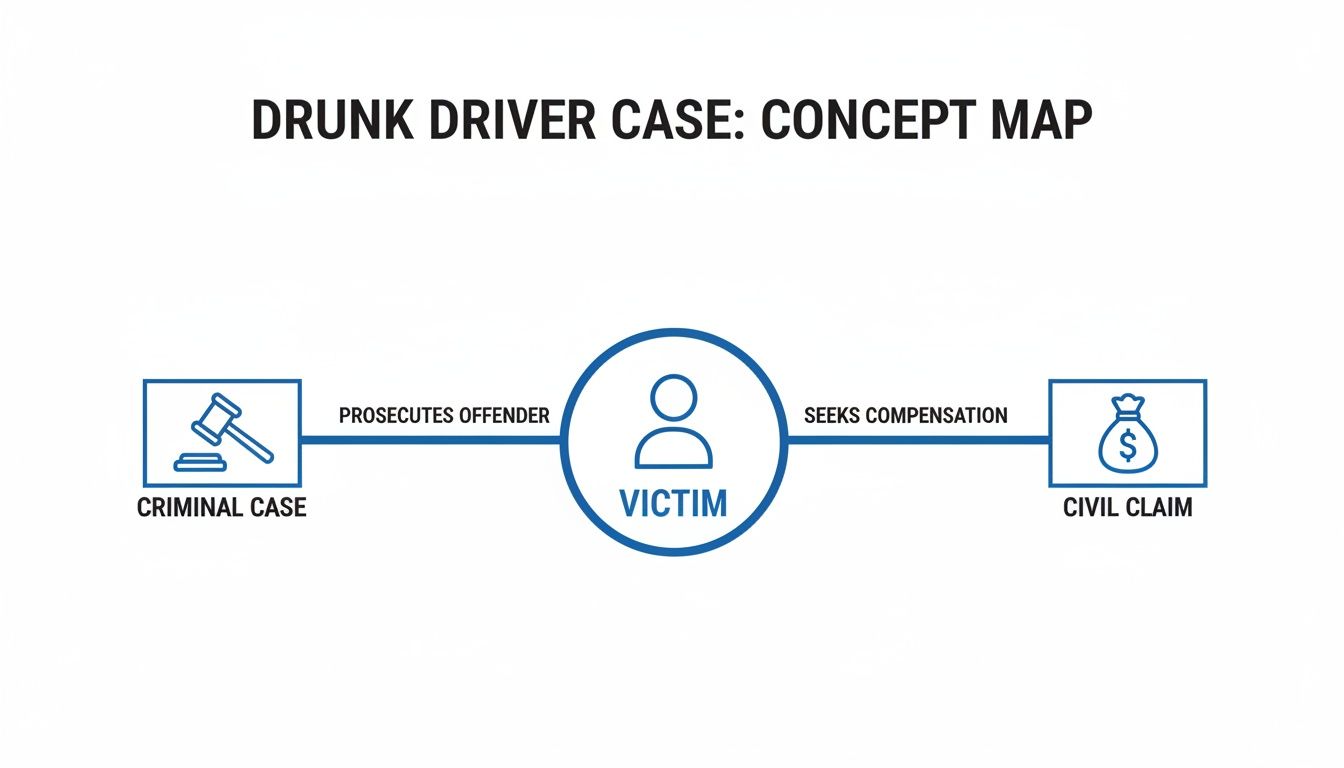
There's the criminal case: the State of Colorado versus the drunk driver. That's the District Attorney's fight. They'll handle the jail time, the probation, the public punishment. That part is out of your hands. The criminal system exists to protect society and punish wrongdoing—but it won't compensate injured victims for medical bills, lost wages, or pain and suffering. That's where civil litigation enters the picture. Under Colorado law, injured parties have three years from the date of injury to file a personal injury lawsuit (C.R.S. § 13-80-101). The civil case is separate and independent, focused entirely on recovery. Colorado follows modified comparative negligence rules, meaning a plaintiff can recover damages even if partially at fault—as long as fault doesn't exceed 50% (C.R.S. § 13-21-111). Non-economic damages, including pain and suffering, are capped at $1,500,000 as of 2025. Understanding these distinctions ensures victims pursue all available remedies.
Then there's your fight. This is the civil case—your one and only path to financial justice. This isn't about a simple mistake. It's about holding someone accountable for a willful, reckless choice that injured you, upended your family, and buried you in bills. A hit by drunk driver settlement in Colorado is where the resources to rebuild come from. It's how accountability gets enforced. Under Colorado law (C.R.S. § 13-80-101), there's a three-year statute of limitations to file a personal injury claim, so timing matters. Colorado follows modified comparative negligence rules (C.R.S. § 13-21-111), meaning a defendant can be held liable as long as they're not more than 50% at fault. Non-economic damages—pain, suffering, emotional distress—are capped at $1,500,000 as of 2025. The civil case is where damages get calculated, where evidence gets presented, and where negligent parties face real financial consequences for the harm they've caused.

While the criminal court deals out punishment, your civil claim is what secures the financial recovery you need. DUI settlements are different—they're complex because they fuse together three distinct components. First, Colorado's modified comparative negligence rule under C.R.S. § 13-21-111 means that even if the injured party bears some responsibility, recovery is still possible as long as fault doesn't exceed 50%. Second, understanding the damages available matters significantly. Non-economic damages—covering pain, suffering, and emotional distress—are capped at $1,500,000 as of 2025. Third, timing is critical: Colorado's three-year statute of limitations under C.R.S. § 13-80-101 governs how long an injured party has to file a civil lawsuit. Miss that deadline, and the claim vanishes regardless of merit. These overlapping legal frameworks transform DUI injury claims into intricate matters requiring careful navigation of statutes, damage caps, and liability thresholds.
- Compensatory Damages: Money to cover every single loss you’ve suffered—economic and emotional.
- Punitive Damages: Extra money awarded by a court specifically to punish the drunk driver.
- Third-Party Liability: The hunt for anyone else responsible, like the bar that overserved the driver.
This is how responsible parties answer for the chaos they caused—in the only language they truly understand: the legal system and financial accountability. Colorado law holds negligent defendants liable through personal injury claims, provided the injured party acts within the three-year statute of limitations under C.R.S. § 13-80-101. Colorado's modified comparative negligence rule, established in C.R.S. § 13-21-111, allows recovery even if the injured party is partially at fault, as long as their negligence doesn't exceed 50 percent. Damages awarded can be substantial, with non-economic damages—covering pain, suffering, and loss of enjoyment of life—capped at $1,500,000 as of 2025. By pursuing a claim, injured parties compel defendants to face consequences, deter future negligence, and secure compensation for medical expenses, lost wages, and life-altering harm. The legal process ensures accountability where it matters most.
Drunk driver cases follow Colorado's standard settlement framework outlined in the state's comparative negligence laws, but they typically result in higher damage awards due to the egregious nature of impaired driving. Under Colorado Revised Statutes § 13-21-111, the state applies modified comparative negligence, meaning an injured party can recover damages only if they are found less than 50% at fault for the accident. Importantly, claims must be filed within three years of the injury date, as established by C.R.S. § 13-80-101. While economic damages like medical expenses and lost wages have no statutory cap, non-economic damages—including pain and suffering—are capped at $1,500,000 as of 2025. These legal parameters significantly influence settlement valuations in drunk driving cases, where juries often view defendant conduct as particularly reckless and award compensation accordingly.
The Foundation of Your Recovery: Compensatory Damages
Before building an aggressive legal strategy, the foundation of any personal injury claim must be carefully constructed. That foundation rests on compensatory damages—the legal remedy designed to restore an injured party to their pre-injury condition. Under Colorado law, compensatory damages encompass both economic losses like medical bills and lost wages, and non-economic damages such as pain and suffering, which are now capped at $1,500,000 as of 2025. Understanding these damages is critical because Colorado's modified comparative negligence rule, codified in C.R.S. § 13-21-111, permits recovery only if the plaintiff is less than 50% at fault. Additionally, claims must be filed within three years under C.R.S. § 13-80-101, making timely action essential. A strong damages foundation demonstrates not only what was lost, but also establishes the roadmap for recovery and determines the realistic value of the claim before litigation intensifies.
Want a quick estimate?
Use our free settlement calculator to see what your case might be worth in 60 seconds—no email required.
Think of these as the direct, dollar-for-dollar reimbursement for everything the drunk driver's decision cost you. It's the baseline accounting of your losses before we even start talking about punishment. Compensatory damages represent the foundation of any recovery under Colorado law, and understanding how they work is critical to maximizing a claim's value. Colorado recognizes two powerful categories of compensatory damages. Economic damages cover tangible, calculable losses: medical bills, lost wages, vehicle repairs, and rehabilitation costs. Non-economic damages address intangible harm like pain and suffering, emotional distress, and loss of enjoyment of life—capped at $1,500,000 as of 2025 under Colorado law. Recovery must be filed within three years under C.R.S. § 13-80-101. Additionally, Colorado's modified comparative negligence rule under C.R.S. § 13-21-111 allows recovery even if the injured party is partially at fault, provided their negligence doesn't exceed 50%. This framework ensures fair compensation while maintaining strict timelines and fault thresholds.

Economic Damages: The Cold, Hard Math
First, the economic damages—everything with a receipt, a bill, or a pay stub attached. It's the math of financial losses, leaving very little room for an insurance company to argue. Medical bills, lost wages, property damage, rehabilitation costs, and future medical care all fall into this category. Unlike subjective claims, economic damages are documented, quantifiable, and verifiable. Under Colorado law, claims must be filed within three years of injury (C.R.S. § 13-80-101), making timely documentation critical. These concrete expenses form the foundation of any personal injury claim and typically carry significant weight in settlement negotiations. While Colorado's modified comparative negligence rule allows recovery even if a plaintiff bears up to 50% fault (C.R.S. § 13-21-111), insurance companies will scrutinize every dollar claimed. Economic damages also differ from non-economic damages, which are capped at $1,500,000 as of 2025. Having organized receipts, invoices, and wage statements transforms economic damages into an almost bulletproof component of your claim.
We demand full compensation for:
- All Medical Bills: Not just the ER visit. This covers surgeries, physical therapy, medication, and specialists—now and for the rest of your life.
- Lost Wages: Every shift you missed, every hour of income you lost while recovering—that’s on them.
- Loss of Future Earning Capacity: If your injuries are permanent and you can’t return to your career, we bring in experts to calculate that lifetime loss down to the penny.
It's vital to account for all future costs when calculating economic damages in a personal injury claim. A deeper understanding of the long-term effects of concussions, for instance, can dramatically change the compensation needed for future care, including medical treatment, rehabilitation, and lost earning capacity. Colorado law recognizes this reality, allowing claimants three years from the date of injury to file a lawsuit under C.R.S. § 13-80-101. However, it's important to note that Colorado follows a modified comparative negligence standard under C.R.S. § 13-21-111, meaning a claimant cannot recover damages if found more than 50% at fault. Additionally, non-economic damages—such as pain and suffering—are capped at $1,500,000 as of 2025. Properly documenting future medical needs, therapy costs, and income loss ensures that settlements and judgments reflect the true long-term financial impact of serious injuries.
Non-Economic Damages: The Human Toll
Next, we quantify the most significant part of suffering—the non-economic damages. This isn't about medical bills or lost wages; it's about the human cost that financial statements cannot capture. The pain that wakes someone at night, the trauma that replays in their mind, the life that was stolen from them. These damages address physical suffering, emotional distress, loss of enjoyment of life, and permanent disfigurement or disability. Under Colorado law, non-economic damages are capped at $1,500,000 as of 2025, establishing the maximum recovery for these intangible harms. However, timing matters critically—Colorado's 3-year statute of limitations (C.R.S. § 13-80-101) means claims must be filed within that window. Additionally, Colorado's modified comparative negligence rule (C.R.S. § 13-21-111) permits recovery only if the injured party is less than 50% at fault. Properly documenting and presenting non-economic damages requires careful attention to medical records, testimony, and evidence of life's disruption.
We fight to put a number on your physical pain, your emotional distress, your anxiety and PTSD, and the simple loss of being able to enjoy life as it once was. These non-economic damages represent the human toll of injury—losses that extend far beyond medical bills and lost wages. Under Colorado law (C.R.S. § 13-21-111), recoverable non-economic damages are capped at $1,500,000 as of 2025, meaning every dollar of that cap must be justified by the severity of suffering endured. This is where a settlement truly reflects the gravity of the experience. Colorado's three-year statute of limitations (C.R.S. § 13-80-101) underscores the urgency of pursuing these claims promptly. Additionally, Colorado's modified comparative negligence rule allows recovery even if the injured party bears up to 50% fault, provided the defendant bears greater responsibility. Proper valuation of non-economic damages ensures the settlement adequately compensates for genuine, lasting harm.
When the Crash is Fatal: A Wrongful Death Attorney Fights for Your Future
For families facing the ultimate tragedy, wrongful death claims represent a critical legal pathway to recovery and accountability. Under Colorado law (C.R.S. § 13-80-101), families have three years from the date of death to file a wrongful death claim. These cases address damages far beyond the immediate financial loss—they encompass the immense void left behind, including lost companionship, guidance, and support the deceased would have provided. Colorado recognizes non-economic damages in wrongful death cases, with non-economic damages capped at $1,500,000 as of 2025. It's important to note that Colorado applies modified comparative negligence rules (C.R.S. § 13-21-111), meaning a claim can proceed even if the deceased is found partially at fault, provided their negligence does not exceed 50%. This framework ensures that families can pursue justice and fair compensation even in complex cases where liability is shared.
A wrongful death settlement distribution in Colorado is designed to provide for the family's future by addressing both immediate and long-term needs. It covers funeral expenses, the loss of financial support, and—most importantly—the immeasurable grief, sorrow, and loss of companionship that survivors endure. Under Colorado law, non-economic damages in wrongful death cases are capped at $1,500,000 as of 2025, reflecting the state's recognition of these profound losses. It's about securing a future that has been irrevocably broken by someone else's recklessness. Importantly, Colorado's modified comparative negligence statute (C.R.S. § 13-21-111) allows recovery even if the deceased was partially at fault, provided their negligence did not exceed 50%. Families pursuing such claims should be aware of Colorado's three-year statute of limitations (C.R.S. § 13-80-101), which establishes the deadline for filing wrongful death lawsuits. Understanding these legal parameters is essential for protecting a family's right to compensation.
The Insurance Company’s Nightmare: Punishing the Driver with Punitive Damages
Here's the part the insurance company doesn't want you to know. In Colorado, a drunk driving crash isn't just negligence—the law calls it "willful and wanton conduct." This critical distinction opens the door to punitive damages, which exist specifically to punish wrongdoers and deter reckless behavior. Under Colorado's modified comparative negligence rule (C.R.S. § 13-21-111), an injured party can recover damages even if partially at fault, as long as their negligence doesn't exceed 50 percent. However, when a drunk driver causes injury, courts may award punitive damages beyond compensatory recovery. Non-economic damages for pain and suffering are capped at $1,500,000 as of 2025, but punitive damages operate under different rules. Importantly, Colorado's 3-year statute of limitations (C.R.S. § 13-80-101) applies to personal injury claims, giving victims a limited window to pursue legal action. Insurance carriers understand that willful and wanton conduct claims dramatically increase exposure, making drunk driving cases substantially different from ordinary negligence disputes.
That legal phrase is everything. It's the key that unlocks a weapon that can completely transform a personal injury case. That weapon is a claim for punitive damages, explicitly authorized under C.R.S. § 13-21-102. Unlike compensatory damages designed to make an injured party whole, punitive damages serve a different purpose: they punish defendants for egregious conduct and deter similar behavior in the future. Colorado law recognizes that certain actions warrant financial punishment beyond mere compensation. Non-economic damages in Colorado are currently capped at $1,500,000 as of 2025, but punitive damages operate under separate rules. To succeed, plaintiffs must file within Colorado's three-year statute of limitations under C.R.S. § 13-80-101. Additionally, Colorado's modified comparative negligence standard under C.R.S. § 13-21-111 requires that a defendant bear at least 50% of the fault before punitive damages become available. When these elements align, punitive damages can fundamentally reshape settlement negotiations and trial outcomes, making them invaluable in cases involving willful or reckless misconduct.
Let's be crystal clear—punitive damages are not for medical bills or pain and suffering. They have one purpose: to punish the drunk driver for their outrageous behavior and make an example of them. This distinction is critical because punitive damages operate separately from compensatory awards under Colorado's modified comparative negligence framework (C.R.S. § 13-21-111), which allows recovery even if the victim is partially at fault, provided they are not more than 50% responsible. Colorado law caps non-economic damages at $1,500,000 as of 2025, but punitive damages exist outside this limitation—making them the key to substantially higher settlements for drunk driving victims. Insurance companies dread punitive damages because they signal judicial disapproval of egregious conduct. Importantly, victims have three years from the injury date to file suit under Colorado's statute of limitations (C.R.S. § 13-80-101), during which aggressive legal strategy can leverage the threat of punitive liability to maximize settlement value.

The Procedural Trick That Requires an Expert
You can't just ask for punitive damages from the start. First, a lawsuit must be filed within Colorado's three-year statute of limitations under C.R.S. § 13-80-101. Then, a special motion requesting court permission to add the punitive damages claim must be filed separately. It's a specific procedural hoop that requires legal precision and strategic timing. Additionally, Colorado's modified comparative negligence rule under C.R.S. § 13-21-111 means a plaintiff cannot recover if found more than 50% at fault—a threshold that affects punitive damages eligibility. Beyond that, non-economic damages are capped at $1,500,000 as of 2025, which can influence the overall damage strategy. These layered requirements demand expertise in navigating Colorado's unique procedural landscape. Missing deadlines or filing procedural motions incorrectly can jeopardize an entire punitive damages claim, making experienced legal representation essential for maximizing recovery opportunities.
Getting this right is non-negotiable. The leverage it creates against the insurance company is absolutely massive, often forcing a high-value settlement just to avoid the risk of a jury's wrath. Under Colorado Revised Statutes § 13-80-101, plaintiffs have three years from the date of injury to file a personal injury claim, a deadline that concentrates settlement pressure as trial approaches. Insurance adjusters understand that juries in Colorado operate under modified comparative negligence rules (C.R.S. § 13-21-111), meaning they can still award damages even if a plaintiff shares up to 50% of fault. They also recognize that non-economic damages—pain, suffering, and emotional distress—now cap at $1,500,000 as of 2025, but that ceiling still represents substantial exposure. When liability is well-documented and damages are clearly quantifiable, insurers face an unacceptable risk equation: proceed to trial or settle decisively. This procedural reality transforms how negotiations unfold.
Why Punitive Damages Terrify Insurance Companies
Insurance adjusters live by spreadsheets and predictable formulas. Punitive damages obliterate that methodology entirely. Unlike compensatory awards—which face caps like the $1,500,000 non-economic damages limit under Colorado law as of 2025—punitive damages operate outside traditional calculation models. Adjusters cannot quantify what a jury, genuinely disgusted by egregious conduct like drunk driving, might decide to award as punishment. This unpredictability keeps insurers awake at night. Under Colorado's modified comparative negligence standard (C.R.S. § 13-21-111), plaintiffs can still recover even if partially at fault, provided they're not more than 50% responsible. Combined with the three-year statute of limitations under C.R.S. § 13-80-101, which provides a reasonable window for claims, juries possess considerable discretion in punitive awards. Spreadsheets cannot predict jury outrage or the moral judgments that drive extraordinary verdicts beyond normal damage calculations.
That risk—that fear of a massive, runaway jury verdict—is the single most powerful tool available to force significantly higher settlements. It makes insurance companies abandon their usual lowball negotiation tactics immediately. Under Colorado law, plaintiffs have three years from the date of injury to file suit (C.R.S. § 13-80-101), creating a genuine deadline pressure that insurers cannot ignore. Additionally, Colorado's modified comparative negligence standard allows recovery even if a plaintiff is found up to 50% at fault (C.R.S. § 13-21-111), expanding potential liability exposure. While non-economic damages are capped at $1,500,000 as of 2025, the possibility of substantial punitive damages in cases involving egregious conduct remains uncapped and unpredictable. This combination of strict statutory deadlines, broad liability standards, and potentially unlimited punitive exposure transforms settlement negotiations. Insurance adjusters recognize that trial represents genuine financial catastrophe, motivating them to settle rather than gamble with a jury.
This is especially true when a crash happens on a holiday. As guides on handling a New Year's Eve drunk driving accident explain, the context of the driver's choices can seriously inflame a jury. The deliberate decision to drive impaired during festivities—when safer alternatives are readily available—demonstrates a reckless disregard for public safety that juries find deeply offensive. Insurance companies understand this vulnerability. Under Colorado's modified comparative negligence standard (C.R.S. § 13-21-111), plaintiffs can recover damages even if 49% at fault, meaning juries focus squarely on defendant culpability. Combined with non-economic damages capped at $1,500,000 as of 2025, and a three-year statute of limitations (C.R.S. § 13-80-101) to file suit, insurers face substantial exposure when holiday impairment is involved. Skilled counsel ensures the insurance company confronts this financial risk from the initial demand, positioning the case for maximum leverage in settlement negotiations or trial.
The Secret Time Bomb: Finding Who Poured the Drinks
There's a ticking clock in every personal injury case that most people never hear about until it's too late. Under Colorado law, victims have exactly three years from the date of injury to file a lawsuit—that's the statute of limitations outlined in C.R.S. § 13-80-101. Missing this deadline means losing the right to pursue compensation entirely, regardless of how strong the case may be. But timing isn't the only critical factor. Colorado's modified comparative negligence rule (C.R.S. § 13-21-111) allows recovery only if the injured party is less than 50% at fault. This means identifying every responsible party matters tremendously. Additionally, non-economic damages like pain and suffering are capped at $1,500,000 as of 2025. Understanding these legal boundaries early can be the difference between securing full accountability and watching responsible parties escape liability. The sooner an investigation begins, the better the chance of preserving evidence and building a comprehensive case.
This is Colorado's Dram Shop Act.
If a bar, restaurant, or liquor store served a "visibly intoxicated" person who then got behind the wheel and crashed into an innocent driver, that business can be held financially liable for resulting injuries. Under Colorado law, establishments have a legal duty to refuse service to patrons showing clear signs of intoxication—and when they choose profit over safety, the law demands accountability. Colorado's modified comparative negligence rule, outlined in C.R.S. § 13-21-111, allows injured parties to recover damages even if partially at fault, provided their negligence doesn't exceed fifty percent. This creates a powerful incentive for businesses to enforce responsible service policies. Importantly, claims against alcohol vendors must be filed within three years of the incident, per C.R.S. § 13-80-101. Non-economic damages in Colorado are currently capped at $1,500,000 as of 2025. Understanding these legal frameworks is essential for victims seeking compensation from negligent establishments that served dangerously intoxicated drivers.

The One-Year Deadline You Cannot Miss
Here's the time bomb: governmental entities operate under an unforgiving one-year statute of limitations to file this specific claim. While standard personal injury claims against private parties allow three years under C.R.S. § 13-80-101, claims against Colorado government agencies must be filed within twelve months. That single year represents a critical deadline that cannot be extended or overlooked. Beyond the compressed timeline, these claims face additional complexities. Colorado's modified comparative negligence rule under C.R.S. § 13-21-111 establishes a 50% fault threshold—meaning plaintiffs cannot recover if they share equal or greater responsibility. Furthermore, non-economic damages in governmental liability cases are capped at $1,500,000 as of 2025, potentially limiting compensation for pain, suffering, and emotional distress. The combination of abbreviated filing windows, comparative negligence bars, and damage caps makes governmental injury claims distinctly different from standard personal injury litigation.
Miss this deadline by one day, and that entire claim against the bar vanishes forever. Under Colorado law (C.R.S. § 13-80-101), a three-year statute of limitations governs most personal injury cases, but insurance companies know this window exists—and they exploit it. They will drag their feet and delay, hoping claimants run out the clock without even realizing it. It's a classic tactic, and it works far too often. Beyond the filing deadline itself, claimants face additional complexities: Colorado's modified comparative negligence rule (C.R.S. § 13-21-111) bars recovery if a plaintiff is more than 50% at fault, and non-economic damages are capped at $1,500,000 as of 2025. Each month of delay brings the deadline closer. Insurance adjusters understand that time pressure weakens negotiating positions. Understanding these critical timelines and statutory limits is essential to protecting claims before opportunities disappear entirely.
While Colorado's general statute of limitations for personal injury claims is three years under C.R.S. § 13-80-101, the Dram Shop rule operates under a distinctly shorter and more punishing one-year deadline. This compressed timeframe applies to claims against alcohol vendors who serve patrons who subsequently cause injury or death. Unlike standard personal injury cases, there is virtually no room for delay. Beyond this critical one-year window, claims are permanently barred, regardless of merit. Colorado's modified comparative negligence system, governed by C.R.S. § 13-21-111, allows recovery only if the claimant is less than 50% at fault. Additionally, non-economic damages are capped at $1,500,000 as of 2025. These restrictions combine to create a uniquely challenging legal landscape. Given the Dram Shop's abbreviated deadline, swift investigation and filing are essential to preserve the right to recover damages before the one-year clock expires.
Finding the Third Party
We don’t wait. We immediately send preservation letters and subpoenas to:
- Demand credit card receipts and bar tabs.
- Depose servers and bartenders.
- Secure security camera footage before it’s erased.
Insurance companies will drag their feet and delay, hoping claimants run out the clock without realizing it. This isn't just another angle—it's a parallel fight that can substantially increase the resources available for recovery. Under Colorado Revised Statutes § 13-80-101, there's a three-year statute of limitations for personal injury claims, but insurers often count on claimants missing critical deadlines or growing impatient during prolonged negotiations. Third-party recovery efforts create additional leverage and funding sources that strengthen a case's overall position. Colorado's modified comparative negligence rule, codified in C.R.S. § 13-21-111, allows recovery even if a claimant bears up to 50% fault—another reason insurers delay, hoping to muddy liability waters. Non-economic damages are capped at $1,500,000 as of 2025, making strategic third-party claims essential for maximizing available compensation. Thorough investigation and aggressive pursuit of all responsible parties ensure no opportunity for recovery goes unexplored.
The Knockout Punch: Leveraging the Criminal Conviction
Let's clear this up: the criminal DUI case and the civil claim operate in completely separate legal worlds. The District Attorney's office prosecutes criminal charges against the driver, while a personal injury claim focuses on financial recovery for the injured party. Understanding this distinction is crucial because success in one arena doesn't automatically translate to the other. Under Colorado law, injured parties have three years from the date of injury to file a civil lawsuit (C.R.S. § 13-80-101). Additionally, Colorado follows a modified comparative negligence standard, meaning an injured party can recover damages as long as their fault doesn't exceed fifty percent (C.R.S. § 13-21-111). Non-economic damages, including pain and suffering, are capped at $1,500,000 as of 2025. A criminal conviction can significantly strengthen a civil case by establishing the driver's negligence, but pursuing both claims requires strategic planning and understanding how each proceeding impacts the other.
But here's the strategic advantage—these two tracks work together seamlessly. A guilty plea or a conviction in the criminal case becomes a knockout blow for the insurance company's defense in the civil suit. Courts recognize it as powerful evidence of negligence, essentially removing the defendant's ability to dispute fault effectively. Under Colorado's modified comparative negligence standard, C.R.S. § 13-21-111, a defendant cannot recover damages if found more than 50% at fault. A criminal conviction significantly strengthens the plaintiff's position in establishing that threshold. Meanwhile, the three-year statute of limitations under C.R.S. § 13-80-101 provides adequate time to pursue the civil claim after criminal proceedings conclude. Additionally, non-economic damages are capped at $1,500,000 as of 2025, which still represents substantial compensation for pain, suffering, and emotional distress. This coordinated approach transforms criminal accountability into civil leverage, making the insurance company's settlement calculus far less favorable than defending against negligence allegations alone.
A criminal conviction in a DUI case completely vaporizes any ridiculous argument an insurance adjuster might invent to avoid paying what they owe. Defense counsel often attempts to manufacture doubt about liability, but a guilty verdict—or even a plea—eliminates that strategy entirely. Our legal team actively monitors the criminal case, obtaining police reports, BAC test results, and bodycam footage that document the defendant's impairment and negligence. Under Colorado's modified comparative negligence standard (C.R.S. § 13-21-111), a plaintiff can recover damages as long as they're less than 50% at fault. The criminal record provides irrefutable proof of the at-fault party's conduct. Importantly, victims have three years from the date of injury to file a personal injury claim under C.R.S. § 13-80-101. Non-economic damages—including pain, suffering, and emotional distress—are capped at $1,500,000 as of 2025. The criminal conviction transforms settlement negotiations dramatically, shifting leverage firmly toward the injured party.
When building a civil case on the back of a criminal one, every word matters. This is where specialized legal court transcription services become invaluable, turning critical audio from police interviews and court testimony into undeniable text evidence. Accurate transcripts serve as the foundation for establishing liability and damages, particularly when pursuing non-economic damages capped at $1,500,000 as of 2025. Under Colorado's modified comparative negligence standard (C.R.S. § 13-21-111), a plaintiff cannot recover if found more than 50% at fault—making precise documentation of witness statements essential. Additionally, Colorado's three-year statute of limitations (C.R.S. § 13-80-101) creates a tight window for filing civil claims following criminal proceedings. Professional transcription services eliminate ambiguity in recorded evidence, ensuring that every admission, contradiction, and detail strengthens the civil narrative. By converting audio records into legally defensible written documentation, transcriptionists provide the factual clarity necessary to maximize case value and navigate Colorado's specific liability thresholds.
This official documentation becomes exponentially more powerful when the arrest occurs during a major enforcement period, such as those coordinated by the Colorado Department of Transportation. Police reports, breathalyzer results, field sobriety tests, and witness statements that prosecutors rely upon to build their criminal case can be strategically repurposed as evidence in civil injury claims. Under Colorado's modified comparative negligence standard (C.R.S. § 13-21-111), a defendant found more than 50% at fault remains liable for damages. A criminal conviction—or even an arrest with supporting evidence—significantly strengthens the injured party's position in civil court. This evidence can support claims for economic damages like medical expenses and lost wages, as well as non-economic damages, which are currently capped at $1,500,000 as of 2025. Claimants have three years from the date of injury to file suit under Colorado law (C.R.S. § 13-80-101), providing a strategic window to leverage criminal proceedings into maximum civil recovery.
Real Drunk Driver Accident Settlement Examples
These are actual settlements from Colorado DUI/drunk driver collision cases:
Your First Moves to Protect Your Claim
In the chaos after the crash, a few critical actions will protect the right to a fair settlement. Above all else: do not speak with any insurance adjuster before retaining a lawyer. Insurance companies employ skilled adjusters trained to minimize payouts, and statements made early can seriously undermine a claim's value. Colorado law provides a three-year statute of limitations to file a personal injury lawsuit (C.R.S. § 13-80-101), but waiting until the deadline approaches weakens evidence gathering and witness recollection. Early legal representation ensures crucial evidence is preserved and documented properly. Colorado also applies modified comparative negligence rules, meaning a claimant can recover damages only if less than 50% at fault (C.R.S. § 13-21-111). An attorney will help establish liability clearly and counter any attempts to assign disproportionate fault. Additionally, non-economic damages—such as pain and suffering—are capped at $1,500,000 as of 2025. Understanding these legal limits and protections requires experienced counsel to maximize recovery within Colorado's framework.
Their calls will sound friendly and professional. They are not your friends. Insurance adjusters are trained to build rapport, but their job is fundamentally to minimize what their company pays out. They will work to get statements on a recorded line and use those words against the injured party—often twisting language to suggest comparative fault or downplay injury severity. Under Colorado law (C.R.S. § 13-21-111), modified comparative negligence applies, meaning if an injured party is found more than 50% at fault, recovery is barred entirely. Additionally, non-economic damages are capped at $1,500,000 as of 2025. Every statement made to an adjuster before legal representation becomes part of the claim record. Adjusters will strategically use early admissions or casual remarks to chip away at the final settlement. The statute of limitations under C.R.S. § 13-80-101 allows three years to file suit, but that window passes quickly. Don't provide the ammunition adjusters need to reduce or deny a legitimate claim.
What to Do Right Now
Your job is to focus on healing. Our job is to take over the fight.
- Don't Talk to Insurers: Politely decline to give any statements. Tell them your attorney will be in touch.
- Gather Your Documents: Pull together the police report, photos from the scene, and any medical paperwork.
- Call an Experienced Attorney: The one-year Dram Shop deadline is ticking. The sooner we start, the stronger your case will be.
For a more detailed breakdown, our guide on what to do right after a car accident provides a solid foundation for immediate steps. The urgency surrounding these decisions cannot be overstated, particularly for families considering wrongful death claims in Colorado or pursuing the complex matter of punitive damages. Colorado law imposes a strict 3-year statute of limitations under C.R.S. § 13-80-101, meaning delayed action directly impacts legal rights. Additionally, Colorado follows a modified comparative negligence standard under C.R.S. § 13-21-111, which bars recovery if a claimant bears 50% or more fault—making early investigation and evidence preservation critical. Non-economic damages are currently capped at $1,500,000 as of 2025, further emphasizing the importance of understanding claim parameters. These statutory constraints demand prompt consultation with experienced counsel to ensure all procedural requirements are met and maximum compensation potential is preserved.
Related Settlement Guides
Explore settlement values for related accident and injury types:
- Rear-End Accident Settlements – Common in impaired driving crashes
- Intersection Accident Settlements – Red-light running by impaired drivers
- Concussion Settlements – Head injuries from high-impact DUI crashes
- Back Injury Settlements – Spinal trauma from violent collisions
The personal injury system is deliberately designed to be confusing and intimidating. Insurance companies employ experienced adjusters and legal teams, while tight deadlines create pressure that favors settlement offers that undervalue claims. Under Colorado law (C.R.S. § 13-80-101), injured parties have a three-year statute of limitations to file suit—a deadline that arrives faster than many realize. Additionally, Colorado's modified comparative negligence rule (C.R.S. § 13-21-111) bars recovery if an injured party is found more than 50% at fault, adding complexity to case evaluation. Non-economic damages, including pain and suffering, are capped at $1,500,000 as of 2025. The stakes for a family's financial security are genuinely high. With insurance companies working against claimants' interests and complex legal requirements governing every step, the system demands experienced representation. Understanding these rules and navigating deadlines correctly can mean the difference between fair compensation and permanent financial hardship.
Let's Talk. Schedule Your Free Case Consultation.
Disclaimer: This blog post is for informational purposes only and does not constitute legal advice. The information contained herein is not intended to create, and receipt of it does not constitute, an attorney-client relationship. You should not act or refrain from acting based on this information without seeking professional legal counsel. Past results do not guarantee future outcomes.
Written by
Conduit Law
Personal injury attorney at Conduit Law, dedicated to helping Colorado accident victims get the compensation they deserve.
Learn more about our team