Conduit Law - Colorado Personal Injury AttorneysAccident Attorneys
Wrongful Death7 min read

Fatal Drunk Driving Accident Lawyer Denver

Fatal drunk driving accident lawyer Denver - Our compassionate team guides your family through wrongful death claims, damages, and the pursuit of justice.

December 15, 2025By Conduit Law
#Fatal Drunk Driving Accident Lawyer Denver, Wrongful Death Denver, DUI Accident Lawyer, Colorado Dram Shop Law, Punitive Damages
Fatal Drunk Driving Accident Lawyer Denver
Table of Contents

That phone call—it doesn't just deliver bad news. It detonates a bomb in the center of your universe, leaving a crater where your life used to be. All because someone made the selfish, criminal choice to get behind the wheel drunk. The aftermath is devastating: medical bills pile up, lost wages accumulate, and pain becomes a constant companion. Under Colorado law, victims have three years from the date of injury to file a personal injury claim (C.R.S. § 13-80-101), but the emotional and financial toll doesn't wait. Colorado's modified comparative negligence standard allows recovery even if the victim is partially at fault, provided they are less than 50% responsible (C.R.S. § 13-21-111). Non-economic damages—compensation for pain, suffering, and lost quality of life—can reach up to $1,500,000 as of 2025. Still, no settlement replaces what was lost in that single moment of recklessness.

You're reeling. Drowning in a fog of grief so thick you can't see two feet in front of you. The last thing you should be doing is navigating the cold, complex machinery of the legal system. Yet time matters. Colorado law imposes a strict three-year statute of limitations on personal injury claims (C.R.S. § 13-80-101), meaning the window to file closes whether or not the pain has subsided. Beyond the deadline pressure, Colorado's modified comparative negligence rule (C.R.S. § 13-21-111) allows recovery only if the injured party is 50% or less at fault—a calculation requiring careful evidence and legal strategy. Additionally, non-economic damages like pain and suffering are capped at $1,500,000 as of 2025. These legal frameworks demand professional guidance during a time when clarity feels impossible. Understanding these rules isn't about rushing into decisions; it's about protecting rights while grief still clouds judgment.

That's the attorney's job: lifting that crushing weight off your shoulders. In Colorado, 234 people died from impaired driving crashes in 2025—one-third of all traffic fatalities. A wrongful death case after a fatal DUI isn't just one fight; it's two. First comes the claim for catastrophic emotional and economic losses your family has suffered. Then comes the second, separate, and equally important fight: pursuing punitive damages designed to punish the driver for inexcusable recklessness. Colorado law allows recovery of non-economic damages capped at $1,500,000 as of 2025 under modified comparative negligence rules (C.R.S. § 13-21-111). Both claims must be pursued simultaneously and relentlessly. Time matters critically—Colorado imposes a strict three-year statute of limitations for wrongful death actions (C.R.S. § 13-80-101). An experienced wrongful death attorney understands these parallel legal battles and the deadlines governing them, ensuring your family receives maximum compensation while holding negligent drivers fully accountable.

My role as a fatal drunk driving accident lawyer in Denver is a dual mission: to handle the profound emotional burden of the wrongful death claim while leading an aggressive, strategic legal pursuit for justice. The fight takes skill, experience, and unwavering commitment—allowing families to begin healing during their most vulnerable time. Colorado law provides critical protections for wrongful death victims. Under C.R.S. § 13-80-101, families have three years from the date of death to file a claim. This statute of limitations is essential; missing the deadline eliminates all legal recourse. Additionally, Colorado follows a modified comparative negligence standard under C.R.S. § 13-21-111, meaning the at-fault party cannot recover if they bear 50% or more fault—but plaintiffs can still pursue claims even if partially at fault. Non-economic damages, including pain and suffering, are capped at $1,500,000 as of 2025. Understanding these legal frameworks ensures families receive maximum compensation while holding drunk drivers fully accountable for their devastating actions.

The Law Decides Who Can Actually Sue for Justice

Grief doesn't follow rules—it floods an entire community. But the law is rigid. The legal right to file a wrongful death lawsuit in Colorado—what lawyers call “standing”—isn’t given to everyone who is hurting. It’s a right reserved for a very specific hierarchy of people.

The Colorado Wrongful Death Act establishes a precise, unbending pecking order that determines exactly who can pursue justice on behalf of a deceased family member. This isn't a flexible guideline—it's a mandatory legal framework that must be followed to protect a family's rights and ensure fair recovery. Understanding this hierarchy is crucial because Colorado law strictly limits who qualifies as a valid claimant under C.R.S. § 13-80-101. Time is equally critical; families have only three years from the date of death to file a wrongful death claim. Additionally, Colorado's modified comparative negligence rule under C.R.S. § 13-21-111 means that if the deceased was found 50% or more at fault, the claim is barred entirely. For those who successfully navigate these requirements, non-economic damages are currently capped at $1,500,000 as of 2025. Mastering these statutory requirements separates successful claims from those that fail on procedural grounds.

  • Year One: In the first 12 months after the death, the right to file the lawsuit belongs exclusively to the surviving spouse. No one else—not children, not parents—can act during this period.
  • Year Two: After a full year passes, the circle widens. The right to sue can be exercised by the spouse, the decedent's heirs (like children), or both acting together.
  • No Spouse or Heirs: In the tragic event the person killed was unmarried with no children, the right typically passes to their surviving parents or, in some cases, a designated beneficiary.

And here's the deadline that can destroy everything: Colorado law imposes a strict three-year statute of limitations to file a wrongful death claim under C.R.S. § 13-80-101. If that window closes by even a single day, the right to seek justice in civil court vanishes. Forever. But the deadline is just the beginning. Colorado also applies modified comparative negligence rules under C.R.S. § 13-21-111, meaning a claimant cannot recover damages if found more than 50% at fault. Additionally, non-economic damages—compensation for pain, suffering, and loss of companionship—are capped at $1,500,000 as of 2025, regardless of the claim's severity. These legal barriers combine to create a complex landscape where timing, fault allocation, and damage limits all work together. Understanding these constraints is essential for families navigating wrongful death claims, as missing deadlines or misunderstanding liability rules can permanently eliminate recovery options.

We Demand Compensation for Your Family’s Overwhelming Loss

A framed sign displays 'Family Compensation' on a wooden dresser beside a family photo, with a white chair.

Let's get one thing straight—no amount of money can replace who was lost. The very idea is an insult. The goal of compensation isn't to put a price on a human life. It's to force the system to acknowledge the staggering financial and emotional void this criminal act has torn in a family's world. Under Colorado law (C.R.S. § 13-80-101), families have three years from the date of loss to pursue a claim. This deadline is critical—missing it eliminates legal recourse entirely. Colorado's modified comparative negligence rule (C.R.S. § 13-21-111) allows recovery even if the defendant bears only partial fault, provided the defendant is more than 50% responsible. Non-economic damages—compensation for pain, suffering, and emotional devastation—are capped at $1,500,000 as of 2025. Economic damages covering medical bills, funeral expenses, lost income, and future financial losses remain uncapped. Together, these remedies represent society's formal acknowledgment that irreplaceable loss demands accountability and financial responsibility.

Our job is to calculate that void and demand it be filled. This is accomplished by pursuing two specific types of compensatory damages designed to restore what was lost. Economic damages cover measurable financial losses such as medical bills, lost wages, and rehabilitation costs. Non-economic damages address intangible suffering including pain, emotional distress, and loss of companionship—though Colorado law caps these awards at $1,500,000 as of 2025. Under Colorado's modified comparative negligence rule (C.R.S. § 13-21-111), recovery is available as long as the injured party is not more than 50% at fault. Time is critical: Colorado's three-year statute of limitations (C.R.S. § 13-80-101) sets a strict deadline for filing claims. Understanding how these legal frameworks apply to a family's specific circumstances is essential for securing fair compensation that genuinely reflects the scope of loss experienced.

Economic Losses (No Cap)

These are the tangible, spreadsheet-level damages that form the foundation of any personal injury claim. Our team meticulously calculates and demands payment for every dollar of financial loss the injured party and their family will now endure. Economic losses carry no statutory cap under Colorado law, meaning there is no ceiling on what can be recovered for documented expenses and lost income. Under Colorado Revised Statutes § 13-80-101, claims must be filed within three years of the injury date—a critical deadline that protects the defendant's right to defend against stale claims. Additionally, Colorado's modified comparative negligence standard under C.R.S. § 13-21-111 permits recovery even when the injured party bears partial fault, provided they are not more than 50% responsible for the incident. While non-economic damages (pain and suffering) are capped at $1,500,000 as of 2025, economic losses remain fully recoverable without limitation, encompassing medical bills, rehabilitation costs, lost wages, and ongoing care expenses.

  • Lost wages and future earnings the deceased would have provided.
  • Lost services—from childcare and home maintenance to financial planning.
  • Final medical bills and funeral expenses.

Non-Economic Losses (The Cap)

This is the legal system's attempt to recognize the unspeakable: the grief, the sorrow, the loss of companionship, comfort, and guidance that follows a devastating injury. These non-economic damages represent the most personal part of a claim—and the part the insurance company will fight the hardest. Under Colorado law (C.R.S. § 13-80-101), injured parties have three years to pursue these claims. However, Colorado's modified comparative negligence rule (C.R.S. § 13-21-111) bars recovery entirely if the injured party is found 50% or more at fault. Additionally, non-economic damages are capped at $1,500,000 as of 2025, which limits how much a court can award for pain, suffering, and emotional loss—regardless of the injury's severity. Insurance adjusters understand these statutory limitations well and use them strategically to minimize settlements. Navigating these caps and comparative negligence thresholds requires understanding both the emotional value of the claim and Colorado's specific legal constraints.

The insurance company's go-to tactic is to devalue grief, treating sorrow like a line item to be haggled over and making disgustingly low offers that trivialize genuine loss. Skilled personal injury attorneys refuse to accept these tactics. Instead, they leverage Colorado's statutory framework to pursue maximum compensation allowed by law. Under C.R.S. § 13-21-111, Colorado follows a modified comparative negligence standard, meaning claims can proceed as long as the injured party is not more than 50% at fault. For non-economic damages—which encompass pain, suffering, emotional distress, and loss of enjoyment—the statutory cap stands at $1,500,000 as of 2025. Importantly, claims must be filed within three years under C.R.S. § 13-80-101. These statutory limits represent the ceiling for recovery, and experienced counsel ensures clients receive compensation up to these maximums rather than accepting the insurance company's initial, typically insufficient offers.

We Fight for Punitive Damages—This Is the Justice Part

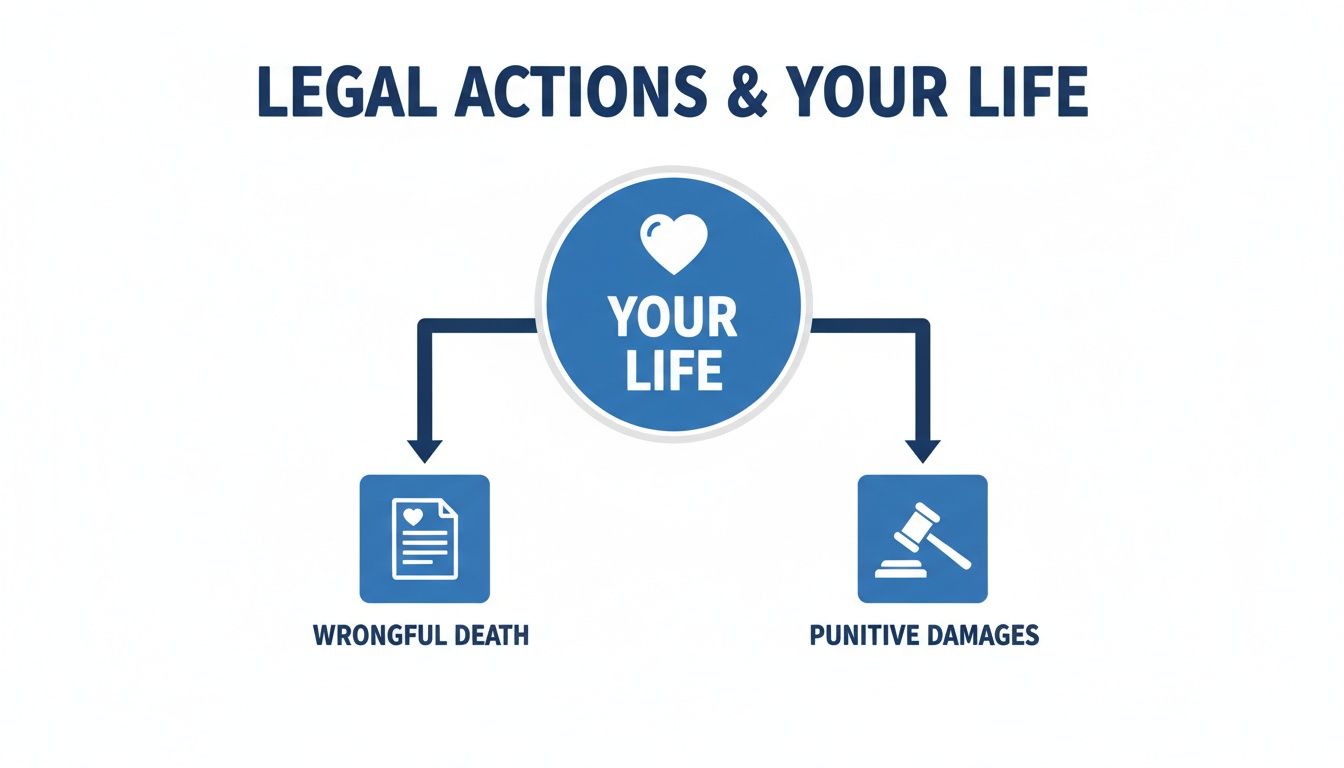
Diagram showing how legal actions like wrongful death and punitive damages are related to your life.

Compensating your family is mission one. This is mission two. This is about accountability.

Driving drunk is not a mistake. It is willful and wanton conduct—a conscious and stunningly arrogant disregard for human life. That legal classification opens the door for families to seek punitive damages, which exist specifically to punish egregious behavior and deter future misconduct. Under Colorado law, drunk driving victims have three years from the date of injury to file a lawsuit, as established by C.R.S. § 13-80-101. Colorado's modified comparative negligence standard allows recovery even if the injured party is partially at fault, provided they are not more than 50% responsible, per C.R.S. § 13-21-111. Non-economic damages—compensation for pain, suffering, and emotional distress—are capped at $1,500,000 as of 2025. Punitive damages exist separately to hold wrongdoers accountable beyond standard compensation. When an intoxicated driver causes injury or death, pursuing punitive damages sends a powerful message that such reckless choices have serious legal and financial consequences.

These damages aren't about compensation; they are about punishment. They are designed to make the consequences so financially painful that the driver—and our entire community—understands this behavior will not be tolerated. Punitive damages serve a critical deterrent function in Colorado's civil justice system, sending a powerful message that reckless or intentional conduct carries severe financial penalties. Unlike economic or non-economic damages, which are capped at $1,500,000 as of 2025, punitive awards exist solely to punish defendants whose conduct was particularly egregious. Colorado law, governed by C.R.S. § 13-21-111, also requires that a plaintiff prove their case while accounting for comparative negligence—meaning recovery is possible even if the injured party is up to 50% at fault. Claims must be filed within three years under C.R.S. § 13-80-101. These statutory protections ensure that justice reaches beyond mere reimbursement, creating accountability that genuinely changes behavior across the community.

This isn't a simple request. It requires a specific procedural move—filing a motion with the court after sufficient evidence of the driver's outrageous conduct has been gathered. It's a fight within a fight, and it demands experienced legal strategy to win. The goal is to make the punishment fit the crime. Under Colorado law (C.R.S. § 13-21-111), modified comparative negligence rules apply, meaning a plaintiff cannot recover if found 50% or more at fault. While punitive damages are generally capped at the amount of compensatory damages awarded, a judge can increase the award if the driver's conduct is particularly egregious. Non-economic damages themselves are capped at $1,500,000 as of 2025. Importantly, the pursuit must begin within Colorado's three-year statute of limitations (C.R.S. § 13-80-101). These punitive damages serve a dual purpose: holding the wrongdoer accountable and deterring similar reckless behavior in the future.

We Expose the Negligent Bar—The Dram Shop Time Bomb

The drunk driver is responsible. But sometimes, they aren't the only ones. The chain of negligence can lead right back to the bar that put profit over safety. Under Colorado's Dram Shop Act, a bar or restaurant can be held liable for serving a visibly intoxicated person who then causes a fatal crash. Colorado law allows injured parties three years from the date of injury to file a dram shop claim under C.R.S. § 13-80-101. However, Colorado's modified comparative negligence rule under C.R.S. § 13-21-111 means a plaintiff cannot recover if found more than 50% at fault. When successful, dram shop claims can result in substantial compensation, including non-economic damages capped at $1,500,000 as of 2025. These claims hold establishments accountable for recklessly serving alcohol to visibly intoxicated patrons, creating a legal deterrent against negligent bartending practices that endanger public safety.

But this claim comes with a brutal, unforgiving deadline: you have only one year from the date of the accident to sue the commercial establishment. This short window—far shorter than Colorado's standard three-year statute of limitations under C.R.S. § 13-80-101—creates what many call a "dram shop time bomb." Miss that one-year mark, and the claim vanishes entirely, regardless of merit. Additionally, Colorado's modified comparative negligence rule under C.R.S. § 13-21-111 imposes a 50% fault bar, meaning a plaintiff cannot recover if found equally or more responsible than the defendant. Even if liability is established, non-economic damages—covering pain and suffering—are capped at $1,500,000 as of 2025. These layered restrictions transform dram shop cases into high-stakes litigation where timing, burden of proof, and damage caps all work against injured victims seeking justice.

One year. Not two. Miss it, and that entire source of recovery vanishes forever.

The insurance company for the bar counts on this. Their entire strategy is to delay, knowing that Colorado's three-year statute of limitations under C.R.S. § 13-80-101 creates a hard deadline that pressures injured families into settlement desperation. They'll offer hollow sympathies while secretly running out the clock on your family's rights. It's a reprehensible tactic, and aggressive representation shuts it down from day one by launching an immediate investigation to secure security footage, find witnesses, and subpoena records before they can be erased or forgotten. Time is the enemy—not just because of the statute, but because evidence degrades and memories fade. Under Colorado's modified comparative negligence rule (C.R.S. § 13-21-111), defendants can still recover if they're less than 50% at fault, making early investigation critical. Non-economic damages are capped at $1,500,000 as of 2025, making strategic documentation essential for maximizing recovery. This isn't an afterthought—it's a primary weapon.

We Run the Entire Playbook for Your Family

In the aftermath of a tragedy, families need more than sympathy—they need a shield and a strategist willing to wage a relentless fight on their behalf. Colorado law provides a three-year window to pursue claims (C.R.S. § 13-80-101), but that clock starts immediately. Under the state's modified comparative negligence rule, an injured party can still recover damages even if found partially at fault, provided their responsibility doesn't exceed 50% (C.R.S. § 13-21-111). Non-economic damages—compensation for pain, suffering, and loss of enjoyment—are capped at $1,500,000 as of 2025. Navigating these complex legal requirements while managing grief requires experienced guidance. A skilled personal injury advocate handles the investigation, negotiation, and litigation while the family focuses on healing and honoring their loved one's memory.

Our firm was built for this. We execute the dual mission—compassion for you, aggression toward them.

  1. Coordinate with the Criminal Case: We work in parallel with the Denver District Attorney’s office, using every development in the criminal prosecution—from a DUI conviction to a guilty plea for vehicular homicide—as leverage in your civil case.
  2. Maximize Every Dollar: We build your case around the new $2.125 million non-economic damages cap, meticulously documenting your family’s loss. We simultaneously execute the precise legal maneuvers required to add the claim for punitive damages, ensuring the driver is punished.
  3. Attack the Dram Shop Claim: The moment we are hired, our investigators are moving to beat the one-year clock. We secure the evidence needed to hold a negligent bar accountable before that evidence disappears forever.

The insurance company's playbook is predictable: delay, devalue, and deflect. Their favorite tactic is to treat your family's sorrow as just another number on a spreadsheet, hoping grief will wear down your resolve. That approach stops here. Our firm takes the entire burden of navigating Colorado's complex injury laws, allowing families to focus on healing instead of fighting bureaucrats. Under Colorado law, there's a three-year statute of limitations (C.R.S. § 13-80-101) to file a claim—time that passes quickly. The state also applies modified comparative negligence rules, meaning claims can still proceed even if the injured party is up to 50% at fault (C.R.S. § 13-21-111). Non-economic damages, including pain and suffering, are capped at $1,500,000 as of 2025. Understanding these thresholds and deadlines requires expertise. That's where experienced representation makes the difference between fair compensation and settling for far less than your family deserves.


Disclaimer: The information in this article is for informational purposes only and does not constitute legal advice. Past results do not guarantee future outcomes.

I know this is overwhelming. No one expects to navigate a personal injury claim alone, especially while recovering and managing medical care. That's exactly why having experienced legal representation matters. A knowledgeable attorney will manage every aspect of the case—from gathering evidence and negotiating with insurers to preparing for trial if necessary. Time is critical; Colorado law establishes a three-year statute of limitations for personal injury claims under C.R.S. § 13-80-101, meaning deadlines are non-negotiable. Additionally, Colorado's modified comparative negligence rule under C.R.S. § 13-21-111 allows recovery as long as the injured party is less than 50% at fault, though awards may be reduced proportionally. Understanding these legal nuances, including non-economic damages caps currently set at $1,500,000 as of 2025, requires specialized knowledge. An experienced personal injury attorney handles all these complexities while the injured person focuses on healing, ensuring nothing falls through the cracks.

CL

Written by

Conduit Law

Personal injury attorney at Conduit Law, dedicated to helping Colorado accident victims get the compensation they deserve.

Learn more about our team
Explore Our Practice Areas

We handle 24+ types of personal injury cases throughout Colorado.

Need Legal Assistance?

If you have been injured, our experienced personal injury attorneys are here to help you get the compensation you deserve.