Conduit Law - Colorado Personal Injury AttorneysAccident Attorneys
Wrongful Death8 min read

Wrongful Death Lawsuit Timeline CO | Conduit

Wrongful death lawsuit timeline Colorado: Learn the typical 18-36 month process, from investigation to settlement, with clear phase-by-phase guidance.

January 11, 2026By Conduit Law
#Wrongful Death Lawsuit Timeline Colorado, Wrongful Death Attorney, Colorado Statute of Limitations, Wrongful Death Settlement
Wrongful Death Lawsuit Timeline CO | Conduit
Table of Contents

When you lose someone you love, the world grinds to a halt. Everything stops—except the clock. Suddenly, survivors are thrown into a legal world they never asked to join, a world with its own brutal rhythm and a pace that feels agonizingly slow. Colorado's Wrongful Death Act (C.R.S. § 13-21-201) provides a legal pathway for families to seek justice and compensation when a loved one's death results from someone else's negligence or wrongful conduct. However, time is critical. Colorado law imposes a strict 2-year statute of limitations (C.R.S. § 13-80-102) from the date of death to file a claim. Additionally, wrongful death damages in Colorado are capped at $2,125,000 as of 2025 (C.R.S. § 13-21-203). Understanding these legal parameters—the deadlines, the statutes, and the compensation limits—is essential for families navigating their grief while protecting their rights.

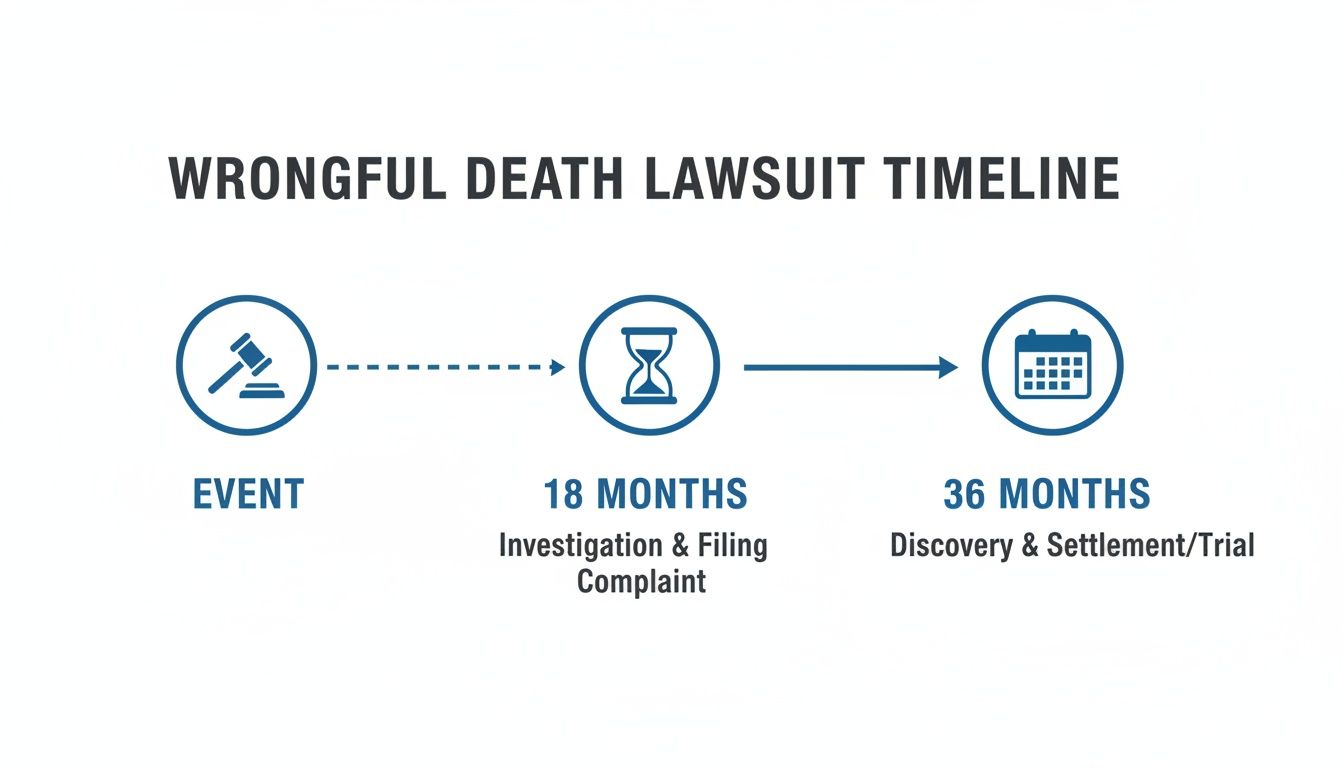
So let's get straight to it. The average wrongful death lawsuit timeline in Colorado runs somewhere between 18 and 36 months. That number isn't a sign of neglect or a case getting lost in the shuffle. It's the deliberate, methodical process required to dismantle the arguments of an insurance company that is banking on grief—counting on exhaustion—to force a quick, cheap settlement. Under Colorado's Wrongful Death Act (C.R.S. § 13-21-201), families have a two-year statute of limitations to file a claim (C.R.S. § 13-80-102). Beyond that filing window, claims are barred forever. Within those bounds, the legal system must carefully establish liability, quantify damages, and navigate Colorado's wrongful death damages cap of $2,125,000 as of 2025 (C.R.S. § 13-21-203). This timeframe isn't arbitrary—it reflects the complexity of proving negligence, the investigation required, discovery disputes, and potential settlement negotiations. Insurance companies understand this timeline. They're betting families won't endure it.

This isn't a passive waiting game. It's a strategic war of attrition. Under Colorado's Wrongful Death Act (C.R.S. § 13-21-201), families have a critical two-year statute of limitations to file a claim (C.R.S. § 13-80-102). That window demands immediate action and thoughtful planning. During this time, skilled legal teams build unassailable cases by gathering evidence, securing witness testimony, and documenting damages. The process requires controlling the timeline while providing families with predictable, compassionate communication. Currently, wrongful death damages in Colorado are capped at $2,125,000 as of 2025 (C.R.S. § 13-21-203), making strategic preparation essential to maximize recovery within statutory limits. Understanding this timeline isn't just for peace of mind; it's the foundation for taking back control. Families deserve counsel that respects their grief while aggressively pursuing justice and fair compensation within Colorado's legal framework.

Your First Job Is Protecting Your Right to Have a Timeline

Infographic showing a wrongful death lawsuit timeline: Event, 18 months for investigation, 36 months for discovery and trial.

While the full wrongful death lawsuit takes years to resolve, the right to file it is governed by a series of short, vicious, non-negotiable deadlines. These are the tripwires. They are unforgiving. Colorado's Wrongful Death Act, codified at C.R.S. § 13-21-201, establishes the legal framework for claims arising from a death caused by negligence or wrongful conduct. However, families must file their claim within two years from the date of death, as mandated by C.R.S. § 13-80-102. This statute of limitations cannot be extended, waived, or negotiated away. Missing this deadline results in permanent loss of the right to pursue any claim, regardless of its merits. Additionally, Colorado law caps wrongful death damages at $2,125,000 as of 2025 under C.R.S. § 13-21-203. Understanding and meeting these critical deadlines is essential to protecting a family's legal rights and maximizing potential recovery for their loss.

This is where experienced legal counsel becomes essential. The first priority isn't calculating settlement values—it's becoming a deadline specialist who identifies and neutralizes every statutory time bomb lurking in the background. Colorado's Wrongful Death Act (C.R.S. § 13-21-201) establishes strict procedural requirements, and the clock is unforgiving. Families have exactly two years from the date of death to file a wrongful death claim under C.R.S. § 13-80-102. Miss this deadline, and the right to recover is permanently lost, regardless of the claim's merit. Beyond the filing deadline, other critical dates demand immediate attention: discovery cutoffs, expert disclosure deadlines, and motion filing requirements. Additionally, Colorado law caps wrongful death damages at $2,125,000 as of 2025 under C.R.S. § 13-21-203, making early case evaluation crucial. Competent representation ensures every procedural requirement is met, every deadline is tracked, and every opportunity to preserve the family's legal rights is protected from the outset.

Missing one of these deadlines—and some are terrifyingly short—means the case is over before it even begins. Game over. The insurance company wins by default. Colorado's wrongful death statute (C.R.S. § 13-21-201) establishes the legal framework for these claims, but only if filed within the strict two-year statute of limitations under C.R.S. § 13-80-102. This window closes fast, and there are no second chances. Additionally, Colorado caps wrongful death damages at $2,125,000 as of 2025, making timely action critical to maximize recovery for grieving families. Missing a filing deadline doesn't just delay justice—it eliminates the right to pursue compensation entirely. The at-fault party and their insurance company know this. They count on families being too overwhelmed to meet rigid court requirements. That's where experienced legal guidance becomes essential, ensuring every procedural requirement is met and every precious day counts toward preserving the family's right to recover.

Phase 1: Pre-Litigation and Investigation (1–6 Months)

The moment a loved one is lost, a series of invisible timers start counting down. This first phase is a sprint—a controlled, strategic sprint—to preserve the family's rights while gathering the evidence needed to win. Colorado law establishes a strict two-year statute of limitations under C.R.S. § 13-80-102, meaning a wrongful death claim must be filed before this window closes. During these critical early months, investigators must secure evidence, interview witnesses, and document the circumstances surrounding the death. Under Colorado's Wrongful Death Act (C.R.S. § 13-21-201), eligible family members may pursue compensation, though recovery is capped at $2,125,000 as of 2025 under C.R.S. § 13-21-203. This initial investigation phase determines the strength of the case, the value of potential damages, and whether settlement negotiations or litigation will follow. Every day matters in preserving testimony, securing medical records, and establishing liability.

We have to move with deliberate urgency. Not to rush families, but to protect them from a system that will not wait for grief. Under Colorado's Wrongful Death Act (C.R.S. § 13-21-201), there is a strict two-year statute of limitations to file a claim. Once that deadline passes, the right to pursue justice and compensation is permanently lost, regardless of circumstances. The investigation phase is critical—evidence deteriorates, witnesses' memories fade, and institutional records become harder to access. Colorado law also caps wrongful death damages at $2,125,000 as of 2025 (C.R.S. § 13-21-203), making early, thorough case development essential to maximize recovery within those limits. Time is not a luxury in wrongful death matters. The sooner qualified legal counsel begins gathering evidence, securing witness statements, and documenting damages, the stronger the foundation for holding responsible parties accountable and ensuring families receive the full compensation the law allows.

The Deadlines We Disarm Immediately

This is our entire focus from day one. These are the deadlines the insurance company hopes you don't know about.

  • The 182-Day CGIA Notice: If a government entity is involved—a city bus, a poorly maintained public road, a state employee—you have a razor-thin 182 days to file a formal Notice of Claim under the Colorado Governmental Immunity Act. It's one of the most brutal deadlines in Colorado law.
  • The 1-Year Dram Shop Deadline: If a bar or restaurant over-served the at-fault person, we have just one year to put them on formal notice. A day late, and that claim vanishes. A fatal drunk driving accident lawyer Denver lives and breathes this deadline.
  • The 2-Year Statute of Limitations (SOL): For most wrongful death cases, you have two years from the date of death to file a lawsuit. It sounds like a lot of time—it isn't. You can read our deep dive into the Colorado wrongful death statute of limitations here.

While managing the strict two-year statute of limitations under C.R.S. § 13-80-102, our team simultaneously launches a full-scale investigation, sends demand letters to preserve critical evidence, and determines who qualifies to file a wrongful death claim under Colorado's Wrongful Death Act, C.R.S. § 13-21-201. This foundational phase is essential because Colorado caps wrongful death awards at $2,125,000 as of 2025, per C.R.S. § 13-21-203, making every strategic decision consequential. The investigation phase secures witness statements, medical records, and physical evidence before memories fade or documentation disappears. Demand letters establish a formal record and often trigger settlement discussions early. Simultaneously, identifying the proper claimants—typically surviving spouses, children, or dependents—ensures the case proceeds with legal standing. This multifaceted approach lays the entire foundation for success, protecting the family's rights while maximizing the potential recovery within Colorado's statutory framework.

Phase 2: The Long Fight of Litigation and Discovery (12–18 Months)

A judge or lawyer in a robe writes at a desk with a gavel and a calendar, highlighting immediate deadlines.

This is where the battle is truly joined. After filing the formal Complaint and officially suing for wrongful death in Colorado, the parties enter the longest and most intensive phase: Discovery. Under Colorado's Wrongful Death Act (C.R.S. § 13-21-201), eligible family members can pursue claims for damages when a person's death results from another's negligence or wrongful conduct. However, time matters critically—Colorado law imposes a strict 2-year statute of limitations (C.R.S. § 13-80-102) from the date of death to file suit. During Discovery, which typically lasts 12–18 months, both sides exchange evidence, conduct depositions, review medical records, and build their cases. Understanding the damages framework is essential: Colorado caps wrongful death awards at $2,125,000 as of 2025 (C.R.S. § 13-21-203). This phase determines case strength and settlement value, making thorough investigation and strategic document requests fundamental to achieving the best possible outcome for grieving families.

This isn't a courtroom drama—it's a strategic intelligence operation. The defense has documents, emails, and testimony they'd rather keep buried. Discovery is the legal authority to force it all into the light, and under Colorado's Wrongful Death Act (C.R.S. § 13-21-201), this process becomes critical in establishing liability and damages. In wrongful death cases, the stakes are particularly high: Colorado law caps non-economic damages at $2,125,000 as of 2025 (C.R.S. § 13-21-203), making thorough discovery essential to maximize recovery within these limits. The discovery phase typically reveals critical evidence—hidden communications, safety violations, or prior incidents—that strengthen settlement negotiations. A longer timeline in litigation often correlates with a higher settlement value, as complete discovery uncovers leverage points. Given Colorado's 2-year statute of limitations for wrongful death claims (C.R.S. § 13-80-102), strategic patience during this 12–18 month phase can mean the difference between inadequate compensation and a settlement that truly reflects the loss.

Our Tools for Forcing the Truth

We deploy a full legal arsenal to extract every relevant fact and dismantle the other side's case.

  • Interrogatories: Written questions the defendant must answer under oath.
  • Requests for Production: A formal demand for every document, email, or record related to the case.
  • Requests for Admission: A list of facts the other side must admit or deny, narrowing the issues for trial.
  • Depositions: Live, sworn testimony where we question defendants and key witnesses face-to-face. There is no hiding in a deposition.

Simultaneously, the firm hires its own team of experts—forensic economists who calculate the full financial devastation of losing a loved one—to build a precise, defensible damages model that insurance companies cannot ignore. These professionals analyze lost wages, lost benefits, loss of companionship, and funeral expenses to establish the true economic and non-economic impact of wrongful death. This rigorous methodology creates leverage during settlement negotiations and trial preparation. Under Colorado's Wrongful Death Act (C.R.S. § 13-21-201), surviving family members have the right to pursue compensation, though statutory caps currently limit non-economic damages to $2,125,000 as of 2025 under C.R.S. § 13-21-203. Working within these constraints, expert-backed analysis demonstrates the full scope of losses that families have endured. The hard, meticulous work of building an unassailable damages calculation is what transforms negotiations and forces insurance companies to take claims seriously within Colorado's legal framework.

Phase 3: The Endgame of Settlement, Mediation, or Trial (6–12 Months)

Discovery phase materials: binders, voice recorder, and documents on a conference table with blue chairs.

After months of building a wrongful death case brick by brick, the litigation enters its critical endgame phase. Over 95% of wrongful death cases resolve during this stage, almost always through a formal process called mediation rather than proceeding to trial. During mediation, a neutral third party facilitates negotiations between the plaintiff's family and the defendant's insurance representatives, allowing both sides to reach a settlement without courtroom proceedings. Understanding Colorado's legal framework is essential during this phase: wrongful death claims are governed by the Wrongful Death Act (C.R.S. § 13-21-201), which establishes the right to pursue damages. However, families must act within the 2-year statute of limitations (C.R.S. § 13-80-102) to file suit. Additionally, Colorado law caps wrongful death damages at $2,125,000 as of 2025 (C.R.S. § 13-21-203), which significantly influences settlement negotiations and outcome expectations throughout this final resolution phase.

Mediation is a structured negotiation run by a neutral third party, usually a retired judge or certified mediator. It's where all evidence is presented transparently—the expert reports, the damning deposition testimony, the undeniable proof that establishes liability and damages. In wrongful death cases governed by Colorado's Wrongful Death Act (C.R.S. § 13-21-201), mediation provides a critical opportunity to resolve claims before trial. Understanding the legal framework is essential. Colorado imposes a statutory cap on non-economic damages in wrongful death cases of $2,125,000 as of 2025 (C.R.S. § 13-21-203), and families must pursue claims within two years of death under C.R.S. § 13-80-102. During mediation, both sides present their case to the neutral mediator, who facilitates discussion and helps parties evaluate settlement value realistically. This process often leads to resolution without proceeding to trial, allowing grieving families to reach finality while maintaining control over the outcome.

It’s where we make the insurance company stare directly at the risk of losing badly in front of a jury.

The Worst Insurance Tactic: The Courthouse Steps Offer

But you need to be prepared for their favorite game. Insurance companies will often wait until the last possible second—sometimes literally on the courthouse steps before a trial begins—to make a fair offer. This delay tactic is particularly common in wrongful death cases, where the stakes are highest. Under Colorado's Wrongful Death Act (C.R.S. § 13-21-201), families have only two years from the date of death to file a claim (C.R.S. § 13-80-102). As that deadline approaches, insurers know families are feeling pressure. They'll lowball an offer at the eleventh hour, betting that families will accept rather than risk going to trial. The current wrongful death damage cap in Colorado stands at $2,125,000 as of 2025 (C.R.S. § 13-21-203). Understanding this tactic—and recognizing that last-minute offers often leave significant compensation on the table—is essential for families navigating the wrongful death claims process.

This is a calculated psychological tactic. Insurance adjusters deploy it strategically to test resolve and prey on claimant exhaustion, hoping to secure a settlement before trial. They want to see if the injured party or grieving family will blink under pressure. In wrongful death cases, this pressure intensifies because families are emotionally vulnerable and facing strict deadlines. Colorado law imposes a two-year statute of limitations under C.R.S. § 13-80-102, creating artificial urgency that insurers exploit. Additionally, Colorado's wrongful death cap of $2,125,000 as of 2025 under C.R.S. § 13-21-203 may seem substantial but often falls short of actual damages in catastrophic loss cases. The courthouse steps offer represents a final negotiating move—one designed when insurers sense trial risk. Understanding this tactic as a pressure play rather than a genuine final offer helps families and their representatives evaluate settlement proposals rationally and pursue full compensation under the Wrongful Death Act.

We don't blink. We anticipate this move, we plan for it, and we never let it intimidate families into accepting a dollar less than they deserve. This cynical game of waiting until the eve of trial is a deliberate strategy to wear down grieving families through exhaustion and financial pressure, and it will not work. Under Colorado's Wrongful Death Act (C.R.S. § 13-21-201), families have a two-year statute of limitations to pursue claims. Insurance companies know this deadline creates urgency, and they weaponize it by dragging settlement negotiations until trial approaches. While Colorado caps wrongful death damages at $2,125,000 as of 2025 (C.R.S. § 13-21-203), carriers often offer far less, gambling that the emotional toll and time pressure will force acceptance. Strategic last-minute offers are calculated psychological pressure. Experienced counsel recognizes this tactic for what it is: an attempt to exploit grief and desperation rather than engage in good-faith negotiation from the beginning.

Phase 4: The Final Wait—Post-Settlement Distribution (1–6 Months)

Two men shake hands across a table, symbolizing agreement during mediation and settlement.

Reaching a settlement agreement feels like the finish line, but it's not. The check doesn't just show up tomorrow. This final phase, lasting one to six months, is where the attorney's job shifts to maximizing the net recovery that actually reaches the family. Under Colorado's Wrongful Death Act (C.R.S. § 13-21-201), settlements must be structured carefully to ensure proper distribution among eligible beneficiaries. Families should understand that wrongful death awards in Colorado are capped at $2,125,000 as of 2025 under C.R.S. § 13-21-203, which influences settlement negotiations and final payouts. During post-settlement distribution, outstanding medical bills, funeral expenses, and attorney fees are systematically paid from the settlement proceeds. Court approval may be required depending on the case complexity. This waiting period isn't idle time—it's when experienced attorneys work behind the scenes to ensure every dollar is properly allocated, tax implications are addressed, and funds are released efficiently to grieving families who have already endured nearly two years under Colorado's statute of limitations.

First, the firm aggressively negotiates down any outstanding medical liens from hospitals, health insurers, or Medicare/Medicaid. This process is particularly critical in wrongful death cases, where the Colorado Wrongful Death Act (C.R.S. § 13-21-201) allows beneficiaries to recover damages up to $2,125,000 as of 2025 under C.R.S. § 13-21-203. Every dollar saved through lien reduction is a dollar that flows directly to the beneficiaries rather than to creditors. Medical providers and government programs often hold significant claims against settlement proceeds, and skilled negotiation can substantially reduce these obligations. Because wrongful death claims operate under a strict two-year statute of limitations (C.R.S. § 13-80-102), the post-settlement distribution phase must proceed efficiently without sacrificing thorough lien resolution. Attorneys coordinate with all lien holders, verify amounts owed, and leverage settlement leverage to achieve meaningful reductions before final disbursement to grieving families.

The Judicial Gatekeeper: Why Probate Court Is Vital

Next, and most importantly, the settlement must receive final approval from the Probate Court. In Colorado, a wrongful death settlement isn't legally final until a judge formally signs off on it. This judicial oversight is essential because it ensures the settlement complies with Colorado's Wrongful Death Act (C.R.S. § 13-21-201) and protects the interests of all beneficiaries. The court reviews whether the settlement amount is reasonable and properly accounts for damages within Colorado's statutory cap of $2,125,000 as of 2025 (C.R.S. § 13-21-203). Additionally, the court verifies that the distribution plan fairly allocates funds among eligible heirs according to Colorado law. This probate approval process serves as a critical safeguard, preventing inadequate settlements and ensuring compliance with the two-year statute of limitations (C.R.S. § 13-80-102). Without judicial approval, even a negotiated settlement remains unenforceable, making this final court order the true completion of a wrongful death claim.

This is not a rubber stamp—it's a crucial protection. Under Colorado's Wrongful Death Act (C.R.S. § 13-21-201), the judge acts as a gatekeeper to ensure the wrongful death settlement distribution is fair and legally sound, especially when the interests of minor children are at stake. The court must carefully review how funds will be allocated and protected, particularly given Colorado's wrongful death cap of $2,125,000 as of 2025 (C.R.S. § 13-21-203). This judicial oversight is especially important because claims must be filed within the strict 2-year statute of limitations (C.R.S. § 13-80-102). The probate court's role involves securing a formal court order that finally authorizes the funds to be disbursed safely and in compliance with state law. This vital step adds time to the settlement process, but it provides an essential layer of legal and financial protection that safeguards beneficiaries' interests.

While this guide focuses on the lawsuit timeline, it's important to understand the broader legal framework governing wrongful death claims in Colorado. Under the Wrongful Death Act (C.R.S. § 13-21-201), families have specific rights and remedies when a loved one's death results from another's negligence or misconduct. It's also critical to know that Colorado imposes a 2-year statute of limitations on wrongful death claims (C.R.S. § 13-80-102), meaning families must file suit within this timeframe or lose the right to recover damages. Additionally, Colorado caps wrongful death damages at $2,125,000 as of 2025 (C.R.S. § 13-21-203), which affects the maximum compensation recoverable. For those seeking deeper insight into how Colorado calculates damages in these cases, additional resources are available. Those curious about timelines in other types of injury claims may also benefit from reviewing guides on general personal injury settlement timeframes.

The Value of Controlling the Clock

The entire wrongful death lawsuit timeline in Colorado is a strategic battlefield. Insurance companies typically want to rush grieving families into hasty settlements before they fully understand their rights and the true value of their claim. Under Colorado's Wrongful Death Act (C.R.S. § 13-21-201), families have important protections and potential remedies. However, time pressure can undermine sound decision-making. Experienced legal representation controls the pace of negotiations to build leverage and gather critical evidence. This deliberate approach ensures families aren't pressured into accepting inadequate offers before the full scope of damages becomes clear. While Colorado imposes a two-year statute of limitations (C.R.S. § 13-80-102) on wrongful death claims, working within that timeframe strategically—rather than reactively—yields better outcomes. Understanding that Colorado's wrongful death cap is $2,125,000 as of 2025 (C.R.S. § 13-21-203) helps families recognize when settlements fall short. Taking control of timing transforms the process from a race into a calculated path toward fully informed decisions.

But it all starts with protecting the right to have a timeline in the first place. Under Colorado's Wrongful Death Act (C.R.S. § 13-21-201), families have a strict two-year statute of limitations to file a claim following a loved one's death (C.R.S. § 13-80-102). Those initial statutory deadlines are everything. Miss them, and the fight is over—the case is permanently barred, regardless of its merits. Beyond timing, Colorado law also caps wrongful death damages at $2,125,000 as of 2025 (C.R.S. § 13-21-203), which underscores why immediate legal action matters. Waiting weeks or months to consult with an attorney can mean lost evidence, faded witness memories, and missed deadlines that destroy an otherwise viable claim. The clock starts the moment death occurs, and families cannot afford delays.

Your only job right now is to focus on your family. Let us take on the fight. Let us handle the deadlines. Let us carry the legal burden for you. Colorado wrongful death claims operate under strict legal constraints that demand immediate attention. Under the Colorado Wrongful Death Act (C.R.S. § 13-21-201), families have only two years from the date of death to file suit—a critical deadline that cannot be extended. Additionally, Colorado law caps non-economic damages in wrongful death cases at $2,125,000 as of 2025 (C.R.S. § 13-21-203), making strategic case management essential to maximize recovery. During this difficult time, navigating these complex statutes, gathering evidence, meeting filing deadlines, and building a compelling claim requires specialized legal expertise. Professional representation ensures no procedural mistakes jeopardize the family's rights and financial recovery. While grieving and supporting loved ones, families simply cannot afford to miss critical deadlines or overlook statutory requirements that could diminish their claim's value.

We got you.


Disclaimer: This blog post is for informational purposes only and does not constitute legal advice. The information provided is not a substitute for consulting with a qualified attorney. The specific facts of your case will determine the best course of action. No attorney-client relationship is formed by reading this post or contacting Conduit Law without a signed engagement agreement.

If you’ve lost a loved one due to someone else's negligence in Colorado, the clock is already ticking. Call Conduit Law for a free, no-obligation consultation to understand your rights and protect your family's future.

CL

Written by

Conduit Law

Personal injury attorney at Conduit Law, dedicated to helping Colorado accident victims get the compensation they deserve.

Learn more about our team
Explore Our Practice Areas

We handle 24+ types of personal injury cases throughout Colorado.

Need Legal Assistance?

If you have been injured, our experienced personal injury attorneys are here to help you get the compensation you deserve.