Table of Contents
Free case qualifier
In a car or vehicle accident?
Answer a few quick questions about the crash and your injuries — we route your details straight to intake.
Start the qualifierKey Takeaways
- Prioritize Safety and Call 911: Your first step is to move out of traffic if possible and call 911. This brings both medical help and law enforcement to the scene, creating an official record of the accident.
- Document Everything: Use your phone to take photos of the scene, vehicle damage, and your injuries. Exchange only essential information with the other driver and avoid admitting fault.
- Seek Immediate Medical Attention: Adrenaline can mask serious injuries. Getting checked by a doctor creates a medical record that links your injuries directly to the crash.
- Be Cautious with Insurance Adjusters: They work for the insurer. Avoid giving a recorded statement or accepting an early settlement offer before you know the full extent of your injuries.
- Understand Colorado Law: Your claim is affected by Colorado's comparative fault rules, strict filing deadlines, and 42-4-1502 CRS helmet rules for riders and passengers under 18. Consulting an attorney ensures you protect your right to compensation.
The moments after a motorcycle crash in Colorado are a blur of confusion, adrenaline, and often, pain. If you're involved in a motorcycle accident in Denver or nearby, knowing what to do right away matters for both your safety and your claim. The first priority is personal safety: if you can do so without further risk, move out of traffic. Then call 911 to report the crash and request medical help if needed.
This is the most important call you can make, because it brings both medical help and law enforcement. Adrenaline can hide serious injuries. You might feel fine, but a prompt medical evaluation protects your health and creates a record linking your injuries to the crash.
Your First Moves After a Motorcycle Accident in Colorado
Knowing what to do after a crash in Denver, Colorado Springs, or on any Colorado road can protect both your health and your legal rights. The steps taken in the first few minutes and hours build the record of what happened: photographs, witness information, and the accident report.
The top priority is always your physical well-being. Riders sometimes refuse treatment at the scene, only to discover a concussion or internal injury later. A delay in care can also make it easier for an insurer to question whether the crash caused the injury.
Prioritize Safety and Medical Help
Move yourself out of harm's way if able. Get to the shoulder or a nearby sidewalk to avoid another collision. However, if seriously hurt, stay put and wait for EMTs to arrive. Moving could worsen a neck, back, or internal injury and complicate emergency response. Once in a safe location, document the scene if possible—photograph vehicle damage, road conditions, and witness information. Seek immediate medical attention, as some injuries manifest hours or days after impact.
Once you are in a safer spot, check on yourself and anyone else involved. Then make the 911 call. This brings paramedics and police, who can secure the scene and create an official accident report with vehicle information, witness details, road conditions, and the officer's observations.
Document Everything at the Scene
If your injuries permit, use your phone to document the scene before it is cleared. Photograph vehicle damage, road conditions, skid marks, and traffic signals from several angles, and note the weather, time of day, and lighting. Documenting your helmet and gear and their condition can also be useful. Get contact information from witnesses while they are still there.
- Photograph the entire scene: Get wide shots of the road or intersection. Capture traffic signs, signals, and road conditions like potholes.
- Document vehicle damage: Take close-up photos of the damage to your bike and the other vehicle from multiple angles.
- Capture your injuries: Photograph any visible cuts, bruises, road rash, or torn gear. These images provide a powerful record of the trauma you suffered.
These steps are similar to any traffic incident, but motorcycle injuries are often more serious, and the medical costs and lost income that follow can be significant. Good photographs, witness statements, and scene notes help establish what happened.
Exchanging Information and Speaking with Police
When exchanging information with the other driver after a motorcycle accident, keep the conversation brief and professional. Share only essential details: full name, address, phone number, driver's license number, and insurance information. Do not discuss what happened or who was at fault, as even a simple "I'm sorry" can be interpreted as an admission of guilt and used against the motorcyclist in later proceedings. If police have not already responded, contact them to file an official accident report.
When the police arrive, give clear, factual answers. Stick to what you know for sure and avoid guessing about speeds or distances, since your statement becomes part of the official record. Note the officer's name and badge number.
Immediate Post-Accident Checklist
| Action | Why It Is Important |
|---|---|
| Get to Safety | Prevents further injury from traffic and secures your immediate well-being. |
| Call 911 Immediately | Dispatches essential medical help and ensures a law enforcement officer creates an official accident report. |
| Take Photos and Videos | Creates an undeniable visual record of the scene, damage, and your injuries before anything is moved. |
| Exchange Information | Gathers the necessary contact and insurance details from the other driver for your claim. |
| Do NOT Admit Fault | Protects your legal rights; simple apologies can be used against you by insurance adjusters. |
| Seek Immediate Medical Attention | Ensures injuries are diagnosed and treated, and creates a medical record linking them to the crash. |
Following these steps gives you a strong foundation for both physical recovery and any claim that follows.
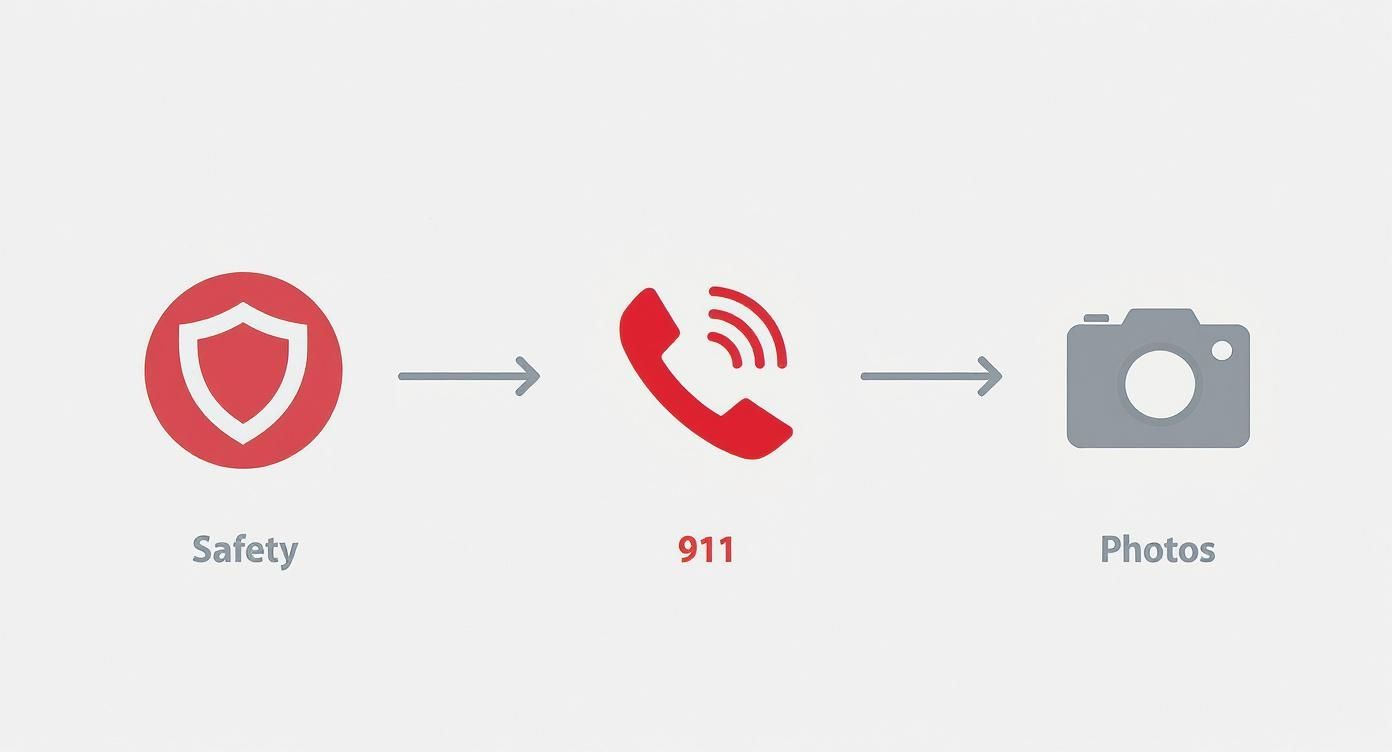
Remembering this straightforward process—Safety, 911, Photos—is your best defense in the disorienting aftermath of an accident.
Documenting Your Case and Handling Insurance Calls
Once immediate health and safety concerns are addressed, the focus shifts to gathering information. Police reports, medical records, photographs, witness statements, and insurance information together show what happened and how the crash has affected your life.
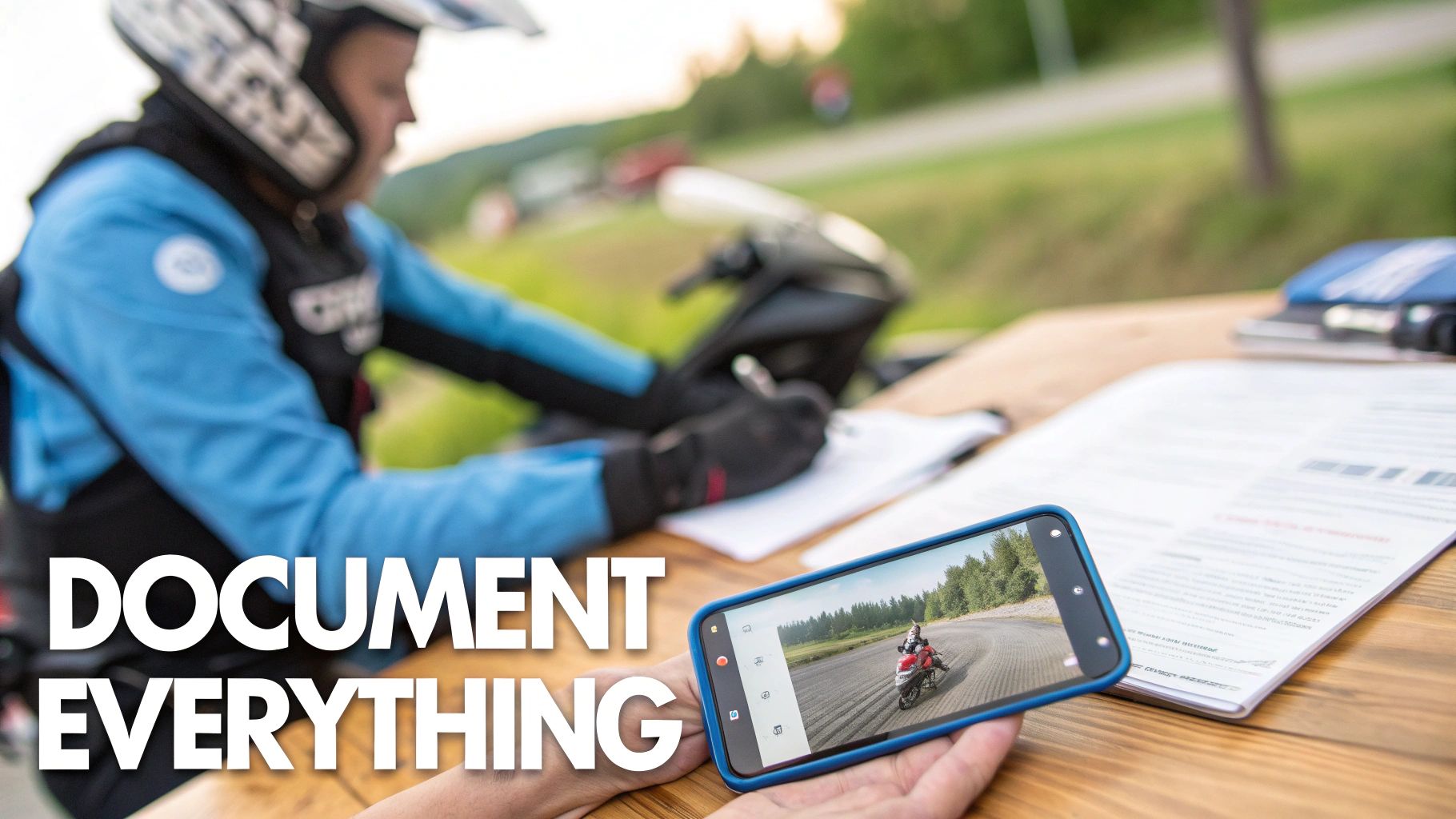
Start Your Evidence File
The police report is the first official piece of evidence in a motorcycle accident case. A copy can be requested from the responding agency, such as the Denver Police Department or Colorado State Patrol. This report contains the officer's findings, witness contact information, and often a preliminary opinion on fault—all critical to building a strong claim.
At the same time, start a personal log of the aftermath. Track pain levels, medical appointments, missed work, and emotional effects. Photograph injuries as they heal and keep receipts for every accident-related expense.
- Your Medical Journey: Note every doctor’s visit, physical therapy session, and prescription.
- Pain and Symptoms: Describe your daily pain levels, sleep difficulties, or new headaches.
- Life Impact: Document missed workdays, family events you could not attend, and hobbies you can no longer enjoy.
- Every Single Expense: Keep receipts for medical bills, co-pays, gas money for appointments, and over-the-counter medical supplies.
This log paints a clear picture of your damages beyond just a stack of bills.
Dealing With Insurance Adjusters
An insurance adjuster will likely call soon after a motorcycle accident. Adjusters work for the insurer, and they may ask for a recorded statement, access to your medical records, or a quick settlement before the full extent of your injuries is clear. The adjuster may also ask whether you wore a helmet, even though Colorado requires helmets only for riders and passengers under 18 (C.R.S. § 42-4-1502).
Many motorcycle crashes involve other vehicles, so witness statements, photographs, and the police report are important for showing fault. Medical records, repair estimates, and expert opinions add to that record.
Protecting Yourself During Insurance Calls
When an adjuster calls, only basic information is needed to open a claim: the date, time, location, and people involved. Detailed statements about fault, injuries, or treatment can wait until you've talked with a lawyer.
- Be Polite but Firm: You can confirm your name and the date of the accident.
- Decline a Recorded Statement: Simply say, "I am not prepared to give a recorded statement at this time." You are not legally obligated to do so.
- Do Not Accept an Early Offer: Never accept a settlement until your medical treatment is complete. Early offers are often made before the full extent of an injury is known.
- Keep it Brief: The less you say, the better. You can end the call by stating that your legal representative will be in touch.
Handling these calls correctly is a key part of what to do after a motorcycle accident.
42-4-1502 CRS: Colorado's Motorcycle Helmet & Eye Protection Statute
42-4-1502 CRS is the section of the Colorado Revised Statutes that sets motorcycle helmet and eye-protection rules. In plain English, the statute requires operators and passengers under 18 to wear a protective helmet, and it requires every motorcycle operator and passenger — regardless of age — to use goggles or eyeglasses with lenses made of safety glass or plastic. The statute matters after a crash because insurers often ask whether the rider followed every safety rule under 42-4-1502 CRS before they evaluate fault and injury damages.
For adult riders, 42-4-1502 CRS does not create a universal helmet requirement. That distinction is important in injury claims: an insurance adjuster may still argue that no helmet made a head or brain injury worse, but the legal analysis is different from a claim involving a rider or passenger under 18. If a crash caused a concussion, traumatic brain injury, facial injury, or fatal injury, document the protective gear, police report details, medical findings, and witness statements before discussing fault with an insurer.
If you are comparing Colorado motorcycle laws after a crash, start with the statute, then look at how it interacts with comparative fault, medical causation, and insurance coverage. Conduit Law's Denver motorcycle accident attorneys can review how 42-4-1502 CRS may affect a Colorado injury claim and what evidence helps keep fault where it belongs.
How the Process Works in Colorado
Whether your claim arises in Denver, Colorado Springs, or Fort Collins, three legal concepts shape most motorcycle accident claims: comparative fault, helmet rules, and the statute of limitations.
Colorado’s Modified Comparative Fault Rule
Colorado follows modified comparative fault (C.R.S. § 13-21-111). An injured rider who was partly to blame can still recover, but the award is reduced by the rider's percentage of fault, and recovery is available only if the rider's fault is less than 50 percent.
For example, if a jury decides a motorcyclist was 20% at fault for a collision and total damages are $100,000, the award is reduced by 20%, leaving $80,000. If the rider is found 50% or more at fault, recovery is barred entirely.
How Helmet Laws Can Affect Your Claim
In Colorado, riders 18 and over can choose whether to wear a helmet; C.R.S. § 42-4-1502 requires helmets only for riders and passengers under 18. Even so, the at-fault driver's insurer may argue that not wearing a helmet made a head or brain injury worse.
How much weight that argument carries depends on the facts and on Colorado law, and it does not change who caused the crash. If helmet use is raised in your claim, it is worth having a lawyer review it.
Deadlines for Filing a Lawsuit
Every personal injury case is governed by a strict legal deadline known as the statute of limitations. This is the time window available to formally file a lawsuit. While the general deadline for most motorcycle accidents in Colorado is three years, the specific circumstances of each case may alter this timeline significantly. Assuming the three-year rule applies without question could put a claim at risk. Claims involving government entities, for example, have much shorter notice requirements.
Missing a deadline can mean permanently losing the right to seek compensation, regardless of the strength of the claim. The deadline that applies depends on who the defendant is and the circumstances of the injury, so it is worth confirming early.
When to Call a Lawyer
Many riders in Colorado ask if they really need a lawyer. For a minor tip-over with a scraped fairing, the answer is probably no. But when injuries go beyond minor scrapes, when fault is disputed, or when an insurer denies the claim, legal help can make a real difference.
If your injuries are more than minor bumps and bruises, it is time to get legal advice. Broken bones, serious road rash, or any head trauma mean long recoveries and high medical bills, and the full value of the claim may not be reflected in the first offer.
Another major red flag is any dispute over who was at fault. A lawyer can investigate independently, interview witnesses, and reconstruct the crash to establish fault accurately.
Red Flags That Signal You Need Legal Help
You should consider calling an attorney if:
- The other driver was uninsured or underinsured. Your own insurance policy may be the only source of compensation, which creates a conflict of interest.
- Your injuries are severe or require long-term care. Calculating the true cost of future surgeries and lost earning potential requires expertise.
- The insurance company offers a quick settlement. Early offers often come before the full value of a claim is known, and a signed release usually ends the claim.
- You are being unfairly blamed for the crash. A lawyer can gather evidence like traffic camera footage to prove the other driver's negligence.
If any of these situations sound familiar, an attorney can step in to protect your rights and pursue the full compensation available under Colorado law.
How a Contingency Fee Works for You
People often worry about the cost of hiring a lawyer, especially after a serious injury. The last thing an injured motorcyclist needs is another bill during recovery. That's why many personal injury law firms use the contingency fee model. Under this arrangement, clients pay no upfront costs. Instead, the attorney's fee comes only from any settlement or judgment awarded in the case, aligning the lawyer's interests directly with the client's recovery.
Our firm operates exclusively on a contingency fee basis, meaning no payment is required unless money is successfully recovered. This No Fees Unless We Win promise ensures everyone has access to quality legal representation, regardless of financial circumstances. We handle the investigation, evidence gathering, expert coordination, and communication with insurance adjusters so injured riders and their families can focus on recovery.
Common Mistakes to Avoid
After a motorcycle crash, certain actions can harm your ability to get fair compensation. Avoiding these common mistakes is crucial.
- Not Seeking Medical Care: Delaying treatment gives the insurance company an opening to argue that your injuries are not serious or were caused by something else.
- Admitting Fault: Apologizing or admitting any fault at the scene can be used against you, even if you were not to blame.
- Giving a Recorded Statement: You are not required to give a recorded statement to the other driver's insurer. They can use your words out of context to weaken your claim.
- Accepting the First Settlement Offer: The first offer often comes before future medical costs and long-term impacts are known.
- Posting on Social Media: Insurance companies will review your social media accounts for any posts that contradict your injury claims. It is best to avoid posting about the accident or your recovery.
What Compensation Covers
The financial fallout from a motorcycle wreck can be overwhelming. A claim seeks compensation, called damages, for the ways the crash has affected your life, including medical bills, lost wages, property damage, and pain and suffering.
Compensation in motorcycle accident cases is generally broken into two categories. Economic damages cover direct financial losses such as medical bills, lost wages, property damage, and rehabilitation costs. Non-economic damages compensate for the human cost of the collision, including pain and suffering, emotional distress, and loss of enjoyment of life.
Tallying Up Your Economic Losses
Economic damages are the most concrete part of a claim and can be proven with bills, receipts, and pay stubs.
These damages typically include:
- Current Medical Bills: All charges from the ambulance ride, ER visit, surgeries, and prescriptions.
- Future Medical Needs: Calculated costs for physical therapy, future operations, and long-term care.
- Lost Wages: All income you lost because you were unable to work.
- Loss of Earning Capacity: Compensation if your injuries prevent you from returning to your old job or limit future earnings.
- Property Damage: The cost to repair or replace your motorcycle.
Accounting for the Human Cost: Non-Economic Damages
Non-economic damages are harder to calculate but often represent a significant part of a serious injury claim. They address chronic pain, emotional trauma, loss of enjoyment of daily activities, and reduced independence. Medical evidence and expert testimony help show the real effect of these injuries.
These personal losses can include:
- Pain and Suffering: For the physical pain and emotional distress caused by your injuries.
- Loss of Enjoyment of Life: If your injuries stop you from doing things you love.
- Scarring and Disfigurement: For permanent scars or other physical changes.
- Emotional Anguish: This addresses mental health impacts like anxiety, depression, or PTSD.
When a rider does not survive, the family may have a wrongful death claim in Colorado. These claims can cover funeral and medical expenses, lost financial support, and the family's loss.
What to Bring to a Free Consultation
To make a first meeting with an attorney as productive as possible, try to gather the following items if available, along with any communication with insurance companies and receipts for treatment and repairs.
- The Police Report: The official record of the accident.
- Medical Records: Any bills or notes from doctors or the ER.
- Photos and Evidence: Pictures from the scene of your bike, the other vehicle, and your injuries.
- Insurance Information: Your policy details and any communication you have had with an adjuster.
- Contact Information: Names and phone numbers for any witnesses.
Do not worry if you cannot find everything. Part of our job is to help you track down missing documents.
Why Conduit Law
Picking an attorney after a motorcycle crash is a personal decision. At Conduit Law, we know riders in Colorado can face stereotypes and complicated insurance questions, including questions about helmet use when the law does not require one.
Insurers sometimes shift blame onto motorcyclists. Careful investigation, evidence gathering, and fact-based arguments are how we respond, including when helmet use is raised in a crash it had nothing to do with.
Our Commitment to You
Conduit Law provides dedicated support when motorcycle accident victims need it most. The firm does not promise outcomes, but commits to giving each motorcycle accident case careful investigation, expert consultation, and attention to detail. Conduit Law works on a contingency fee basis, meaning clients pay no legal fees unless the firm secures compensation. This approach aligns the firm's interests directly with the client's recovery.
From determining fault to negotiating with insurers, we handle the details so injured riders can focus on recovery.
Frequently Asked Questions
Riders injured in motorcycle accidents in Denver, Aurora, and across Colorado often have the same questions. Here are answers to some of the most common.
How long do I have to file a motorcycle accident claim in Colorado?
Colorado's statute of limitations generally gives injured parties three years from the date of a motorcycle crash to file a personal injury lawsuit. However, this deadline can be significantly shorter if a government vehicle was involved in the accident. It is a common mistake to assume the full three-year window applies to every case. The only reliable way to determine the exact filing deadline is to have an attorney review the specific details of the crash.
What if the other driver was uninsured?
If struck by an uninsured or underinsured driver, Uninsured/Underinsured Motorist (UM/UIM) coverage on the injured party's own policy is designed to cover resulting losses. A UM/UIM claim against your own insurer can involve complex policy language and coverage calculations. A personal injury attorney can review your policy limits and help make sure the coverage you purchased is honored.
The insurance adjuster says the crash was my fault. What now?
Do not accept what the insurance adjuster tells you at face value. Fault is a legal conclusion that must be based on objective evidence, not on an adjuster's preliminary assessment. An independent investigation can uncover what happened through traffic camera footage, witness interviews, accident reconstruction, or expert analysis. Helmet use does not determine who caused a crash. Talk with a personal injury attorney before agreeing to any fault determination.
Call (720) 432-7032 or request a free consultation. No fees unless we win.

Written by
Elliot Singer, Esq.
Personal injury attorney at Conduit Law, dedicated to helping Colorado accident victims get the compensation they deserve.
Learn more about our team