Table of Contents
Free case qualifier
In a car or vehicle accident?
Answer a few quick questions about the crash and your injuries — we route your details straight to intake.
Start the qualifierHere's the short answer: after an Uber or Lyft crash in a Denver snowstorm, the size of your claim almost always comes down to one thing—what the driver's app status was at the moment of impact. If the driver had accepted your ride or you were already in the car, a commercial policy of at least $1 million per occurrence is on the table. If the app was on but no ride was matched yet, you're looking at a smaller layer. Get that status nailed down, preserve the evidence, and talk to a lawyer before you talk to an adjuster.
If a winter rideshare crash also involves another negligent driver, our Denver car accident attorneys can evaluate both the ordinary auto claim and the Uber/Lyft insurance layer. For coverage specifics, see our deep dives on Uber & Lyft accident insurance in Colorado and a Lyft passenger injury claim.
You did everything right. The snow squall moved in over the Front Range, you decided not to drive, and you tapped an app to put a professional behind the wheel. Then came the jolt—the crunch of metal on black ice. One minute you're in the back seat heading to DIA; the next, the vehicle is in a ditch off I-70 and you're hurt. The weather escalates fast in Denver. So does the legal aftermath.
This isn't a normal car accident. The key to your case is your driver's status in the app at the exact moment of impact. That status is the switch that flips on a commercial insurance policy. Expect questions about whether the bigger policy applied, and about how fault is allocated.
Why the Driver's App Status Decides Your Coverage
After a rideshare crash in a Denver snowstorm, the central question isn't only what happened on the slick road—it's what was happening on the driver's phone. Everything hinges on which insurance phase applies, because that single fact decides whether you're looking at a modest layer or seven figures of coverage. Colorado's Transportation Network Company law (C.R.S. § 40-10.1-604, as amended by HB22-1089) builds the whole structure around the driver's app status.
The Colorado Rideshare Insurance Phases
Gaps in documentation make it harder to show which phase applies. Here's what each phase requires under Colorado law:
| App / Ride Status | Liability Coverage Required |
|---|---|
| App off (driver not working) | Driver's personal auto policy only — Colorado minimums are $25,000 per person / $50,000 per accident bodily injury, $15,000 property damage. |
| Logged in, waiting for a ride request | $50,000 per person / $100,000 per accident bodily injury, plus $30,000 property damage (C.R.S. § 40-10.1-604). |
| Ride accepted or passenger on board (prearranged ride) | At least $1,000,000 per occurrence in liability coverage (C.R.S. § 40-10.1-604). |
| Uninsured / underinsured motorist (UM/UIM) | $200,000 per person / $400,000 per occurrence (C.R.S. § 40-10.1-604; HB22-1089, effective Aug. 10, 2022). |
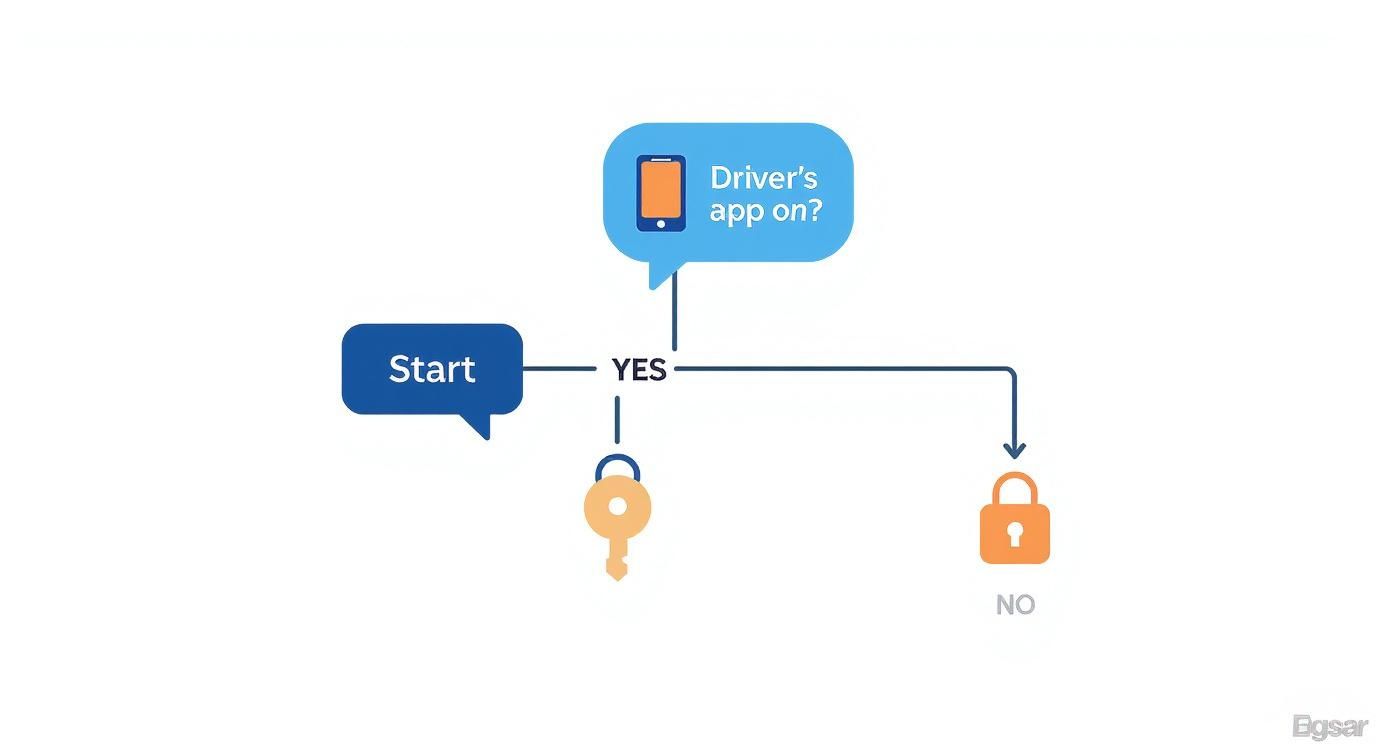
Because the $1 million layer depends on an active ride, proving the ride status is the hinge of the whole case.
So the single most important thing you can do after a crash—once you're safe—is take a screenshot of the active ride in the Uber or Lyft app. That screenshot is valuable: time-stamped, geo-located proof that the driver was carrying you on a prearranged ride at the moment of impact. It hands your attorney the foundation for unlocking the right coverage layer.
How We Prove Black Ice Negligence in a Winter Storm
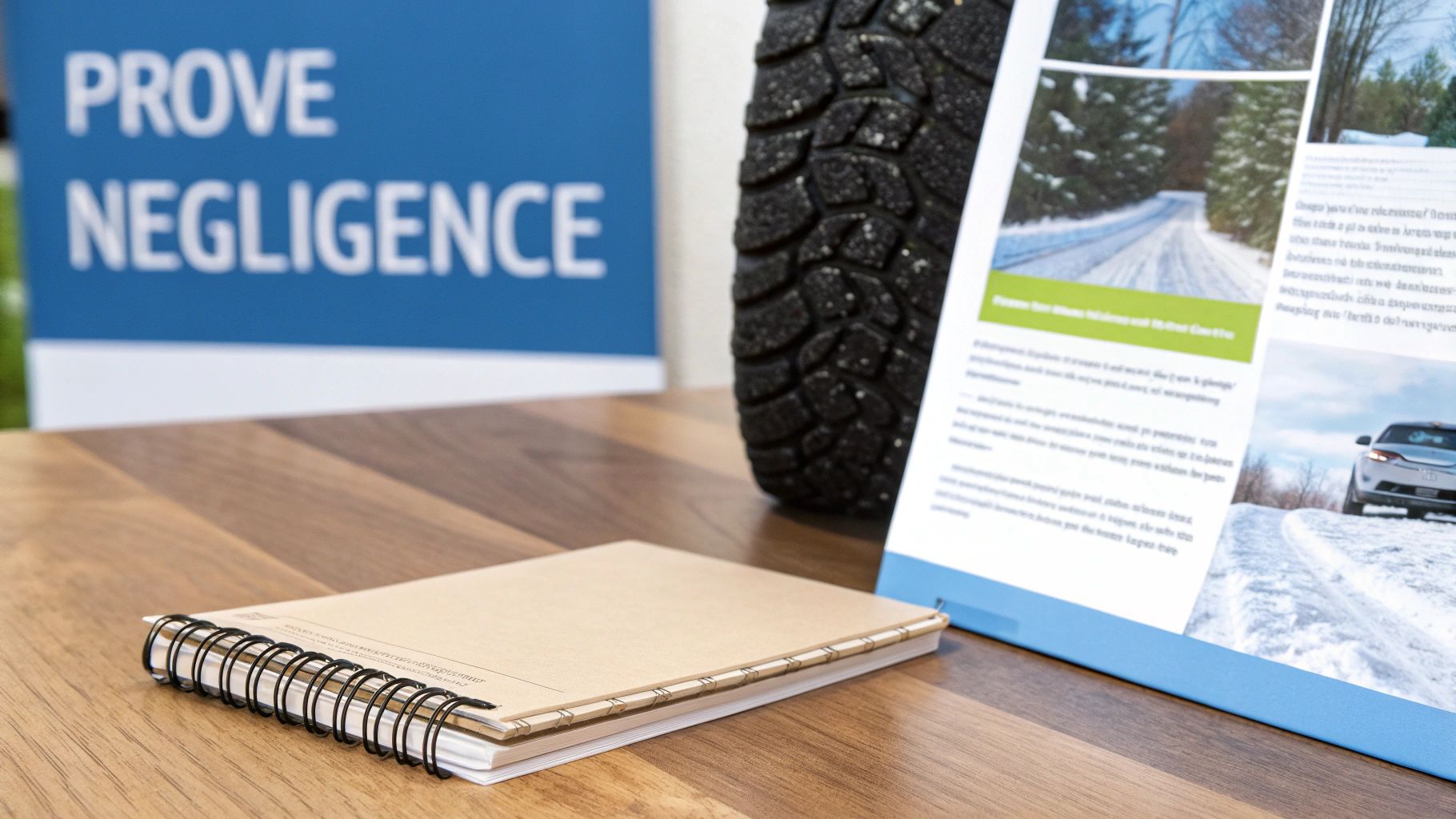
Storm crashes often draw an "Act of God" argument: the suggestion that no one is to blame. A snowy road doesn't erase a driver's duty to drive reasonably for the conditions. Bad weather is a known feature of a Colorado winter, not a get-out-of-liability card. The duty to adjust for ice and reduced visibility doesn't disappear because the forecast was rough.
A driver carrying a paying passenger is expected to drive like a professional, not like someone gambling on bald all-seasons. Driving too fast for icy conditions on a commercial trip can be negligence. When black ice is in play, the question becomes whether the driver adjusted speed and following distance the way a reasonable person should have. We use the storm itself as evidence the driver breached that duty, not as an excuse for it.
- Did they have adequate snow tires for the Front Range, or were they running on bald all-seasons?
- Were they driving too fast for the conditions, even if it was under the speed limit?
- Should they have even accepted a high-risk fare to DIA during a blizzard at all?
Our job is to answer the "Act of God" argument with facts: meteorological reports, subpoenaed maintenance logs, traffic data. The storm is the setting; the question is whether the driver adjusted to it.
Who Pays for Your Injuries?
One part is usually simple: as a passenger, you rarely carry any of the blame. The question is who caused the crash and which coverage applies. The real question isn't whether you can recover—it's which policy pays.
And here's where Colorado's fault rule matters. The state follows modified comparative negligence (C.R.S. § 13-21-111): you can recover even if you're partly at fault, but you're barred from recovery once your share of the fault reaches 50% or more. As a passenger, you're rarely anywhere near that line.
Scenario A: Your Rideshare Driver Is at Fault
If your driver caused the wreck—lost control on ice, sped, or made another negligent call while carrying you—the claim goes straight at the rideshare company's commercial liability coverage of at least $1 million. Proof of active ride status and solid evidence of negligence are what move that claim toward resolution. For more on this exact situation, see when the rideshare driver is at fault in Colorado.
Scenario B: Another Driver Is at Fault
What if a third party is to blame—say, another driver slides through a red light and T-bones your Lyft? The primary target becomes that driver's insurance policy. If liability is clear, recovery is more straightforward, and their carrier covers medical bills, lost wages, and other documented losses.
But what if that driver carries only Colorado's minimum $25,000 bodily-injury limit, or has no insurance at all? Then we look to the rideshare company's uninsured/underinsured motorist coverage—$200,000 per person and $400,000 per occurrence (C.R.S. § 40-10.1-604; HB22-1089). That layer exists for exactly this situation: it covers your injuries when the at-fault driver can't.
The at-fault driver's insurance, the rideshare company's commercial policy, and that UM/UIM layer can each come into play. Knowing which policy applies, and in what order, is where a lawyer helps most. For more on coverage, see our Uber passenger rights guide.
Your First Moves to Secure Your Claim
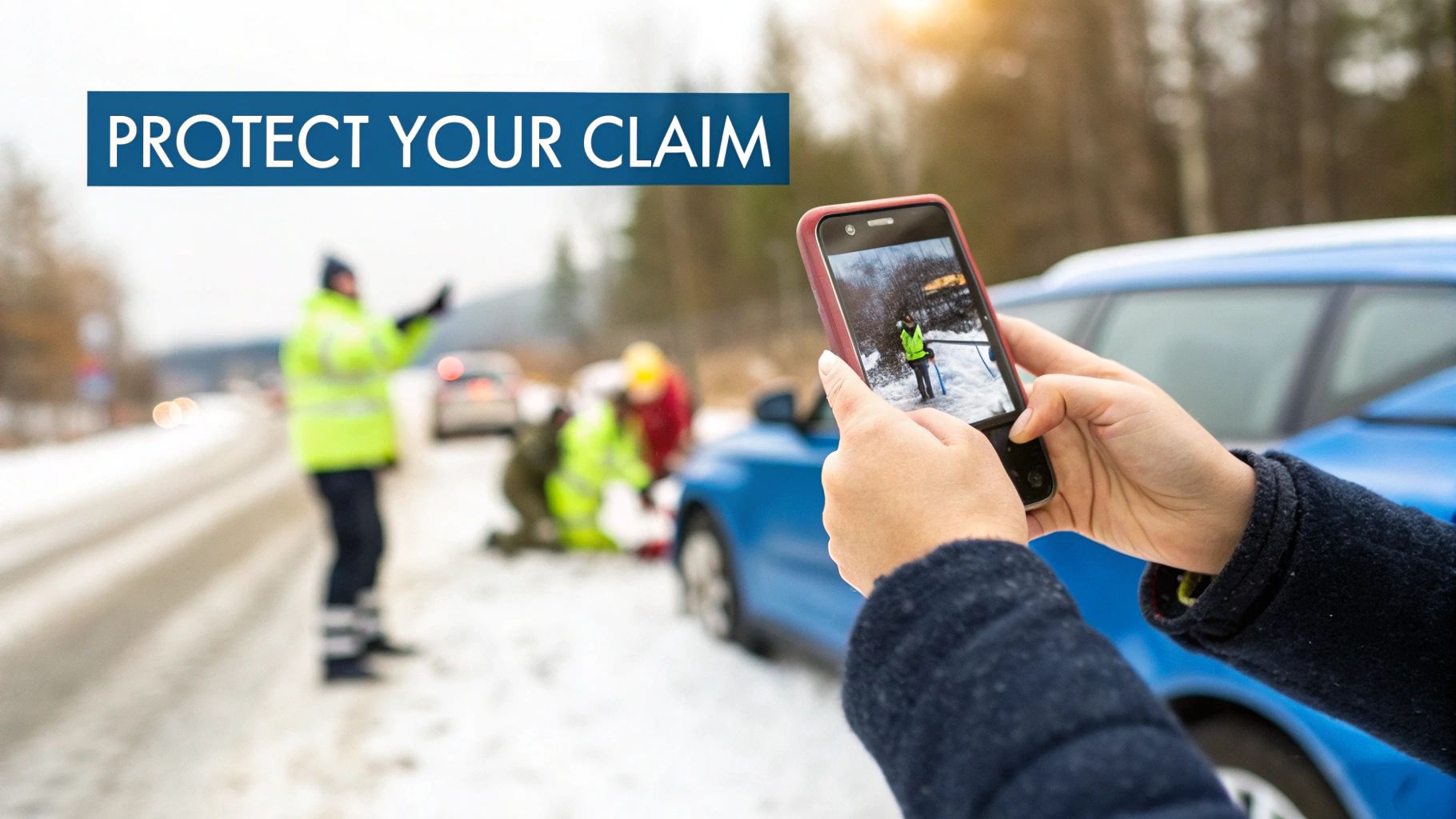
The first few minutes after a crash are a blur, but a few decisive moves protect both your safety and your case. Safety comes first—call 911 and get police and paramedics on scene. Evidence degrades and memories fade fast, so those early steps matter. Then become your own best advocate:
- Screenshot your active ride. Open the Uber/Lyft app and grab a screenshot showing the active trip. This is your most important piece of evidence.
- Call the police. An official police report is non-negotiable. It creates a permanent record of the event.
- Seek medical attention. Go to an ER or urgent care even if you feel fine—adrenaline masks injuries, and a same-day record documents the injury.
Now the most important warning: do not give a recorded statement to any insurance adjuster—not Uber's, not Lyft's, not the other driver's. An offhand comment can later be read as accepting part of the blame, and under the 50% bar fault allocation matters. Politely decline and tell them your attorney will be in touch.
You also have time on your side, but not forever: in Colorado, the statute of limitations for a motor-vehicle injury claim is three years from the date of the crash (C.R.S. § 13-80-101). Miss it and your claim is gone, so the smart move is to start the investigation early while the evidence is fresh.
Disclaimer: The information provided in this article is for general informational purposes only and does not constitute legal advice. The content is not intended to create, and receipt of it does not constitute, an attorney-client relationship. You should not act or refrain from acting based on this information without seeking professional legal counsel. The outcome of any legal matter depends on a variety of factors, including the specific factual and legal circumstances, and past results do not guarantee a similar outcome in future cases. Conduit Law is a law firm licensed to practice in Colorado.
You've been through enough. Elliot Singer has recovered more than $50 million for clients over his career. Let us handle the insurance claim so you can focus on getting better. Call us at (720) 432-7032 for a free consultation.

Written by
Elliot Singer, Esq.
Personal injury attorney at Conduit Law, dedicated to helping Colorado accident victims get the compensation they deserve.
Learn more about our team