Table of Contents
Picture this. You’re riding down Speer on a perfect Tuesday afternoon. Sun’s out, traffic’s light. The kind of day you bought the bike for. Suddenly, a Camry making a blind left turn from the far-right lane decides your space is now their space. You swerve, you brake, but physics is a cruel mistress. Next thing you know, you’re looking up at the sky, your leg is screaming, and the smell of hot asphalt is a little too close to your face.
The driver runs over, frantic apologies pouring out of their mouth. “I’m so sorry! I didn’t see you!” They say it like it’s a magic incantation that erases their negligence. It isn’t.
Days later, the at-fault driver’s insurance adjuster calls. They sound… nice. Concerned, even. They ask how you’re doing, say they want to “take care of this quickly,” and make you a fast offer to cover your ER bill and the bike repairs. It feels like a lifeline when you’re drowning in pain and paperwork.
It’s not a lifeline. It’s an anchor. Their entire job—their one and only goal—is to close your claim for the absolute minimum amount possible. They’re betting you don’t know your rights, don’t understand the full value of your claim, and are too overwhelmed to fight back. A skilled motorcycle accident lawyer in Denver knows this game and is here to make sure they lose.
The Insurance Company’s Playbook Is an Open Secret
Insurance companies aren’t your good neighbor. They are multi-billion-dollar corporations with a simple business model: collect as much as possible in premiums and pay out as little as possible in claims. Your tragedy is just a number on their balance sheet.
They use the same tired tactics on every single person who files a claim, because—depressingly—they often work. But the moment you see the con, you take away their power.
Their moves are predictable, cynical, and infuriatingly effective against the unrepresented.
- The Recorded Statement Trap: They’ll call and ask for a “quick recorded statement” to “get your side of the story.” This is a lie. It’s a fishing expedition where they hope you’ll say one wrong word—"I'm fine," "I'm sorry," "maybe I was going a little fast"—that they can twist to deny your claim.
- The Bias Blade: They lean hard into the unfair stereotype that all motorcyclists are reckless thrill-seekers. They will imply—with zero evidence—that you were speeding, weaving, or somehow responsible for not being seen by their driver. It’s a disgusting way to shift blame.
- The Delay, Deny, Defend March: This is their magnum opus of bad faith. They will delay processing your claim for months, hoping you’ll get desperate. They will deny legitimate medical treatments with nonsensical excuses. They will defend their insulting lowball offers with a straight face. It’s all designed to wear you down until you give up.

The early settlement offer is their crown jewel of cynicism. By taking their check, you sign away your right to ever ask for another penny—even if you need surgery a year from now. And they love the Delay, Deny, Defend tactic because it costs them nothing and saves them millions. Don't fall for it.
You can read up on strategies for negotiating with insurance adjusters, but remember—their goal is to pay you less. Always.
Colorado Law Is a Minefield They Expect You to Cross Alone
Navigating the Colorado legal system after a wreck feels like trying to perform surgery on yourself. It’s a terrible idea, and you’re probably going to do more harm than good. Insurance companies spend millions of dollars understanding every nuance, loophole, and deadline in the law—and they count on you knowing none of them.
Their entire defense strategy is built on using our state’s specific laws against you. This isn’t a fair fight; it’s a demolition.
That Ticking Clock Is a Trap
Colorado gives you a finite amount of time to file a lawsuit for your injuries. This is called the statute of limitations. For most motorcycle wrecks, you have three years from the date of the crash.
If you miss that deadline by one minute, your claim is worth exactly zero. It doesn’t matter how hurt you are or how clearly the other driver was at fault. The courthouse doors are legally barred.
This is why insurers love to drag their feet. Every day they delay is another day closer to their victory-by-default. Don’t let them run out the clock on you. You can learn more from our guide on Colorado's personal injury statute of limitations.
Their Favorite Weapon: Modified Comparative Negligence
This is the big one. This is the legal doctrine they use to gut your claim. In Colorado, if you are found to be partially at fault for an accident, your final compensation is reduced by your percentage of fault.
So, if a jury decides you were 10% at fault, your total award is cut by 10%. Makes sense.
But here’s the kill shot: if you are found to be 50% or more at fault, you get nothing. Not a dime. Your case is over.
This is why they will fight tooth and nail to pin even a shred of blame on you. They’ll say you were in a blind spot/changed lanes too quickly/your jacket wasn’t bright enough. Anything—anything—to get that number to 50% and walk away without paying.
This Is How We Calculate the True Cost of a Crash
The insurance company wants you to think your claim is a simple sum of your medical bills plus the cost to fix your bike. This is a deliberate, insulting oversimplification of everything that was taken from you.
Your claim isn’t just a pile of receipts. It’s the story of your life—the before and the after. Our job is to make them pay for the chapters they forced you to live through. An experienced Denver motorcycle accident lawyer knows how to value the full scope of your losses.
Economic Damages: The Black-and-White Costs
These are the tangible, out-of-pocket losses. The stuff you can put on a spreadsheet.
- Medical Expenses: Every single bill—past, present, and future. From the ambulance ride to the surgery you’ll need in five years.
- Lost Wages: All the income you lost while you were unable to work.
- Diminished Earning Capacity: The massive financial loss if your injuries prevent you from ever earning at the same level again.
- Property Damage: The full cost to replace your bike, your helmet, your gear—everything.
Non-Economic Damages: The Real-Life Costs
This is where the fight really happens. These are the human losses that don’t come with an invoice. The insurance adjuster will try to dismiss them, but they are just as real as a broken bone.
- Pain and Suffering: The physical agony of your injuries—both now and the chronic pain that may never go away.
- Emotional Anguish: The PTSD, the anxiety every time a car gets too close, the depression that follows a life-altering trauma. We fight for your legal rights, but this guide to post-accident emotional support offers a helpful perspective, though it's from another system.
- Loss of Enjoyment of Life: You can no longer ride through the canyons on a Saturday morning/play catch with your kid/hike your favorite trail. This is compensation for the joy the crash stole.
- Scarring and Disfigurement: The permanent, visible reminders of the violence you endured.
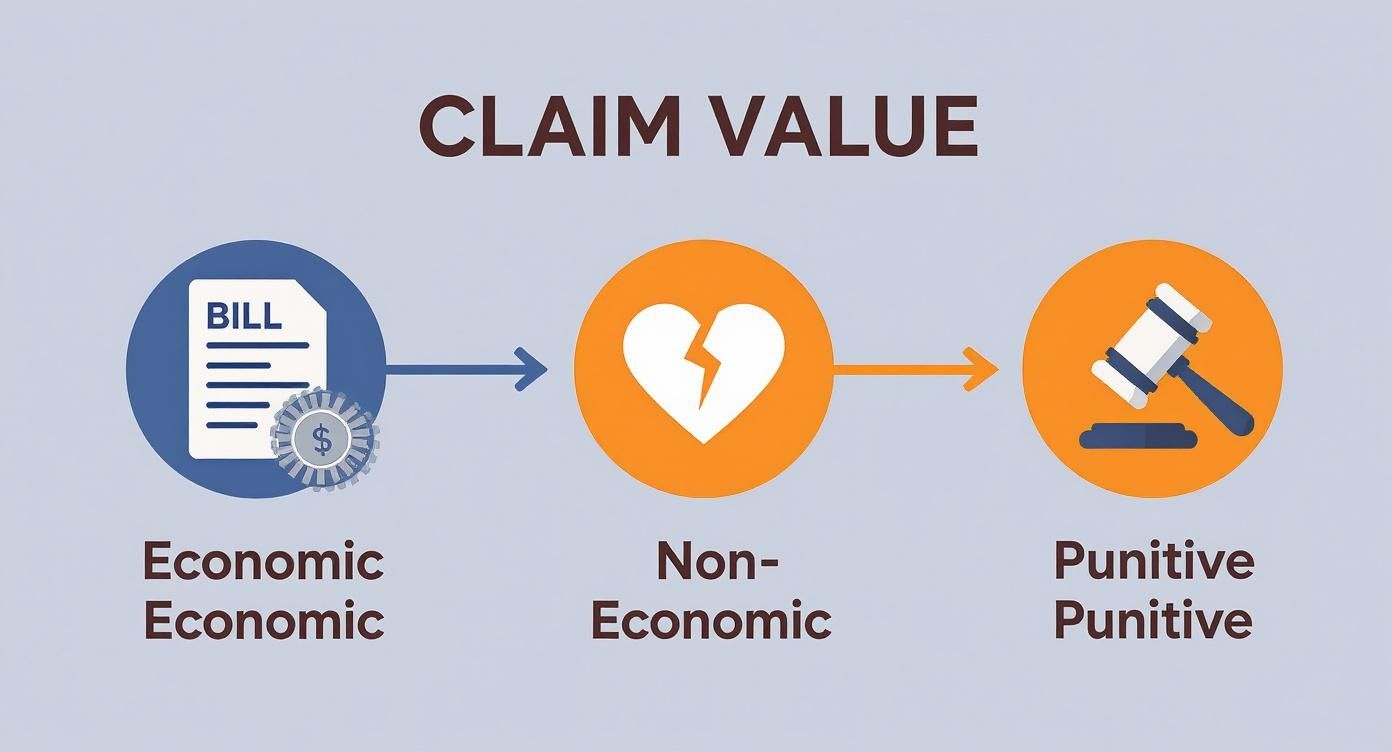
In rare cases of extreme recklessness—think drunk driving—we can also pursue punitive damages. These aren’t to compensate you; they are to punish the defendant and send a message. And understanding the other driver's bodily injury liability coverage is key to knowing the policy limits we are up against.
The Five Rounds of a Winning Case
Winning isn’t about a dramatic courtroom moment. It’s about methodical, relentless preparation. It’s building a case so airtight that the insurance company has no choice but to pay what they owe. Think of it as a five-round prize fight.
- Investigation: The moment you hire us, we move. We secure police reports, interview witnesses, and send legal demands to preserve evidence like security footage before it’s erased forever.
- Building the Medical Narrative: We collect every medical record and bill to create a comprehensive story of your injuries, proving the necessity of every treatment and linking it directly to the crash.
- The Demand Package: We assemble all the evidence into a powerful, detailed legal argument. It tells your story and makes it clear we are prepared for war.
- Aggressive Negotiation: The adjuster will inevitably come back with a lowball offer. We dismantle their arguments with facts and turn up the pressure until they are forced to negotiate in good faith.
- Litigation and Trial: If they refuse to be reasonable, we sue them. Many firms fear the courtroom. We don’t. Our reputation for being willing to go to trial is often the final piece of leverage needed to get them to pay what your case is truly worth.
How to Choose the Right Lawyer for Your Corner

This is the most important decision you will make. You are not hiring a paper-pusher. You are hiring a fighter to stand between your family and a billion-dollar company that wants to leave you with nothing.
Ask these questions at any consultation:
- What percentage of your cases are motorcycle accidents? You don’t want a generalist. You need a specialist who understands the unique biases and physics of motorcycle wrecks.
- Will you be the one handling my case? Many big firms pass you off to a junior associate. Demand to know who your fighter will be.
- How many motorcycle cases have you taken to trial? This is the key. Insurers know which lawyers are afraid of the courtroom and lowball them accordingly.
And run from any lawyer who guarantees a result, uses high-pressure sales tactics, or runs a massive “settlement mill” firm where you’re just another number.
A real motorcycle accident lawyer in Denver works on a contingency fee. This means you pay absolutely nothing unless and until we win. Our fee is a percentage of your recovery. Our goals are perfectly aligned.
Riders face unique dangers and biases. According to the motorcycle safety findings from the Colorado Department of Transportation, the statistics often paint a grim picture that insurance companies are all too eager to exploit. A good lawyer knows how to fight that narrative.
Frequently Asked Questions About the Aftermath
Your mind is a mess after a crash. Let’s get you some straight answers.
What’s the first thing I should do after a crash?
- Call 911. Your health is paramount. Get medical attention, even if you feel fine. Adrenaline masks serious injuries.
- Document everything. If you can, take pictures of the scene, the vehicles, your bike, skid marks—everything.
- Get information. Get the other driver’s info and witness contact numbers.
- Do NOT apologize. Saying “I’m sorry” can be twisted into an admission of fault.
- See a doctor. Even if paramedics clear you, get checked out to create a medical record.
- Do NOT give a recorded statement to their insurer until you’ve spoken with a lawyer.
Save our step-by-step checklist of what to do after a motorcycle accident on your phone. Just in case.
How much does it cost to hire you?
Zero dollars out of your pocket. We work on a contingency fee. We only get paid if you get paid. If we don’t win your case, you owe us nothing.
The insurance company is already blaming me. What now?
This is a tactic, not a fact. Do not argue with them. Politely end the call and contact an attorney. We will take over all communication, launch our own investigation, and prove what really happened. Their blame game is designed to make you give up. Don’t.
How long is this going to take?
Anyone who gives you a specific timeline is lying. A straightforward case might settle in 6-9 months. A complex one could take a year or more, especially if a lawsuit is necessary. The most important factor is your health—we will never rush to settle a case until you have reached Maximum Medical Improvement (MMI), which is when we know the full extent of your future medical needs. Settling before MMI is a gamble we will never take with your life.
This is a lot to handle on your own. You’re dealing with physical pain, financial stress, and an insurance company that sees you as nothing more than a liability to be minimized. You don’t have to fight them alone.
My name is Elliot Singer. I’m the managing attorney here at Conduit Law. Give us a call. The consultation is free, the conversation is completely confidential, and I promise you’ll walk away with a clear plan. I got you.
Disclaimer: The information in this blog post (“post”) is provided for general informational purposes only and may not reflect the current law in your jurisdiction. No information contained in this post should be construed as legal advice from Conduit Law, LLC or the individual author, nor is it intended to be a substitute for legal counsel on any subject matter. No reader of this post should act or refrain from acting on the basis of any information included in, or accessible through, this post without seeking the appropriate legal or other professional advice on the particular facts and circumstances at issue from a lawyer licensed in the recipient’s state, country or other appropriate licensing jurisdiction.
Written by
Conduit Law
Personal injury attorney at Conduit Law, dedicated to helping Colorado accident victims get the compensation they deserve.
Learn more about our team